Sort for privacy before reuse
Look at the printed side before placing a sheet in the scrap tray. Names, addresses, account details, school records, medical information and confidential work should follow the proper secure disposal process instead.
Keep only clean, dry sheets without staples, sticky residue or heavy damage. Remove anything that could harm a printer, child or person handling the stack.
A home note tray and an office document process are not the same. Follow the organization’s policy where paper belongs to work, clients or another person.
Give the paper a clear second job
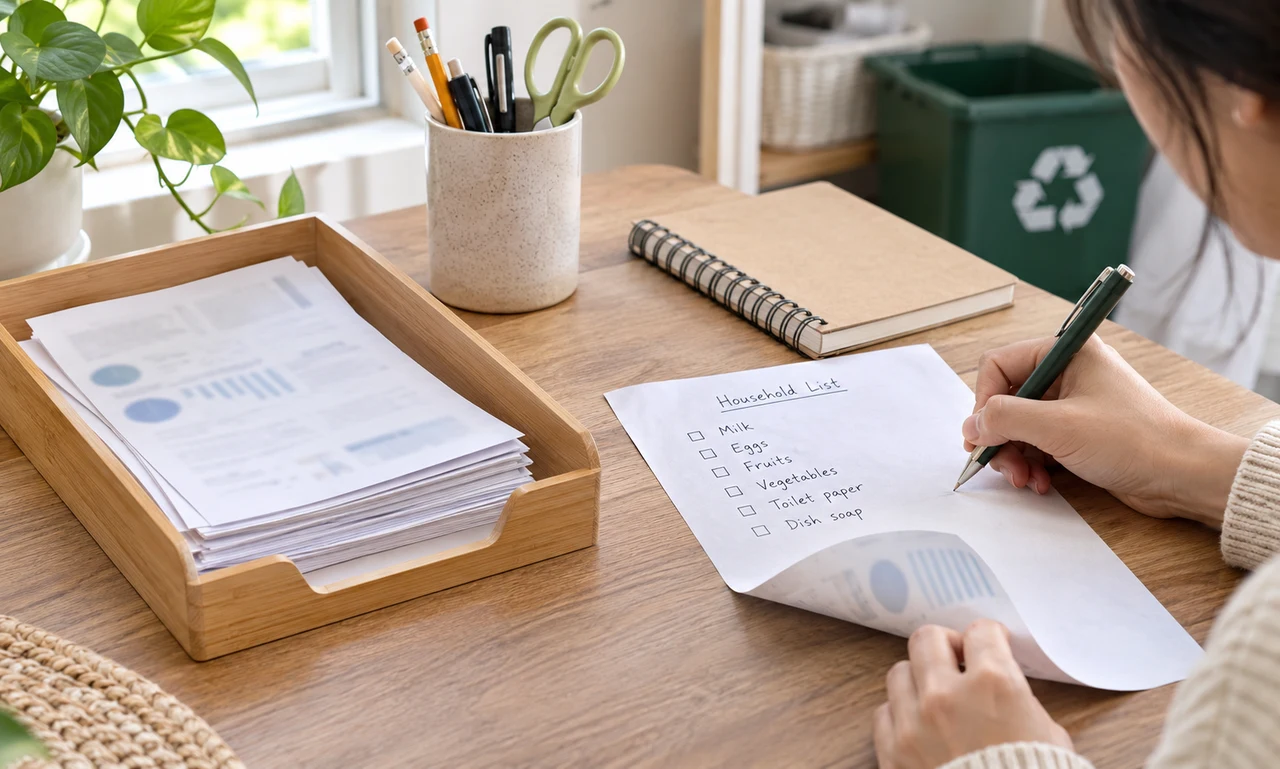
Place reusable sheets in one visible location with the blank side facing up. Use them for shopping lists, rough calculations, sketches, packing notes or other temporary tasks.
Mark the printed side as old when confusion is possible. Do not reuse an outdated form or letter in a way that makes its original instructions look current.
For printing, check the device guidance and the sheet’s condition before feeding paper through again. Some printers and papers are not suited to duplex reuse, and a jam can waste more time and material than the sheet saves.
Recycle after the useful side is finished
When both sides have served their purpose, remove non-paper attachments and follow local recycling rules. Coated, laminated, thermal or contaminated paper may be handled differently from ordinary office sheets.
Keep the tray small enough to remain useful. If it becomes a deep archive of paper nobody reaches for, recycle the excess rather than preserving every page indefinitely.
The habit does not need special stationery. It asks one quick question before a new sheet is taken: is there already a blank side close at hand?
About this article
An original everyday guide from Everyday News. It offers practical ideas and perspective rather than firsthand reporting.

