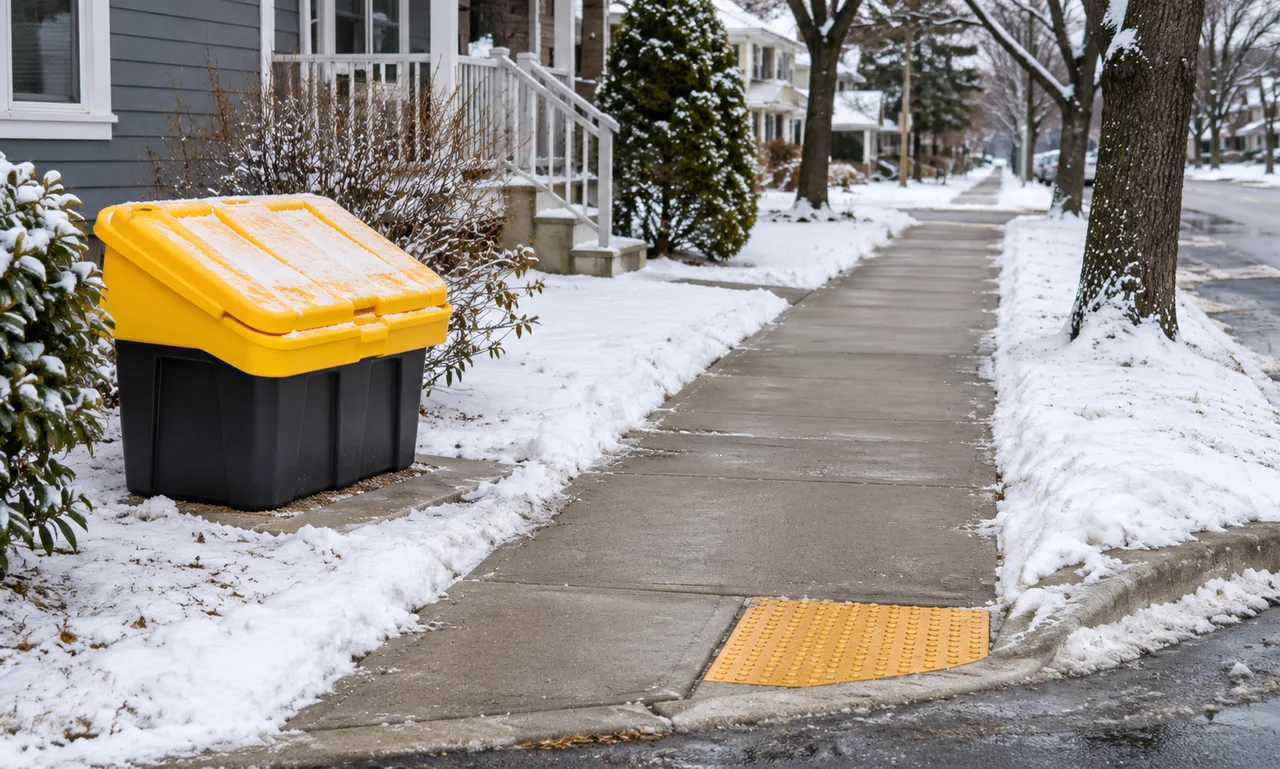
Choose a stable place off the path
Place an approved salt or grit bin on a level surface beside the route, not on the sidewalk, curb ramp, stair landing or doorway clearance. Preserve the usable width required by local accessibility and property rules.
Keep the bin close enough for the responsible person to reach safely without stepping into traffic or crossing an icy slope. Do not place it where snow clearing equipment is likely to strike it.
Protect drains, tree pits and building vents from spills. Local guidance may restrict materials or storage locations because salt can affect plants, surfaces, animals and waterways.
Keep the lid and surroundings manageable
Close the lid after use so precipitation does not turn the contents into a solid block. Wipe or sweep an ordinary spill promptly when it is safe to do so.
Use a scoop stored according to the supplier’s instructions rather than reaching into the bin with bare hands. Follow the product label and wear the recommended protection.
Do not fill an unlabelled container with a de-icing product. In a shared building, the responsible manager should make the material and safe-use instructions clear to authorized users.
Check access after every snowfall
Snowbanks can gradually push the walking line toward a bin that was safely placed in autumn. Reassess the clear width after plowing, shovelling or deliveries change the space.
Move the bin only if you are authorized and can do so safely. A heavy or frozen container may require equipment or help from the property manager.
Winter supplies support the route when they stay beside it. The aim is a clear path, a reachable bin and no new obstacle created by the tools used to manage the weather.
About this article
An original everyday guide from Everyday News. It offers practical ideas and perspective rather than firsthand reporting.

