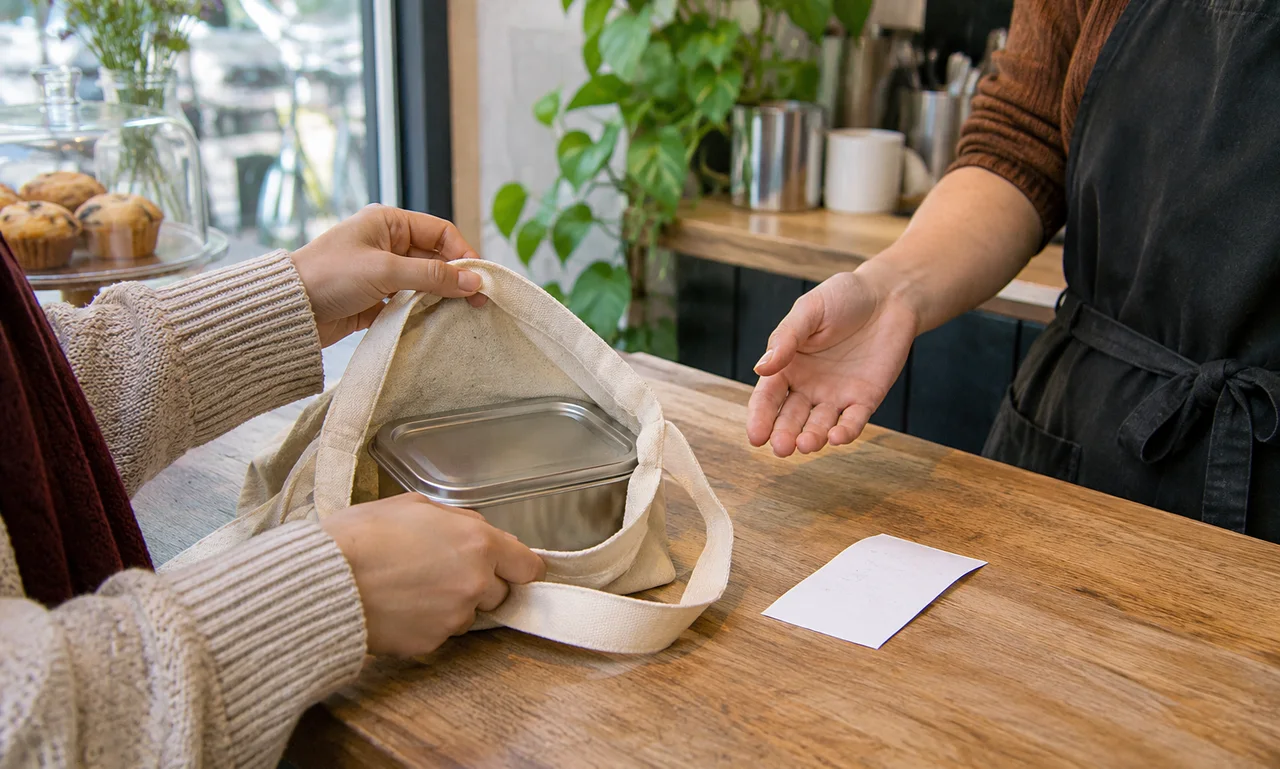
Learn the return route before leaving
Check where the container can be returned, whether a lid or receipt is required and if the program has a time limit. A quick look at the instructions prevents a useful container from becoming a permanent cupboard item.
Keep the return point in mind when choosing pickup or delivery. A system that fits an ordinary commute, walk or errand is more likely to become a routine than one that requires a special journey.
If the container belongs to a deposit or exchange program, follow its rules rather than mixing it with a different service. Similar-looking containers may use different washing, tracking or refund systems.
Clean and store it as directed
Remove leftover food promptly and follow the program’s cleaning instructions. Some services ask for a rinse while others require a full household wash, so use the guidance provided with the container.
Let the container and lid dry before placing them together. Trapped moisture can create odours and make the return unpleasant for the person receiving it.
Keep the empty container in a visible, clean place near the bag or coat used for errands. Do not put it with household recycling unless the program specifically says the item has reached the end of its return life.
Connect the return to an existing trip
Add the container to the next route that already passes the return point. A short note on the shopping list or a reminder beside the door can be enough.
Bring only clean containers that belong to the program and hand them over through the designated counter, bin or kiosk. Do not leave containers outside a closed business or beside an ordinary waste station.
Reuse works through repeated handoffs. The strongest habit is not collecting more containers; it is closing one loop before opening the next one.
About this article
An original everyday guide from Everyday News. It offers practical ideas and perspective rather than firsthand reporting.

