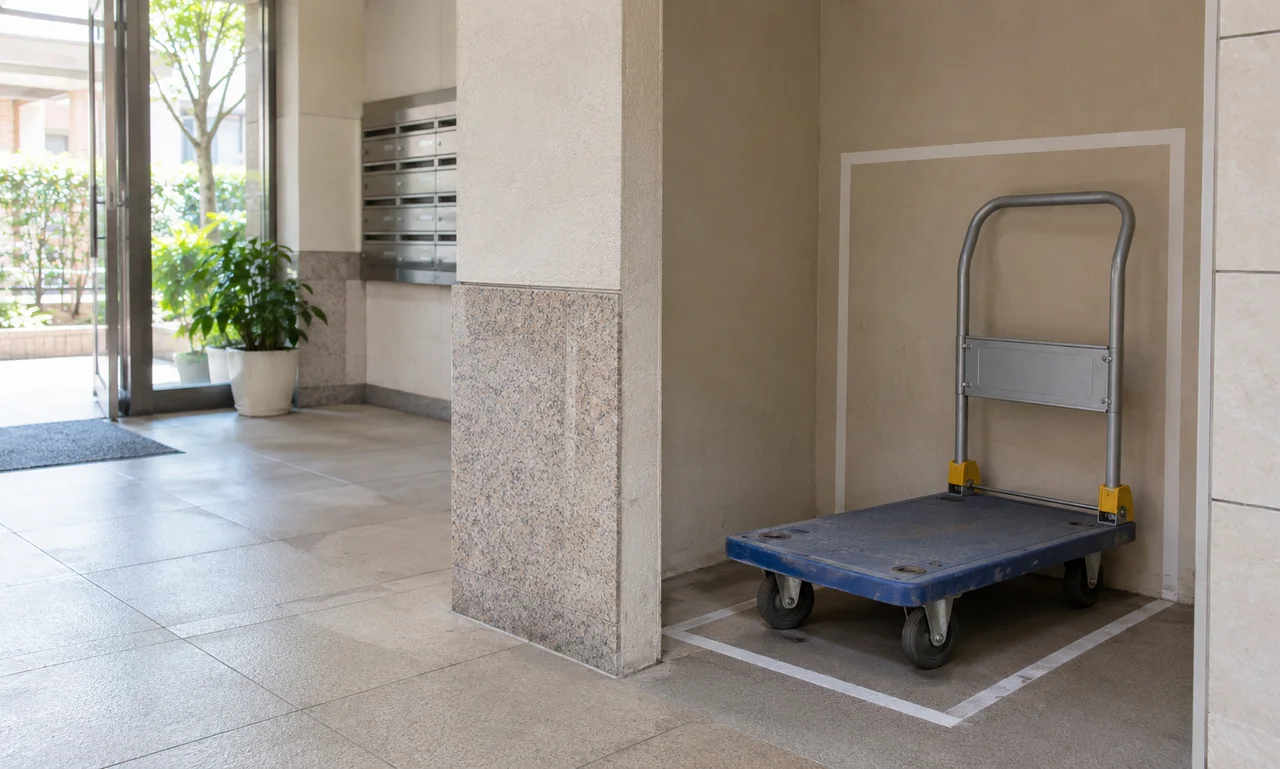
Check the cart before loading
Use the cart only for the purpose and weight allowed by the building. Look for damaged wheels, a loose handle or anything left by the previous user before placing a delivery on it.
Balance the load so it does not block your view or extend into doorways. Heavy items should sit securely, and nothing should be stacked so high that it can fall during a turn or elevator ride.
Keep fire routes, entrances and elevator doors clear while loading. If the cart is unsafe, leave it in the approved location and report the problem instead of improvising a repair.
Complete one trip at a time
Take the cart directly to the destination and unload it promptly. A shared cart should not become temporary storage inside an apartment, office or hallway while boxes are opened.
Watch the wheels at thresholds and inside elevators. Give other people enough room to enter, leave or choose another trip without being crowded by the load.
Remove packaging, straps and loose material as soon as the cart is empty. Follow the building’s waste rules rather than leaving cardboard or plastic in the lobby for someone else to sort.
Restore the starting point
Return the cart to its marked bay or the location named by building staff. Park it fully out of the walking route, with the handle and platform arranged as the design requires.
Wipe an ordinary spill with the approved supplies and report leaks, sharp debris or contamination that needs special handling. Do not leave a wet cart on a polished floor where another person may slip.
The final part of the delivery is not the apartment door. It is the empty cart back in place, ready to make the next resident’s heavy trip a little easier.
About this article
An original everyday guide from Everyday News. It offers practical ideas and perspective rather than firsthand reporting.

