Learn what the room should look like
Check the booking instructions, posted diagram or staff guidance before moving furniture. Some rooms have a standard layout designed around exits, accessible routes, cleaning and the next scheduled use.
Keep doorways, fire equipment and circulation paths open throughout the event. Do not stack chairs or fold tables in a place that creates a new obstruction.
Assign the reset to specific people before the meeting ends. A general request often leaves the task until everyone else has already departed.
Clear the meeting, not the room’s supplies
Collect personal belongings, handouts and food. Sort waste according to the facility’s rules and return shared markers, cables, remotes or presentation equipment to their proper place.
Wipe ordinary spills with approved supplies and report damage, broken glass or a maintenance concern to the responsible contact. Do not hide a damaged chair in a stack where the next group may use it.
Protect information left on whiteboards, flip charts and sign-in sheets. Erase or store it according to the group’s privacy and record-keeping needs rather than leaving names or plans on display.
Use the last minute as a handoff
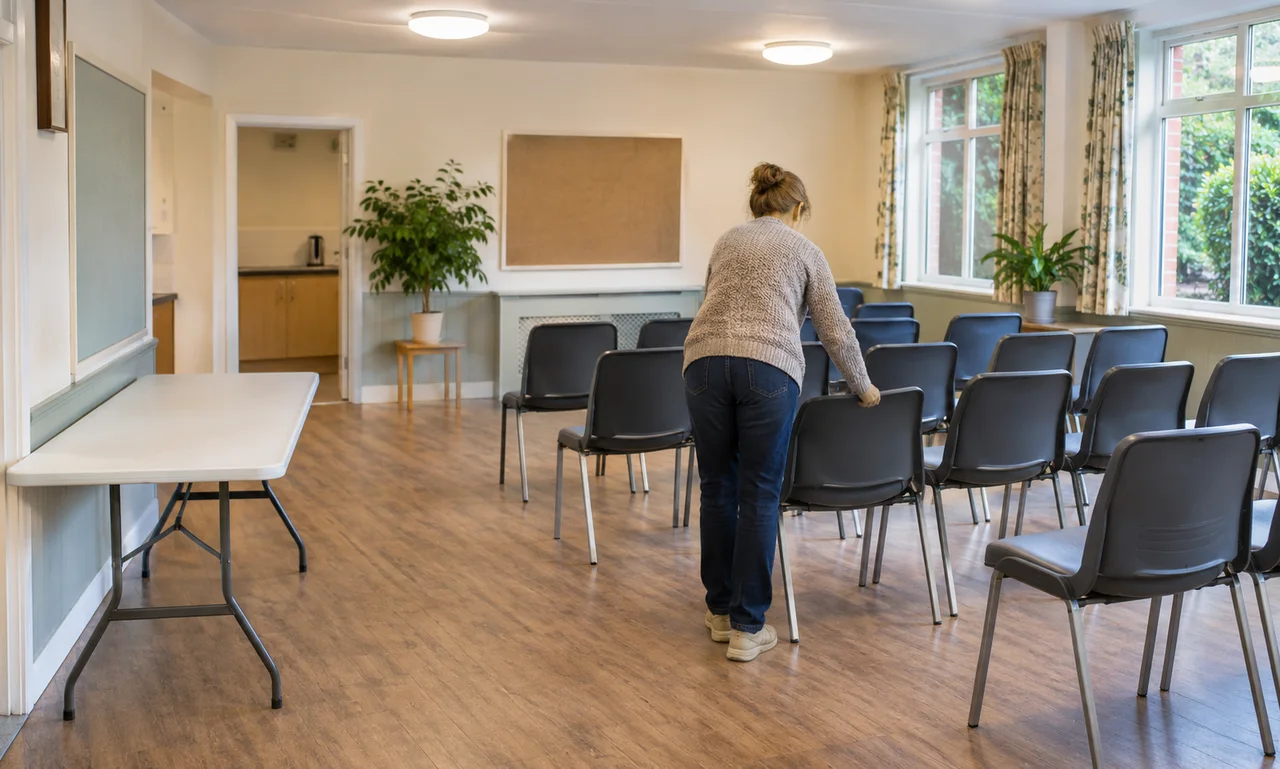
Return chairs and tables to the agreed arrangement without dragging heavy furniture unsafely. Ask for help, use available equipment and follow lifting guidance when an item is awkward.
Turn off approved equipment, close windows and set lights or doors as the booking instructions require. Do not change heating, security or access systems beyond what the facility authorizes.
Take one final look from the entrance. A finished meeting leaves more than an empty room: it leaves a clear, known starting point for the people arriving next.
About this article
An original everyday guide from Everyday News. It offers practical ideas and perspective rather than firsthand reporting.

