Read the dates and the condition
Take one shelf or category at a time and check package dates, seals and storage instructions. Follow current food-safety guidance and the product label rather than using appearance alone to judge an unfamiliar item.
Separate damaged, leaking, swollen, infested or recalled products from ordinary pantry stock. Do not taste food to decide whether a questionable package is safe.
Dates can mean different things depending on the product and local rules. A best-before date is not automatically the same as an expiry date, so use reliable guidance when uncertain.
Move the next useful item forward
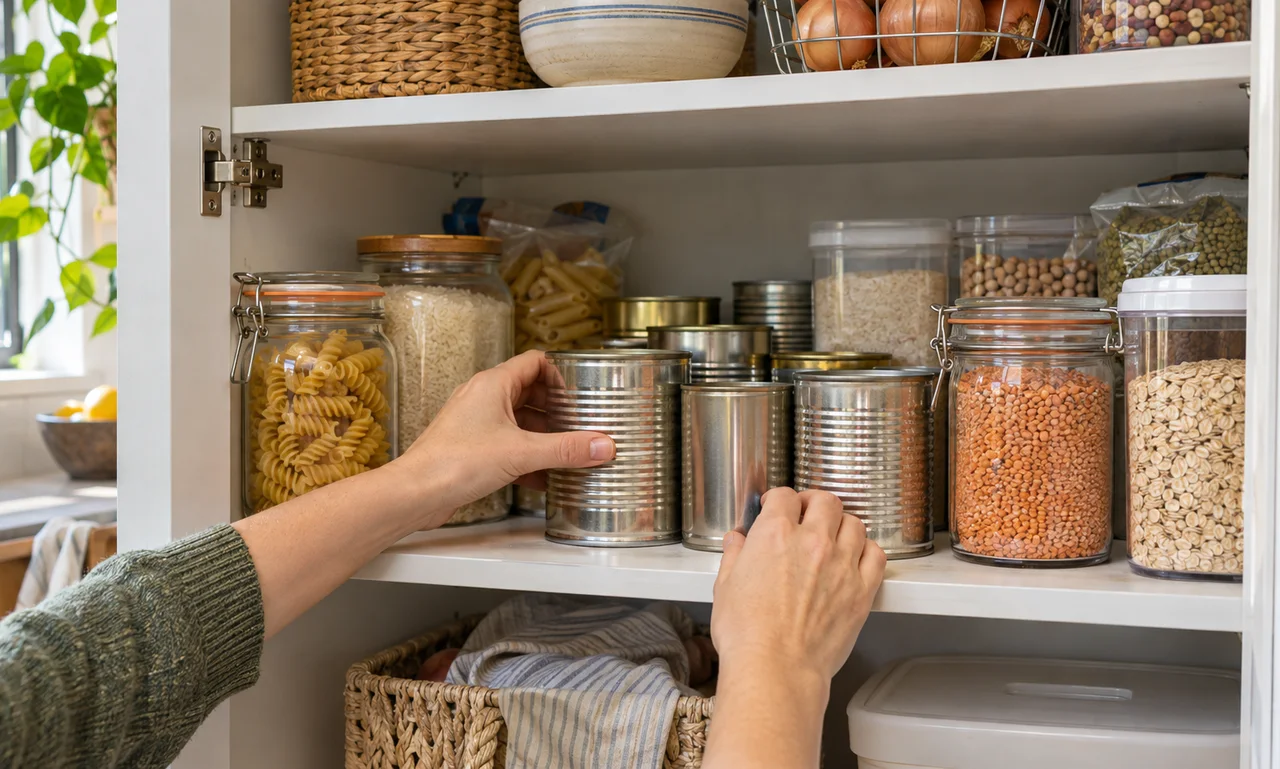
Place sound older products where they can be seen and reached before newer purchases of the same kind. Keep labels and dates visible rather than stacking them against the wall.
Group foods by a simple household logic, such as breakfast, baking or quick meals. The system should help people find and use food, not create a display that is too complicated to maintain.
Respect dietary, allergy and ownership boundaries in a shared pantry. Rotation should not move someone else’s food into a place where it can be mistaken for communal stock.
Plan from what is already open
Before shopping, look at the front row and build one or two meals around what needs attention. Add an item to the list only after checking whether a usable package is already present.
Avoid buying more simply to make every container look full. Leave enough space to see the shelf and clean an ordinary spill before it attracts pests.
The rotation takes minutes, not a full pantry redesign. Older food becomes visible, newer food waits behind it and one small shelf offers a clearer answer to the question of what to use next.
About this article
An original everyday guide from Everyday News. It offers practical ideas and perspective rather than firsthand reporting.

