Keep the original information
Before transferring or labelling a package, read its storage instructions, best-before or expiry information and allergen details. Keep the original label available when that information may be needed later.
An opening date does not replace food-safety guidance or the manufacturer’s directions. Some products require refrigeration after opening, while others need a cool, dry cupboard.
If a package is damaged, contaminated, recalled or shows signs of pests or spoilage, follow reliable disposal guidance. Do not use a new label to make a questionable product appear safe.
Add one clear date
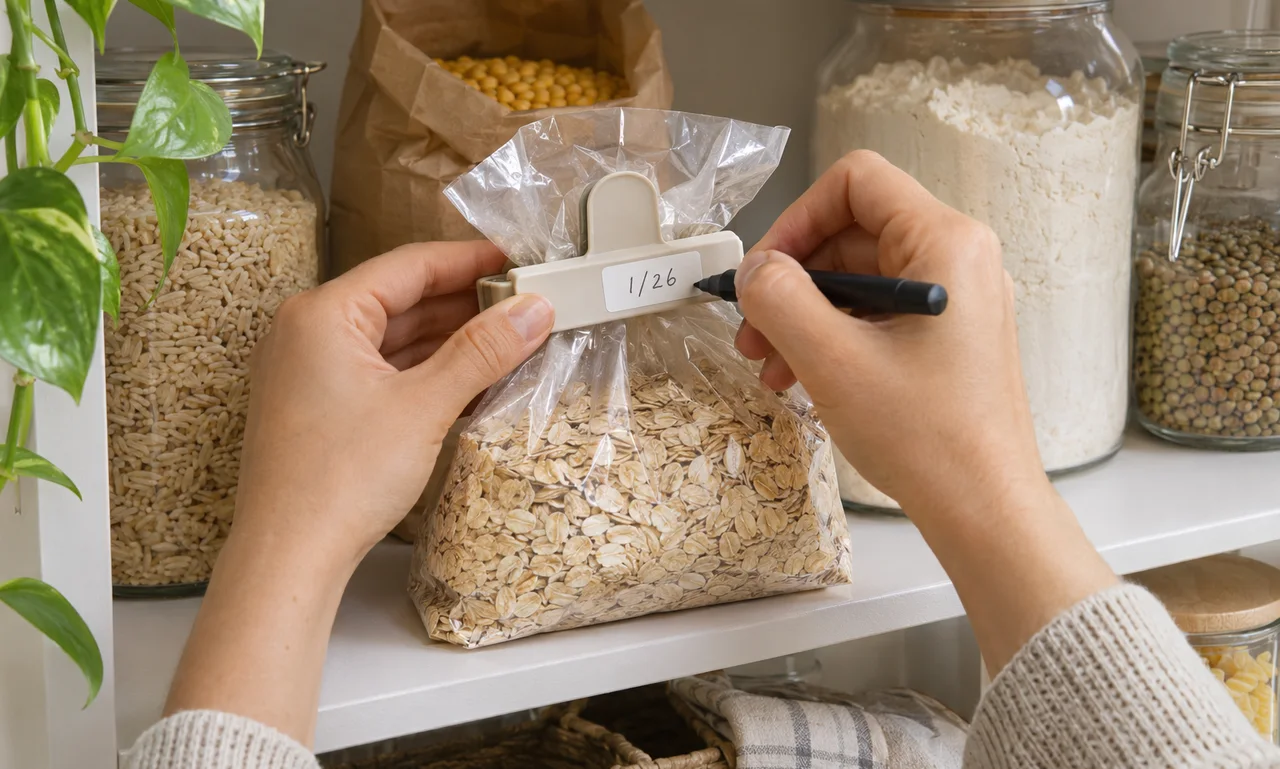
Write the date the package was opened on a removable label, clip or suitable part of the container. Use a format everyone in the household understands, especially where day and month order can be confused.
Keep the product name visible when the contents are stored in a plain container. For shared kitchens, include ownership or allergy information according to the room’s rules.
Choose a marker and label that will stay readable in the storage conditions without touching the food. Avoid covering preparation instructions, lot numbers or other important details.
Use the label at the next decision
Place the opened package where it can be seen before an unopened one of the same product. When planning a meal or shopping list, check the date and condition first.
Follow the product guidance for how long it keeps after opening. If the label does not answer that question, use a current, authoritative food-safety source rather than guessing.
The small mark is useful because it turns memory into shared information. It helps the household finish what is already open, notice a forgotten package and waste less through uncertainty.
About this article
An original everyday guide from Everyday News. It offers practical ideas and perspective rather than firsthand reporting.

