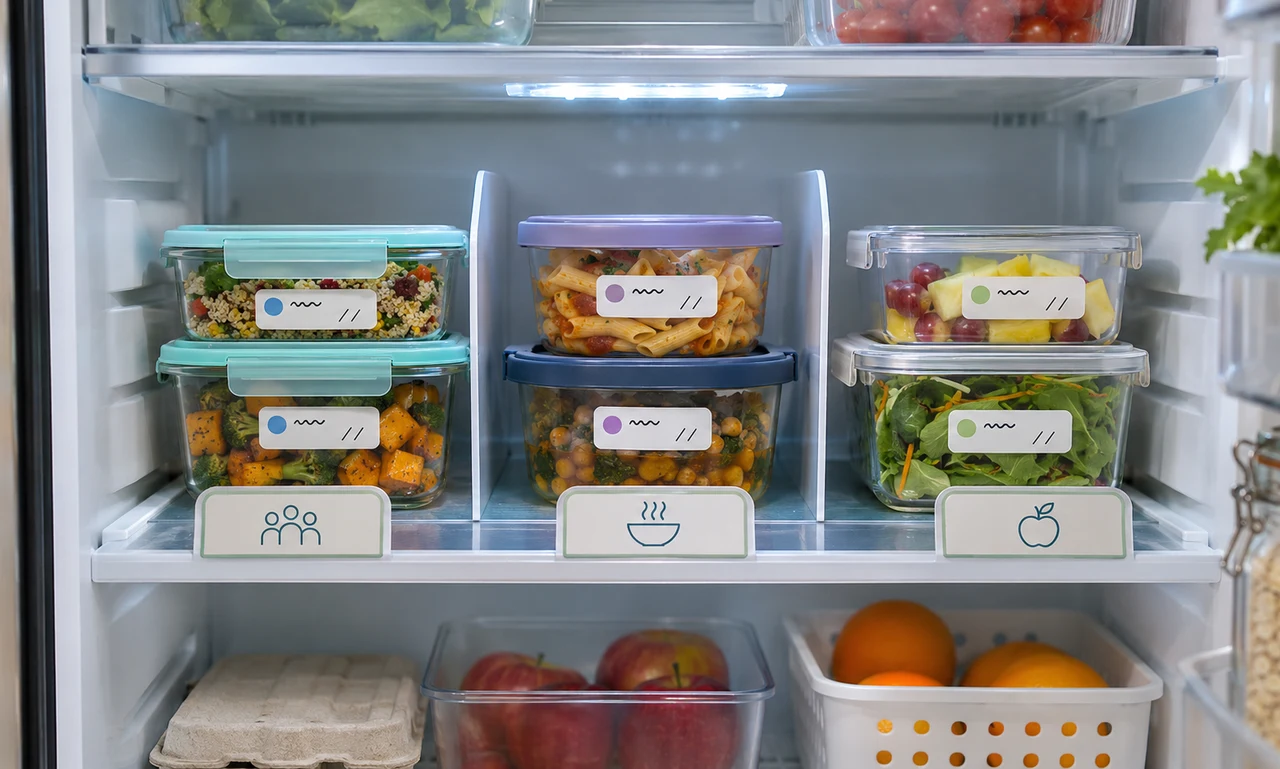
Follow the kitchen’s labeling rule
Shared refrigerators often have a policy for names, dates, shelf areas and cleanout times. Read it before storing food and use the label format the space expects.
Include only the identification needed for the handoff, such as a first name or agreed initials and the storage date. Do not put private contact details on a container that everyone can see.
Use a clean, food-safe container with a secure lid. Keep raw ingredients, allergens and foods needing special handling according to the kitchen’s rules and current food-safety guidance.
Make the label easy to understand
Write clearly on removable tape or the approved label and place it where the information can be seen without opening the container. Avoid covering vents, seals or instructions that still matter.
Do not relabel old food with a new date. If a container has been transferred or a meal prepared in advance, keep the date information accurate enough for the applicable storage guidance.
Names and dates do not make food safe indefinitely. When storage time, temperature or condition is uncertain, follow the kitchen’s disposal policy rather than relying on smell or appearance alone.
Clear the shelf through an agreed process
Take your container home or dispose of its contents at the end of the agreed period. Wash shared dishes promptly and leave the shelf ready for another person.
Organizers should announce cleanout timing and apply it consistently. Do not throw away a clearly current item simply because it is unfamiliar, and do not taste food to identify its owner.
The label is a small piece of shared infrastructure. It tells the next person what belongs, when it arrived and how the limited refrigerator space can remain understandable.
About this article
An original everyday guide from Everyday News. It offers practical ideas and perspective rather than firsthand reporting.

