Follow the visible route
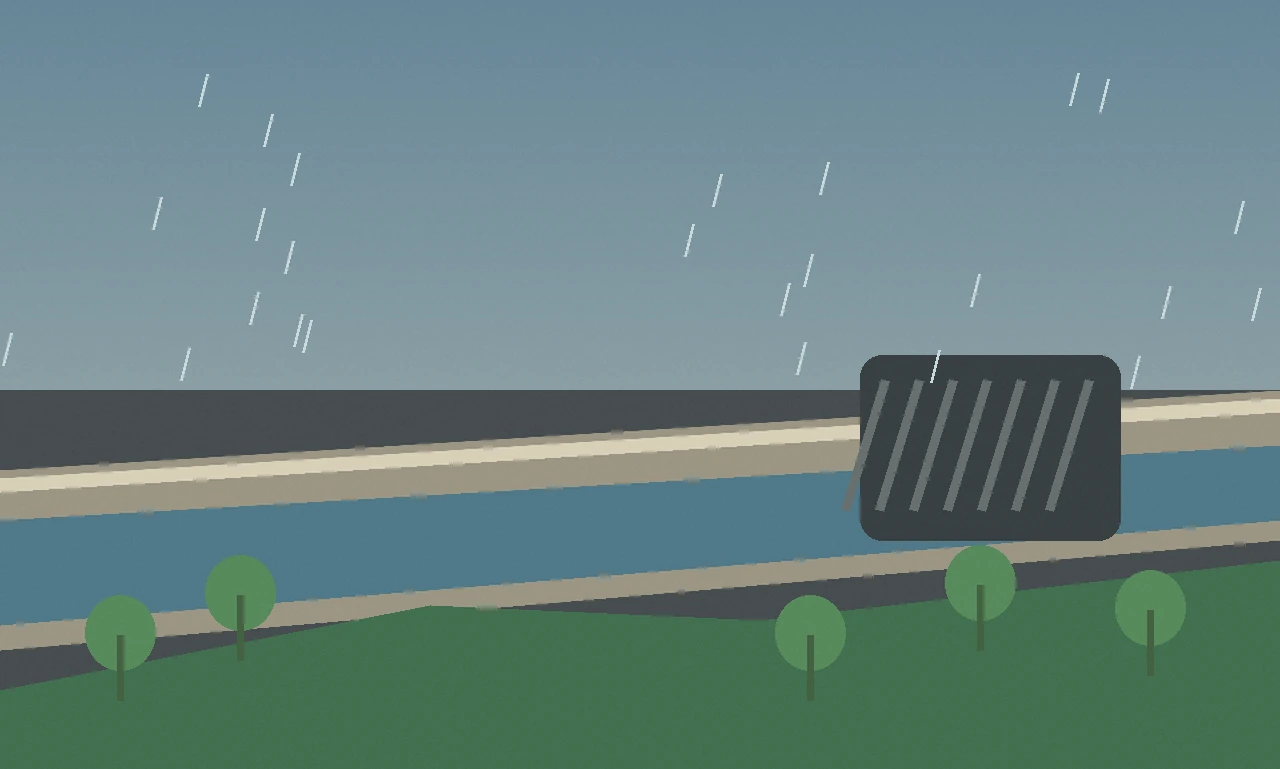
Rain briefly redraws a familiar street. Water gathers along the curb, crosses a low point and disappears through a grate. A shallow dip becomes a channel. A planted edge darkens first, while a covered patch remains dry.
Observing this route can make the shape of the street easier to understand. You do not need to measure the flow or step into it. From a safe, public place, notice where water begins to collect and which direction the surface sends it.
Conditions during heavy rain can be hazardous and change quickly. Keep away from moving water, flooded areas, traffic and drains. This is an exercise in attention after an ordinary shower, not an invitation to inspect dangerous conditions.
Separate a pattern from a problem
A puddle does not automatically prove that drainage has failed. The timing, depth, duration and recent maintenance all matter. A low spot that clears soon after the rain is different from water that repeatedly blocks a crossing or reaches a building entrance.
If you notice a concern, record the location, date and what you can see without making a technical diagnosis. A photograph of the public area may help if it can be taken safely and without identifying people. Use the relevant local reporting channel for hazards or blocked infrastructure.
Specific language is useful: “water covered the curb ramp for thirty minutes after the rain” says more than “the street floods.” It gives the responsible service a clearer observation to assess.
See design working in real time
Rainwater also shows what is functioning. A clear grate accepts flow. A planted strip receives runoff. A slope keeps the walking route passable. These ordinary outcomes can be easy to miss because successful infrastructure often disappears into the background.
Return to the same place on a dry day. The route will still be present in the angles of the pavement and the position of the curb, but it may take the memory of rain to make those details legible.
The exercise changes how a street is read. Buildings and paths remain important, yet water adds another layer: a temporary movement shaped by every surface it meets. For a short time after the clouds pass, the neighbourhood displays part of its hidden plan.
About this article
An original perspective from Everyday News. It offers practical ideas and perspective rather than firsthand reporting.

