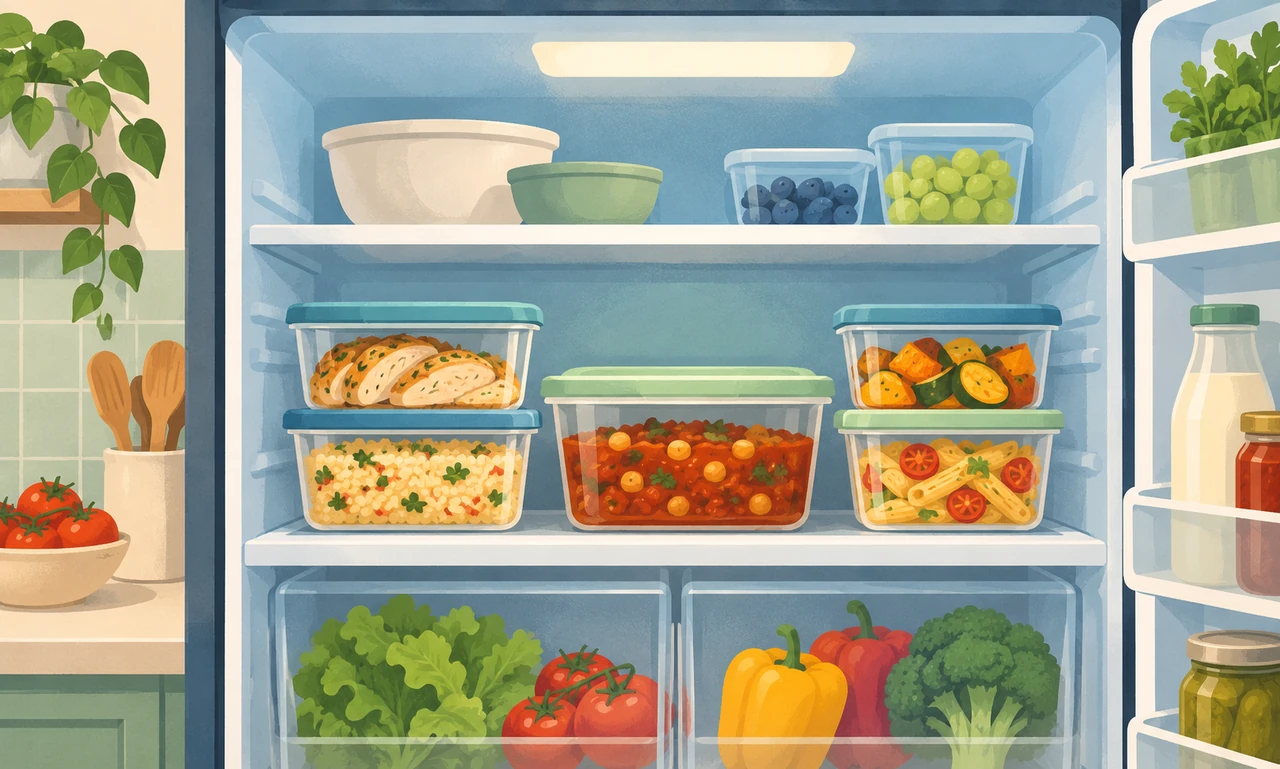
Choose the shelf before the container
Leftovers are often stored wherever a container fits. That solves the immediate task and creates a later one: remembering what is behind the milk, under the vegetables or inside an opaque box.
Choose one easy-to-see area as the first place for prepared food that should be considered soon. The best location depends on the appliance, household and manufacturer’s guidance. Do not block vents or overload a shelf, and keep raw foods separated in the way current food-safety advice recommends.
This is an organization idea, not a rule that food remains safe because it is visible. Cool and store food promptly, use clean covered containers and follow reliable local guidance for temperatures, storage times and reheating.
Make the next decision obvious
Use containers that let you identify the contents, or add a short label with the name and date. Put the item most likely to be used first at the front. A small tray can make the area easier to pull forward and clean, but it should not become another place where containers collect unnoticed.
Before shopping or planning dinner, look at this shelf first. The question is simple: can one of these items become part of the next meal? A cooked vegetable may join an omelette; rice may suit a bowl; a portion of soup may already be enough. Follow appropriate food-safety guidance for each food rather than relying on appearance or smell alone.
If several people share the refrigerator, agree on what the shelf means. A system works better when it is a common cue, not one person’s private arrangement.
Reset it in one minute
Pick a regular moment to review the shelf, such as before a grocery trip. Remove containers that are empty, check dates and clean spills. If something must be discarded, note the broad reason—too much cooked, forgotten, or not enjoyed—without turning one mistake into a household audit.
Those notes can shape the next week. Smaller batches, clearer labels or freezing a portion earlier may fit the routine better. Do not freeze food merely to postpone a decision; label it, date it and follow appropriate freezing and thawing guidance.
A visible shelf cannot eliminate food waste, and no single kitchen system suits everyone. It can reduce one common source of confusion: food that was saved with good intentions and then hidden from view. The first shelf is simply a place for the next useful decision.
About this article
An original everyday guide from Everyday News. It offers practical ideas and perspective rather than firsthand reporting.

