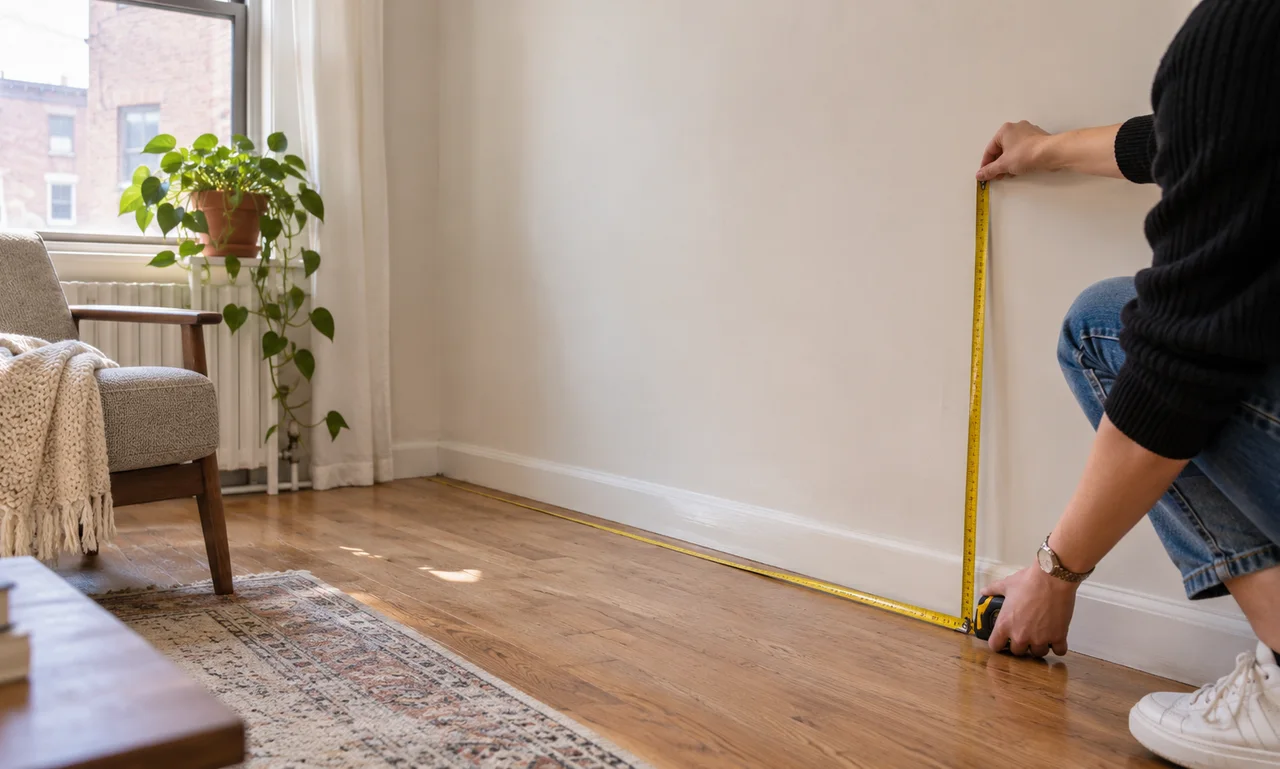
Measure the route as well as the destination
Record the width, height and depth available where the furniture will sit. Include baseboards, vents, radiators, outlets, windows and the space needed for doors or drawers to open.
Then measure the route from the building entrance to the room. Doorways, stair turns, elevators and narrow halls can matter as much as the final wall.
Use a stable measuring tool and ask for help where the task requires reaching or moving an existing object. Do not stand on furniture or block a shared corridor while checking dimensions.
Mark the footprint without buying anything
Use removable painter’s tape, folded paper or another floor-safe method to show the proposed footprint. Walk around it and test the ordinary routes people use through the room.
Consider the space needed by mobility devices, cleaning tools, children, pets and any chair that must pull out. A piece can fit the measurements and still make the room difficult to use.
Check product dimensions from the seller or maker, including packaging and required assembly clearance. A photograph alone cannot show scale reliably.
Choose with delivery and future use in mind
Confirm delivery terms, return conditions and who is responsible for assembly before ordering. Second-hand furniture should also be checked for condition, materials and safe transport.
Compare the proposed item with something already owned that could be moved, repaired or repurposed. Avoid buying simply to fill an empty wall when the room already works.
Measurement does not guarantee that every choice will last, but it removes a common source of waste. The best return is often the one a careful plan makes unnecessary.
About this article
An original everyday guide from Everyday News. It offers practical ideas and perspective rather than firsthand reporting.

