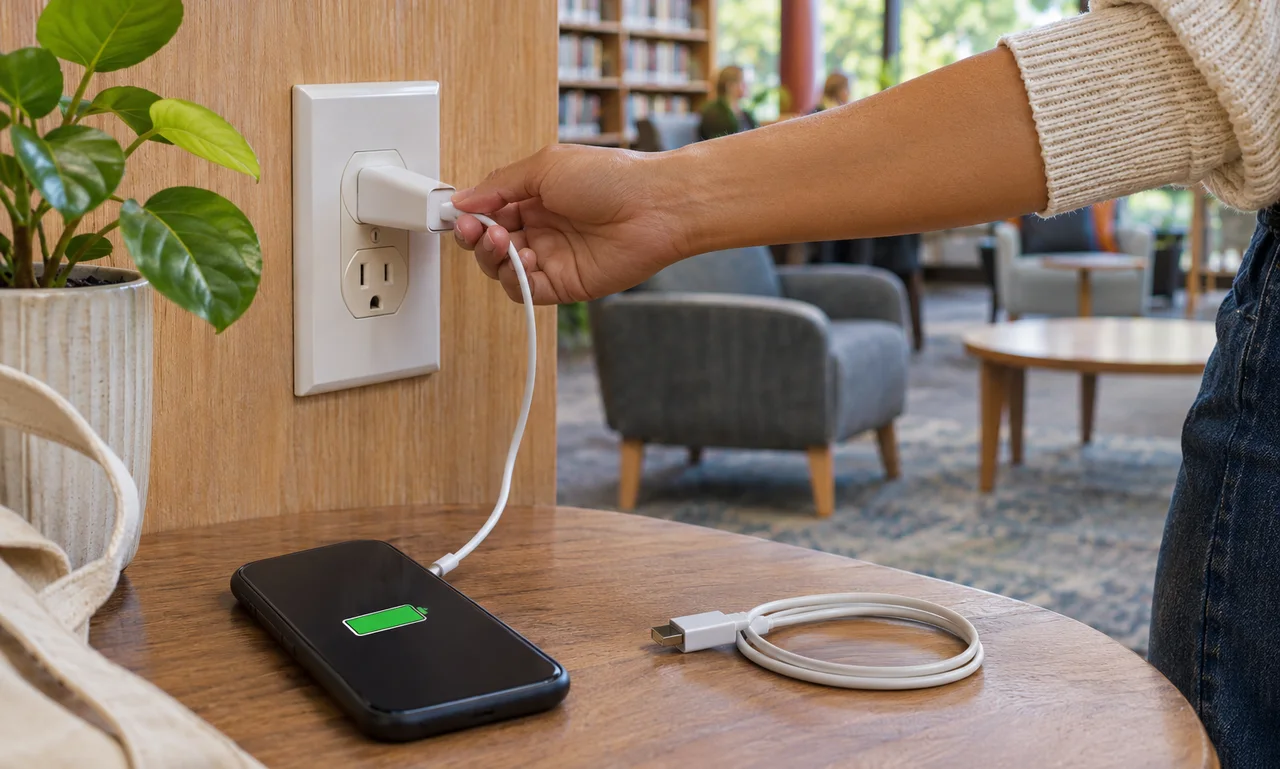
Treat the outlet as shared equipment
Charging points in libraries, waiting rooms and community spaces are often limited. Use one outlet for the device that needs it rather than occupying several sockets for convenience.
Follow posted rules and ask staff before moving furniture, power bars or covers. Never use a damaged socket, loose plug or cable that becomes unusually hot.
Keep cords close to the wall or within the charging area so they do not cross a walking route. An available outlet should not create a tripping hazard for someone passing nearby.
Take only the time the device needs
Check the charge occasionally and unplug when the device has enough power for the remaining task or trip. A full battery does not need to reserve the socket indefinitely.
Do not unplug another person’s device without permission, even if it appears fully charged. Ask politely or use a different outlet rather than handling someone else’s property.
If a queue forms, agree on a simple turn or time check. A brief conversation is usually clearer than leaving an unattended device to claim the space.
Clear the area when finished
Remove the plug from the outlet by holding the plug itself rather than pulling the cord. Coil the cable loosely and take adapters, battery packs and personal belongings with you.
Return chairs or tables only if doing so is allowed and does not block the accessible route. Report an electrical fault to staff instead of trying to repair public equipment.
A shared outlet is a small public resource. Leaving it safe, empty and visible is an ordinary courtesy that makes the next person’s wait a little shorter.
About this article
An original perspective from Everyday News. It offers practical ideas and perspective rather than firsthand reporting.

