Notice what the bench is for
A public bench offers a pause along a walking route. It may be especially important to an older adult, someone managing pain or fatigue, a caregiver or a person waiting for transit.
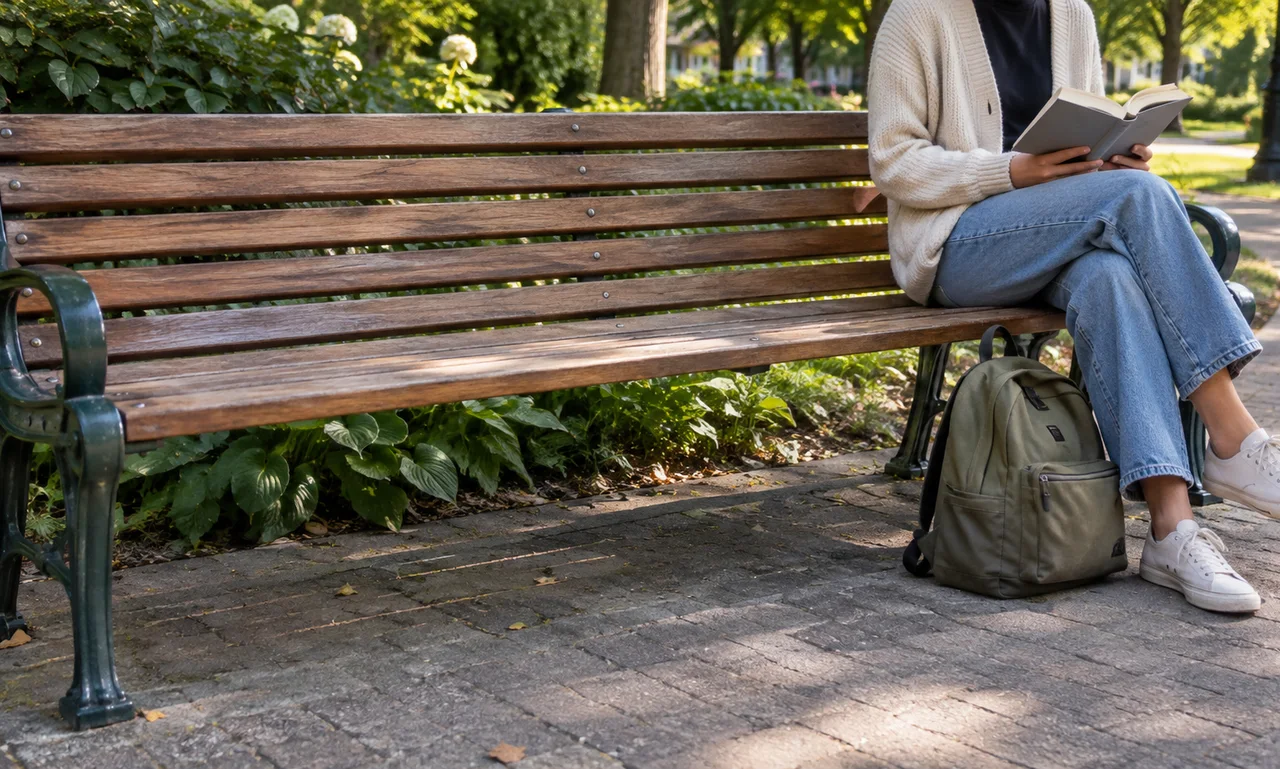
Place bags, parcels and sports equipment on your lap or safely beside you when the surface is clean and the item remains supervised. Do not block the path around the bench.
Some benches include designated accessible space beside the seat. Keep that area open for mobility devices rather than treating it as luggage storage.
Share the seat without making assumptions
Use only the space you need and make room when another person approaches. A simple shift can be more welcoming than waiting for someone to ask.
Do not pressure a person to explain why they need the bench or to sit closer than is comfortable. People can share public space while maintaining ordinary personal boundaries.
Keep pets controlled according to local rules and prevent leads, bicycles or scooters from stretching across the approach.
Leave the pause ready for someone else
Take every personal item when you go and use the correct bins for waste. Do not leave food where it attracts wildlife or a wet object where the next person may sit without seeing it.
Report broken slats, sharp edges, unstable legs or another maintenance concern to the responsible service. Avoid making an unauthorized repair to public furniture.
A bench does not need a reservation system to serve the neighbourhood well. It needs a clear seat, a clear approach and the quiet understanding that someone else may need the pause next.
About this article
An original perspective from Everyday News. It offers practical ideas and perspective rather than firsthand reporting.

