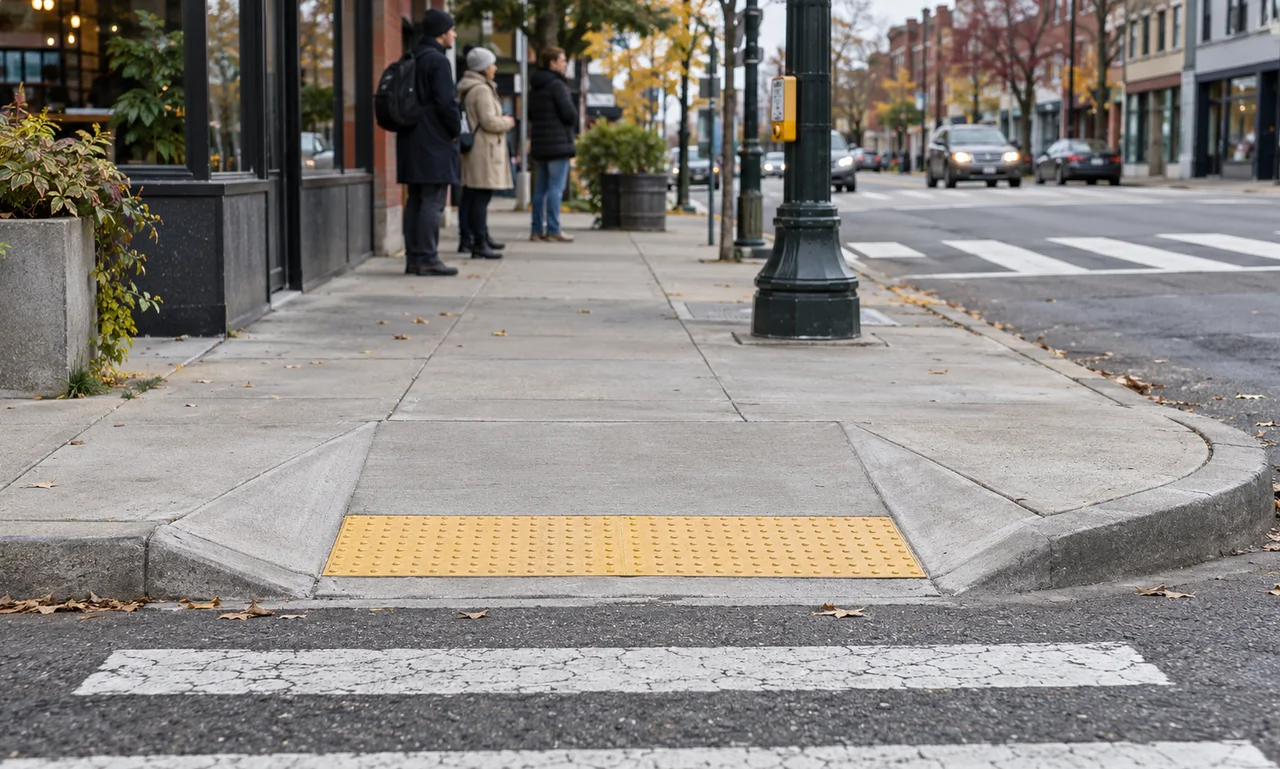
Recognize the route through the corner
A curb ramp connects the sidewalk with the crossing for people using wheelchairs, walkers, strollers, carts and other mobility supports. Its useful space includes the approach, the slope, tactile surfaces and the landing beyond.
Wait to one side where you can still see the signal without occupying that route. A person approaching from behind should not have to ask a group to move before the crossing begins.
Keep bicycles, scooters, bags and pets out of the same area. Even a light object can narrow the turning space or cover the textured surface someone uses for orientation.
Cross without stopping in the transition
When the signal and conditions permit, move through the ramp and crosswalk at a steady pace. Avoid stopping at the bottom to check a phone, arrange a bag or continue a conversation.
Do not assume that every person will take the same line or speed. Leave room for someone to align with the ramp, reach a push button or pause safely before entering traffic.
Drivers and cyclists must follow local laws and signals. A clear ramp does not replace the need to check for turning traffic and other hazards throughout the crossing.
Treat obstructions as access issues
Snow piles, standing water, damaged pavement and poorly placed street furniture can make a ramp difficult or impossible to use. Report the exact corner and condition to the responsible service.
Move a personal item immediately when it blocks the route, but do not enter traffic or handle heavy municipal equipment to clear a larger obstruction yourself.
The curb ramp may occupy only a small part of the corner, yet it completes an essential connection. Leaving it open turns ordinary waiting space into a neighbourhood route that works for more people.
About this article
An original perspective from Everyday News. It offers practical ideas and perspective rather than firsthand reporting.

