Decide early what will be eaten fresh
Consider how much of the loaf the household is likely to use while it is still fresh. Set that portion aside and prepare the remainder before it becomes dry or shows signs of spoilage.
Freeze bread while it is in good condition. Freezing pauses change; it does not make stale or unsafe food fresh again. Bread with visible mould should be discarded according to current food-safety guidance.
Follow package instructions when they provide storage advice. Homemade and bakery loaves may need to cool completely before wrapping so trapped warmth does not create excess moisture.
Pack the amount you will actually use
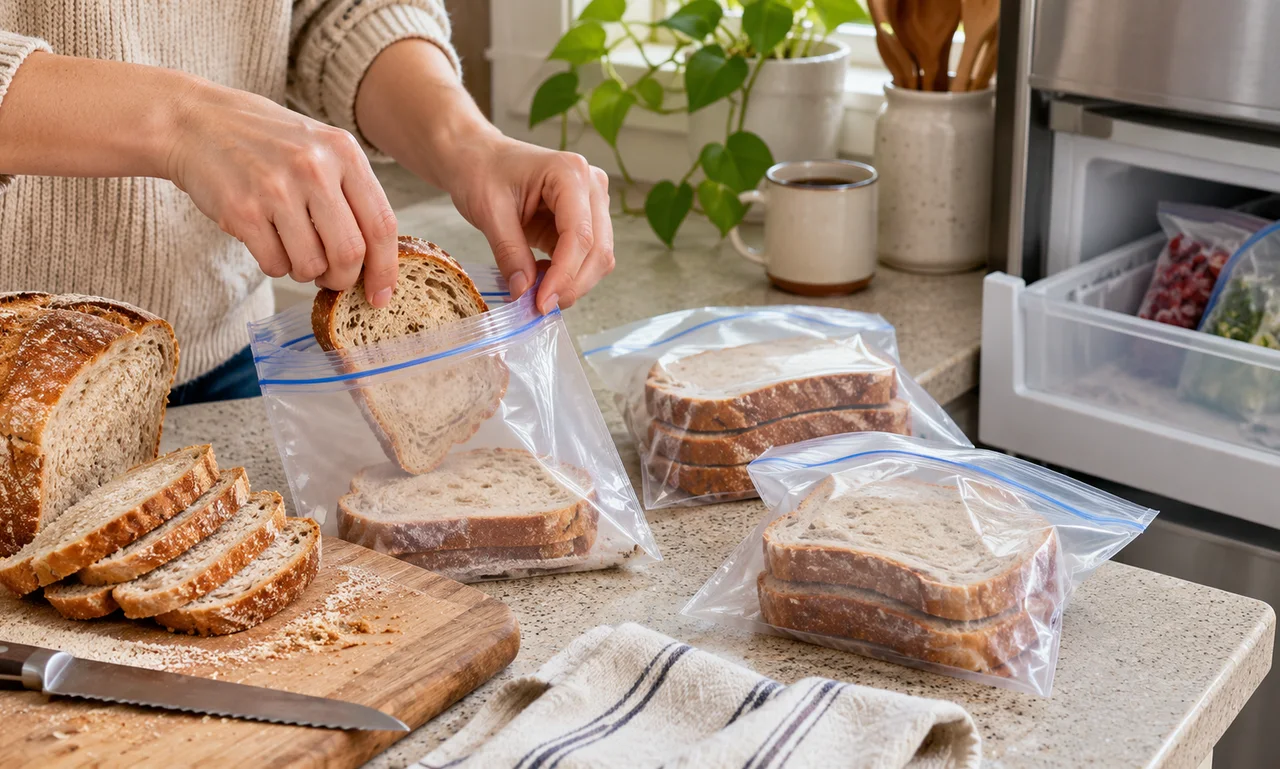
Separate slices with suitable freezer paper when they are likely to stick together, or divide the loaf into portions sized for one meal. Use clean freezer-safe packaging and remove excess air without crushing the bread.
Label the package with the item and freezing date. A clear label prevents an unmarked bundle from being overlooked at the back of the freezer.
Keep the freezer at the recommended temperature and place the bread where it will not be compressed by heavier food. Reuse appropriate packaging only when it remains clean, intact and suitable for freezer storage.
Bring back only what is needed
Remove one portion at a time and thaw or toast it using a safe method suited to the bread and appliance. Keep the remaining slices frozen instead of repeatedly warming and cooling the whole loaf.
Notice which portion size works. If half a loaf is still too much, make smaller packs next time; if single slices create needless wrapping, group them by breakfast or meal.
The useful habit happens before waste looks inevitable. A small decision on the first day gives the later slices a planned place instead of leaving them to become an afterthought.
About this article
An original everyday guide from Everyday News. It offers practical ideas and perspective rather than firsthand reporting.

