Look at what remains
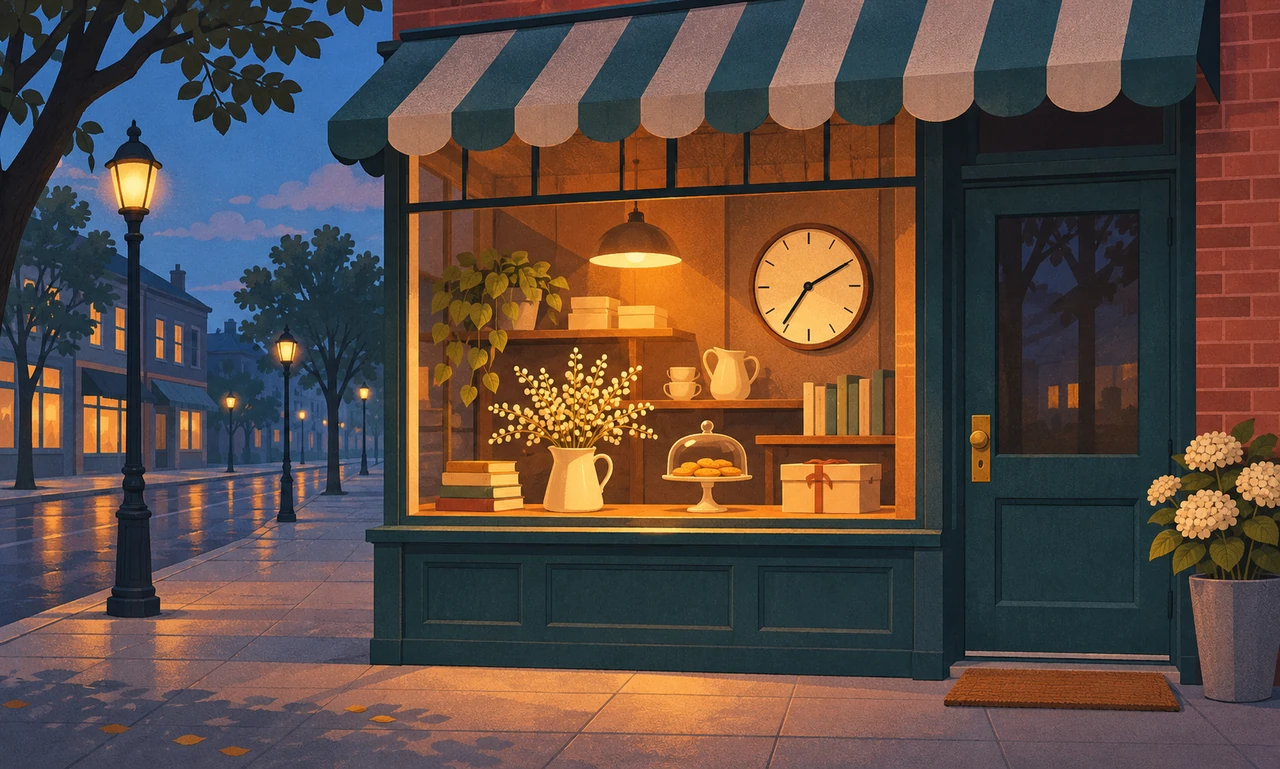
A storefront changes when business ends. The exchange at the counter stops, the door closes and the pavement outside becomes more visible. Yet the window still holds objects, light and clues about when the room will become active again.
Walk past a familiar shop after closing and notice only what is publicly visible. Opening hours, a changed display or a light left on can make the street legible without revealing anything private. The glass also reflects traffic, trees and people moving beyond the shop, briefly layering the street over the room inside.
Observation should remain respectful. Do not peer into private areas, photograph identifiable people without permission or treat security arrangements as visual entertainment. The point is to understand the public edge of the building, not to examine what was meant to be closed away.
Notice how light marks the hour
At dusk, an illuminated window can become a small landmark. Later, when the display darkens, the same frontage may recede into the block. Streetlights, neighbouring businesses and passing vehicles change the scene again without the shop itself moving.
Light does not automatically make a place safe or welcoming, and darkness does not prove the opposite. Those judgments require more than one person’s impression. What can be described is the pattern: where light falls, which signs remain readable and how the route looks at a particular time.
Date the observation if you write it down. Seasons, changing hours and temporary displays matter. A winter evening and a summer evening may present the same storefront at very different moments in its daily cycle.
Read the window as a promise to return
A closed shop still communicates with tomorrow. Hours tell a visitor when to come back. A display suggests what will be available. A note may explain a holiday, repair or change of routine. Even without a message, an orderly window can connect the finished day to the next opening.
That continuity is easy to overlook when streets are described only by daytime activity. After closing, storefronts continue to shape routes, landmarks and expectations. Their public face remains part of the neighbourhood’s visual memory.
The next time you pass a locked door, notice the window before deciding that nothing is happening. A business has paused, but the street continues. In the glass, one day’s work meets the evening around it and leaves a quiet indication that the room will have another hour.
About this article
An original perspective from Everyday News. It offers practical ideas and perspective rather than firsthand reporting.

