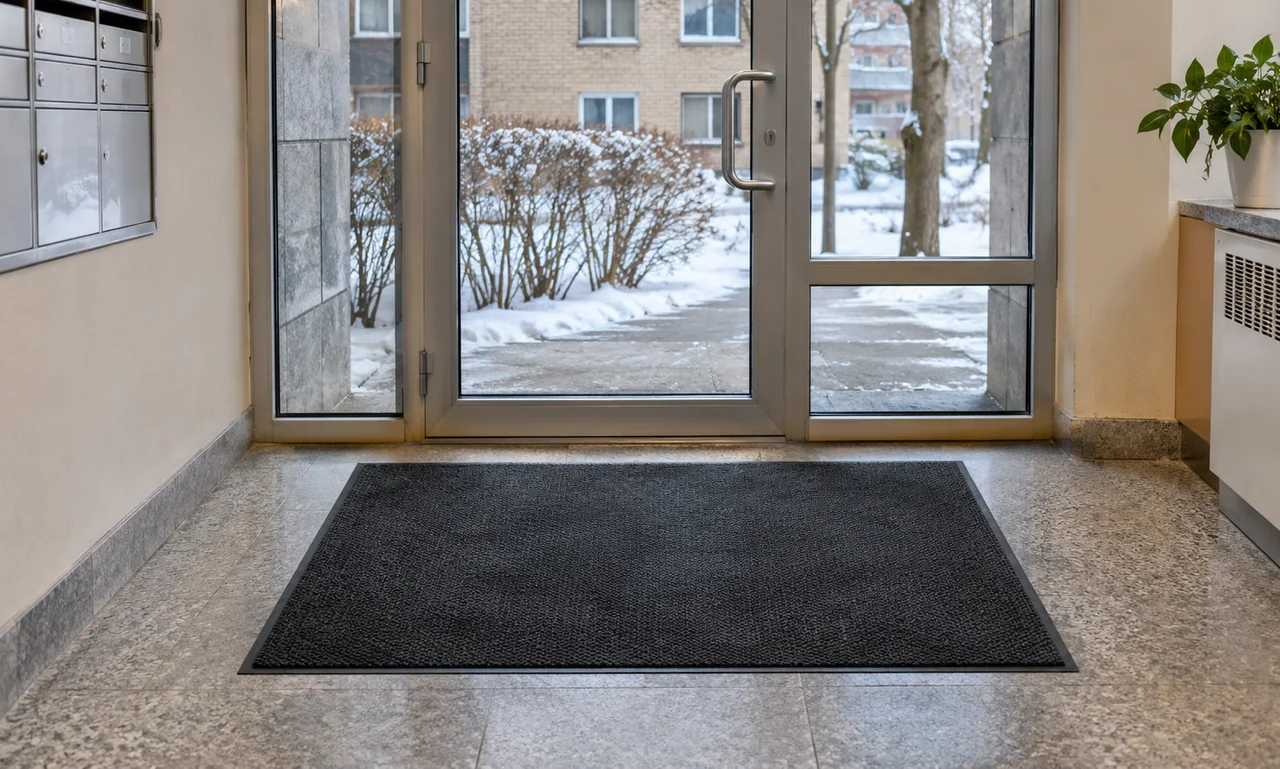
See the mat as part of the entrance
An entry mat has a practical job: it collects water, grit and snow before those materials travel farther into a building. Its position, size and condition affect how safely the doorway works.
Keep the mat fully inside the area chosen by building staff and away from the door swing, threshold and any accessible control. An oversized or misplaced mat can turn a useful surface into an obstruction.
Do not add a personal rug to a shared entrance without permission. Fire, accessibility and cleaning requirements may determine which products can be used and where they belong.
Keep every edge predictable
Look for curled corners, gaps, folds and movement underfoot. A mat that slides or rises above the floor can catch a shoe, cane, walker or wheel.
Avoid leaving parcels, umbrellas, boots or signs on top of the mat. People need enough clear space to enter, pause and continue without steering around temporary storage.
Water that pools beyond the mat should be reported or cleaned through the approved process. Adding towels, cardboard or another loose layer may create a second hazard rather than solve the first.
Report when the entrance outgrows the mat
A saturated, damaged or undersized mat may need replacement or more frequent service. Tell the responsible person what you observed, when it happens and which part of the route is affected.
Do not lift a heavy wet mat or use cleaning chemicals unless that task belongs to you and you have the right equipment. Keep others away from an immediate hazard while help is arranged.
The mat is small infrastructure. When it lies flat, stays clear and receives proper maintenance, it helps the entrance handle the weather without asking people to negotiate a new obstacle.
About this article
An original perspective from Everyday News. It offers practical ideas and perspective rather than firsthand reporting.

