Begin with the fixed elements
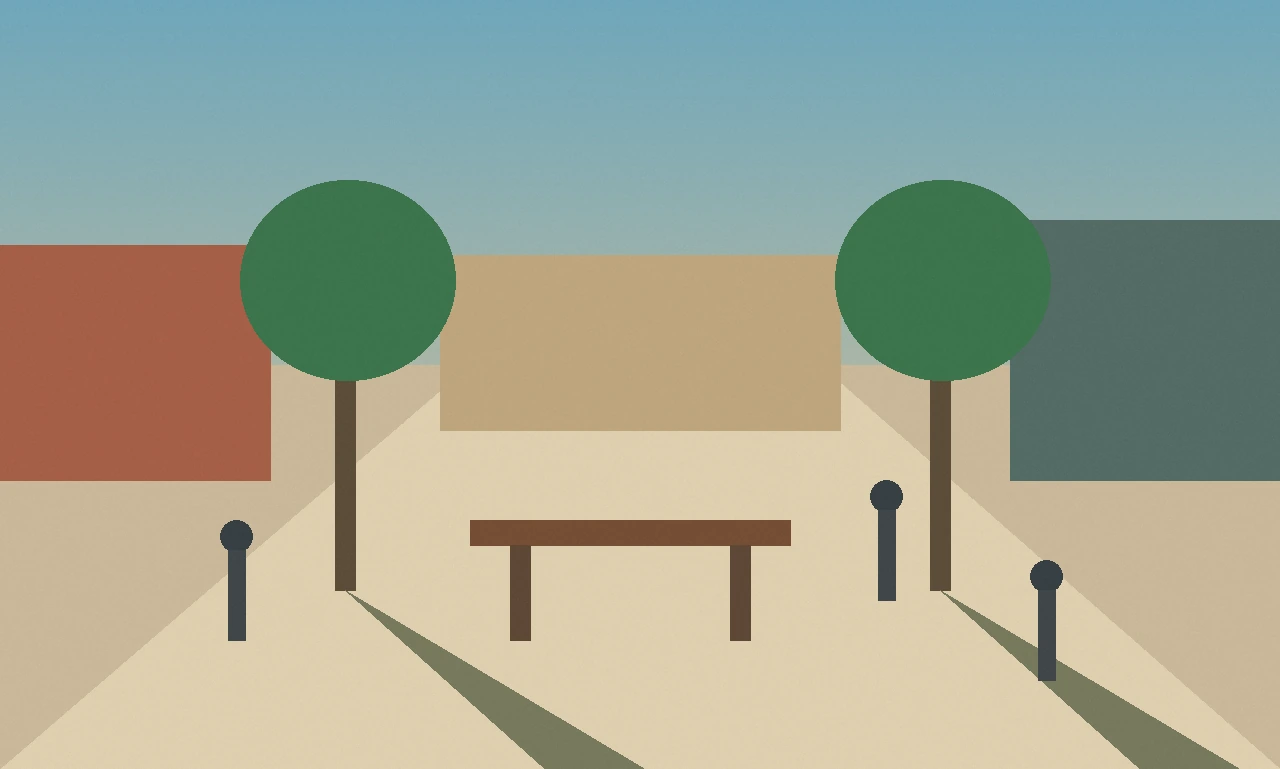
A public square may look stable on a map: an open surface, a few trees, paths, seats and surrounding buildings. Visit at different hours and the same arrangement becomes several different places.
Morning light may draw people to one edge. At midday, shade becomes more important. Later, shop closures, lighting and transit schedules change which routes feel active. The physical design stays mostly still while use shifts around it.
Observe from a respectful distance and avoid making assumptions about why particular people are present. The aim is to notice the relationship between time and space, not to turn strangers into subjects.
Notice what arrives and disappears
Temporary elements can shape the square as much as permanent ones. A market stall, maintenance vehicle, performance, queue or delivery may reorganise movement for an hour and vanish before the next visit.
Sound changes too. Traffic, conversation, music, birds and cleaning equipment may each dominate at a different time. A square that feels quiet in the morning can become a busy crossing in the afternoon without changing its basic layout.
Weather and season matter, so one day cannot represent the whole place. Date your observation and describe the conditions. Specific notes make comparison possible without pretending that a brief visit is a complete survey.
Ask which hour the design serves
A seat in full sun may be appealing on a cool morning and difficult to use later. A well-lit route may feel clear after dark, while another edge fades from view. Looking at several hours reveals strengths and gaps that a single visit can hide.
If you raise a maintenance or access concern, report the exact location, time and visible condition through the relevant channel. Separate a temporary obstruction from a repeated pattern and avoid technical conclusions you cannot establish.
The larger lesson is that public space is partly temporal. A square is not only where it is; it is also when it is. Returning at another hour can make a familiar place new, not because the stones moved, but because the life around them did.
About this article
An original perspective from Everyday News. It offers practical ideas and perspective rather than firsthand reporting.

