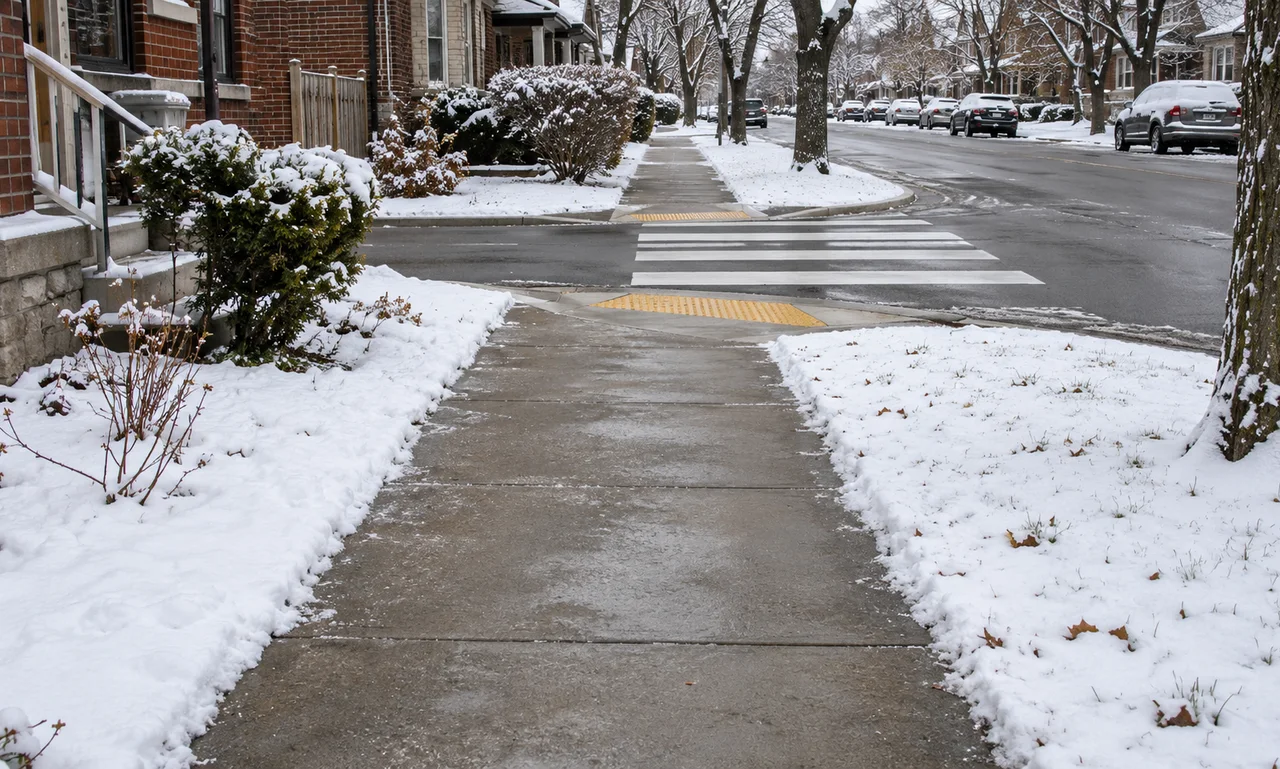
Follow the route beyond the property line
Winter clearing is often judged from the nearest doorway, yet a walking trip continues toward a neighbour, transit stop, shop or crossing. Look at how the cleared section connects with the next part of the public route.
Keep the sidewalk’s usable width open and preserve the approach to curb ramps, pedestrian buttons and building entrances. A pile placed at the corner can undo the value of a carefully cleared path.
Follow local snow-clearing rules and property responsibilities. Do not move snow into the road, bicycle lane, another property or a place that blocks drainage and visibility.
Avoid the ridge at the end
Plows and repeated shovelling can create a dense ridge where the sidewalk meets the street. That final barrier may be difficult for a wheelchair, walker, stroller or person with limited balance to cross.
Clear only when the task is safe, permitted and within your ability. Use appropriate tools, stable footwear and methods that do not require lifting more than you can manage.
Ice may remain after loose snow is removed. Apply approved materials carefully and follow local guidance, especially near pets, plants, concrete and waterways.
Report the gap in the network
When a public route remains blocked, report the exact location and describe whether the problem affects the sidewalk, curb ramp, crossing or access to transit. A clear description helps the responsible service understand the missing connection.
Do not enter traffic or climb a snowbank to document the issue. A location, direction of travel and view from a safe place are usually enough.
Winter access is a chain of short sections. The route works when each cleared piece meets the next one and the final metre reaches the crossing instead of ending at a wall of snow.
About this article
An original perspective from Everyday News. It offers practical ideas and perspective rather than firsthand reporting.

