Empty and open every part
A reusable bottle can look empty while moisture and residue remain around the threads, spout, straw or seal. After use, pour out what is left and take apart the removable pieces according to the maker’s instructions.
Check whether the bottle and lid are dishwasher-safe or require hand-washing. Materials, coatings and insulated constructions differ, so one cleaning method does not suit every bottle.
If the bottle held something other than drinking water, clean it promptly. Sugary drinks, milk and other beverages can leave residue in places that a quick rinse does not reach.
Wash the bottle, lid and seal
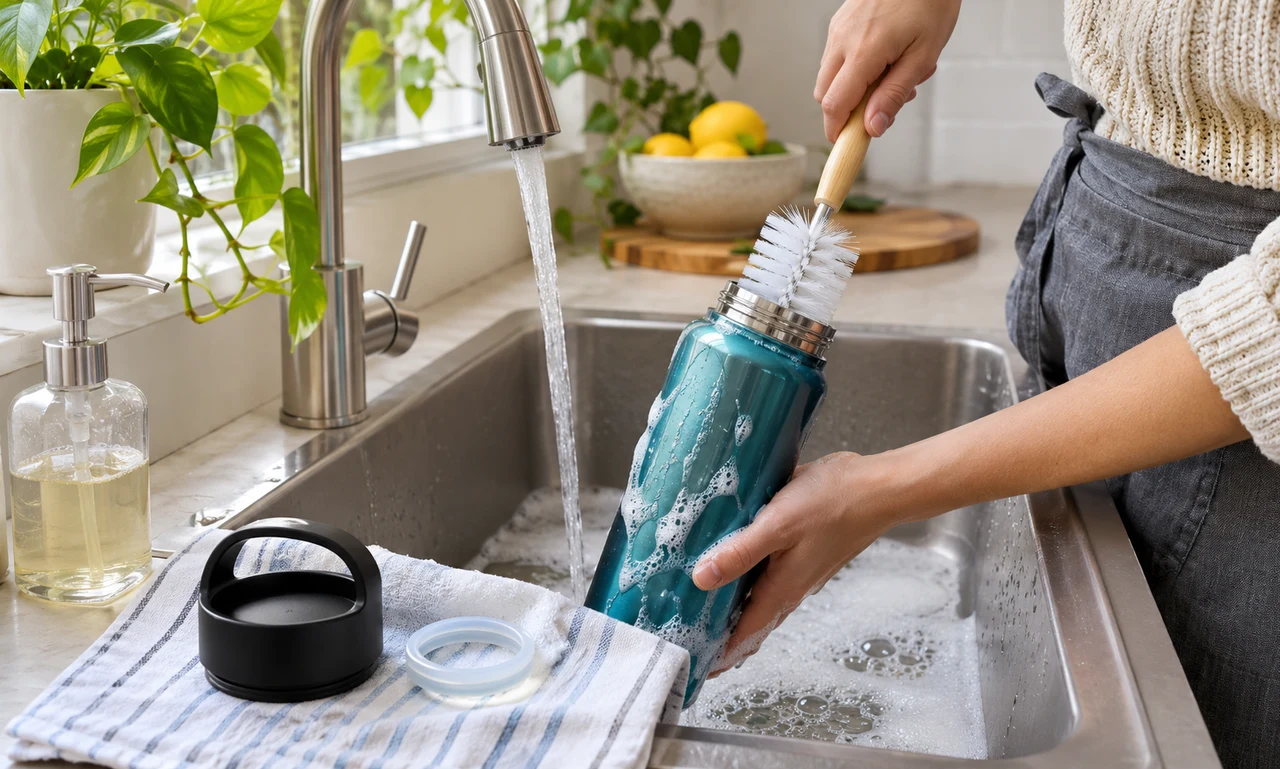
Use warm water, an appropriate dish soap and a clean bottle brush that reaches the base and sides. Wash the mouth, threads, lid, straw and removable seals separately, paying attention to narrow channels.
Rinse each part thoroughly. Avoid abrasive tools, extreme heat or harsh chemicals unless the manufacturer specifically approves them, because they can damage surfaces or leave the bottle unsuitable for use.
Look for persistent odour, residue, mould, cracks, corrosion or a damaged seal. Follow the maker’s advice for deeper cleaning or replacement rather than continuing to use a part that cannot be cleaned properly.
Dry fully before closing
Place the bottle and all parts on a clean rack with air able to circulate. Leave the lid off until the inside is fully dry; sealing damp pieces together can trap moisture and odour.
Store the bottle open or loosely assembled in a clean place. Before refilling, check that the brush, drying rack and hands are clean and that no small seal has been left behind.
Refill with safe drinking water and handle the mouthpiece with clean hands. The reusable choice works best as a repeating cycle: drink, empty, wash, dry and begin again with the whole bottle ready.
About this article
An original everyday guide from Everyday News. It offers practical ideas and perspective rather than firsthand reporting.

