Plan the future portion
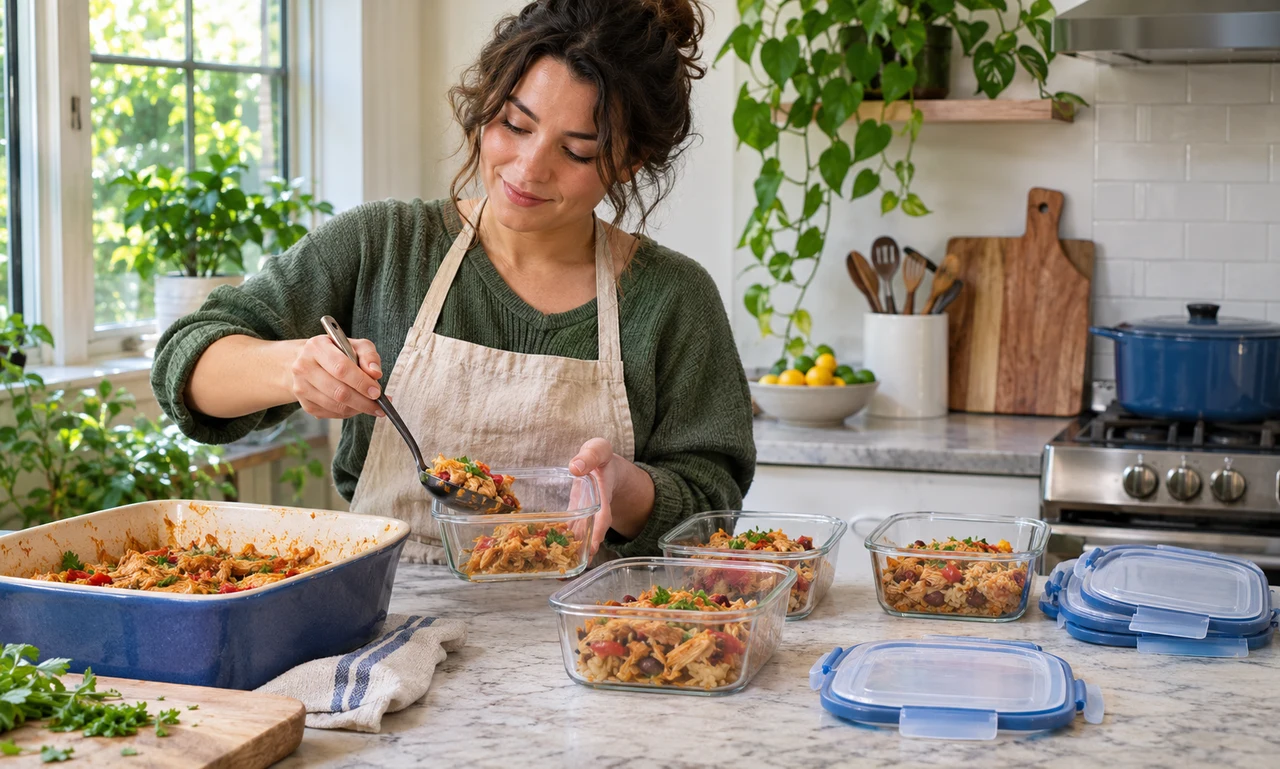
Before freezing a large batch, think about how it is likely to be used. One family meal, two lunches or several individual servings may need different container sizes.
Follow reliable food-safety guidance for cooling and storage times. Do not leave perishable food at room temperature longer than recommended, and use shallow containers when guidance calls for faster cooling.
Choose clean containers or freezer bags designed for the job. Leave appropriate space for foods that expand, and do not use damaged packaging that may leak or fail in the cold.
Label what the cold will hide
Write the food name and freezing date on the container with a freezer-suitable label or marker. Add a useful detail such as the number of servings when several packages look alike.
Remove unnecessary air where the packaging instructions allow it, close the seal fully and arrange portions so cold air can circulate. Follow the freezer maker’s guidance and keep the appliance at the recommended temperature.
Place newer portions behind or beneath older ones when practical. A simple first-in, first-out pattern makes forgotten food less likely.
Thaw only what the meal needs
Move the needed portion to a safe thawing method recommended by public-health guidance, such as the refrigerator. Methods and reheating requirements vary by food, so use advice appropriate to the dish.
Heat the portion thoroughly when required and avoid repeated cycles of warming and cooling. If there is uncertainty about how long food has been stored or whether it remained safely cold, discard it rather than guessing.
Portioning turns the freezer into a plan rather than a waiting room. The food is easier to identify, easier to use and less likely to be thawed in an amount no one needs.
About this article
An original everyday guide from Everyday News. It offers practical ideas and perspective rather than firsthand reporting.

