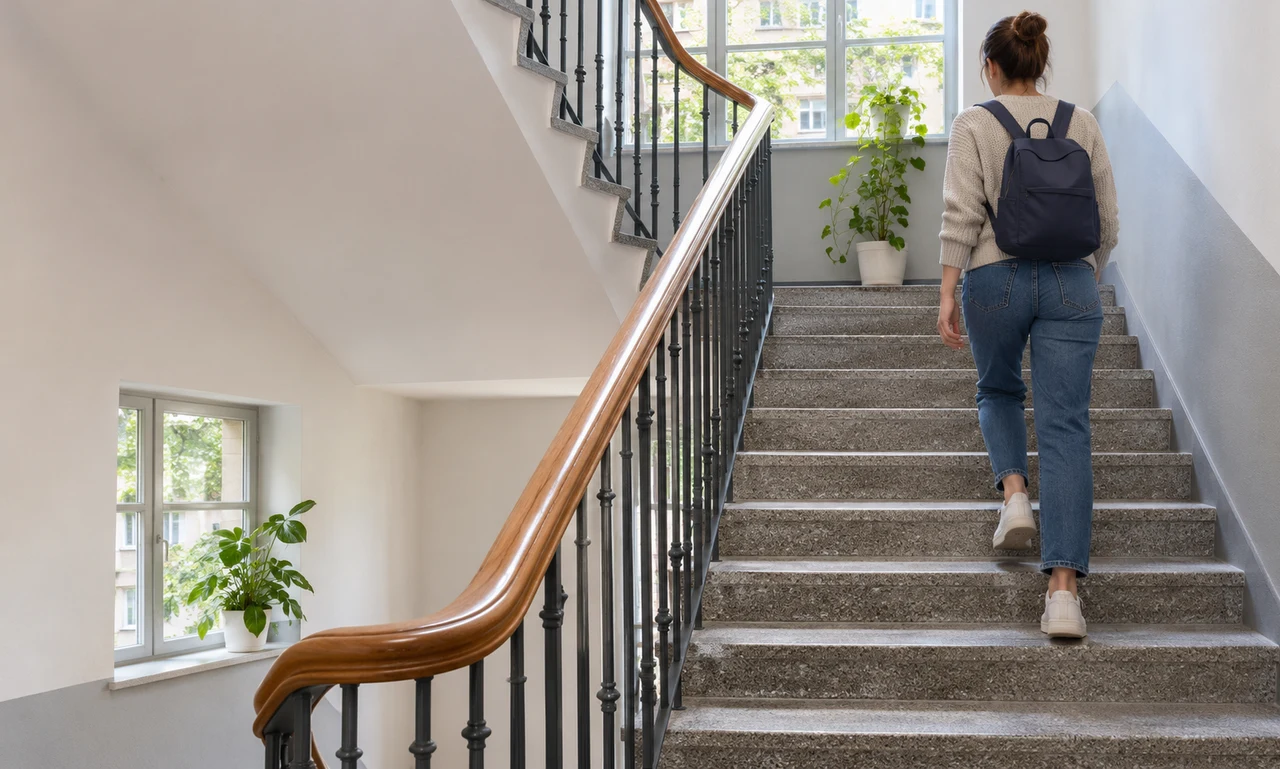
Treat the rail as working space
A handrail is not just part of the architecture. It is a support that someone may need at any moment for balance, direction or confidence on the stairs.
Keep bags, coats, cords and decorations off the rail. Even a light object can interrupt a person’s grip or make it harder to slide a hand along the full route.
Use the staircase at a pace that suits the conditions, and leave room for others to reach the rail. Follow posted building guidance about direction, passing and emergency routes.
Keep the route beside it usable
The steps, landing and approach to the rail should remain clear. Do not store parcels, footwear, bicycles or cleaning equipment where they narrow the route or create a trip hazard.
People use stairs differently. Some need more time, some use a cane, and some cannot use stairs at all. Keep accessible alternatives available and never move another person’s mobility aid without permission.
In a crowded moment, wait on a landing or another safe place rather than squeezing past. Courtesy is most useful when it protects both personal space and a reliable handhold.
Report damage instead of working around it
A loose bracket, sharp edge, unstable section or poor lighting deserves a prompt report to the property manager or responsible service. Give the exact location and describe what you observed.
Do not make an improvised repair or test a damaged rail with your full weight. Building components should be assessed and repaired by authorized people following applicable requirements.
The handrail is easy to overlook because it waits at the edge of the route. Keeping it clear preserves that quiet readiness for the next hand that reaches for it.
About this article
An original perspective from Everyday News. It offers practical ideas and perspective rather than firsthand reporting.

