Read the room before adding light
Natural light changes through the day, across seasons and from one window to another. Before switching on every fixture, notice which part of the room is already bright enough for the task at hand.
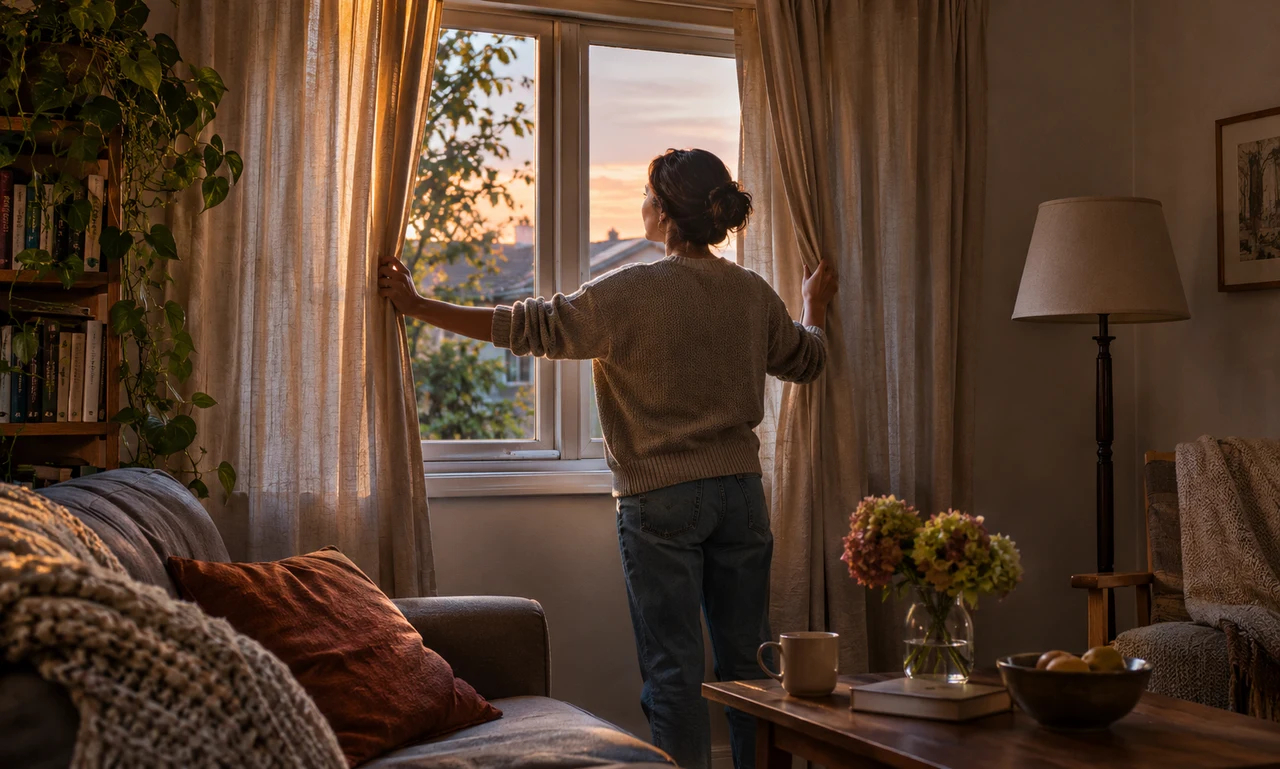
Open curtains or blinds when doing so improves visibility and privacy allows it. Move a chair, book or simple household task closer to useful daylight rather than forcing the whole room to be equally bright.
Daylight is not always sufficient. Detailed work, stairs, cooking areas and people with particular vision needs may require consistent artificial lighting. Comfort and safety come before a small energy saving.
Control glare, heat and privacy
A bright window can create glare on a screen or leave the rest of a room in deep shadow. Adjust the blind, change the screen angle or use a task light so the view remains comfortable instead of simply adding more overhead light.
Sunlight can also warm a room and fade fabrics or objects. In hot weather, shading may reduce unwanted heat; in cooler conditions, useful sun may be welcome. The best choice depends on orientation, season and the building.
At dusk, close coverings when indoor lighting would make the room visible from outside. Daylight use should not require giving up privacy or leaving a window treatment in a position that is difficult to operate safely.
Add only the light the evening needs
As daylight fades, turn on the fixture suited to the activity and location. A focused lamp may serve reading or desk work, while routes, kitchens and shared areas need broader, reliable illumination.
Use bulbs and fixtures that are compatible, in good condition and appropriate for the space. Electrical repairs and new installations should follow local requirements and be handled by qualified people when necessary.
The habit is not about sitting in a dim room. It is about recognizing a useful resource before replacing it. Let in the light that is available, shape it for comfort and add artificial light when the room actually needs it.
About this article
An original everyday guide from Everyday News. It offers practical ideas and perspective rather than firsthand reporting.

