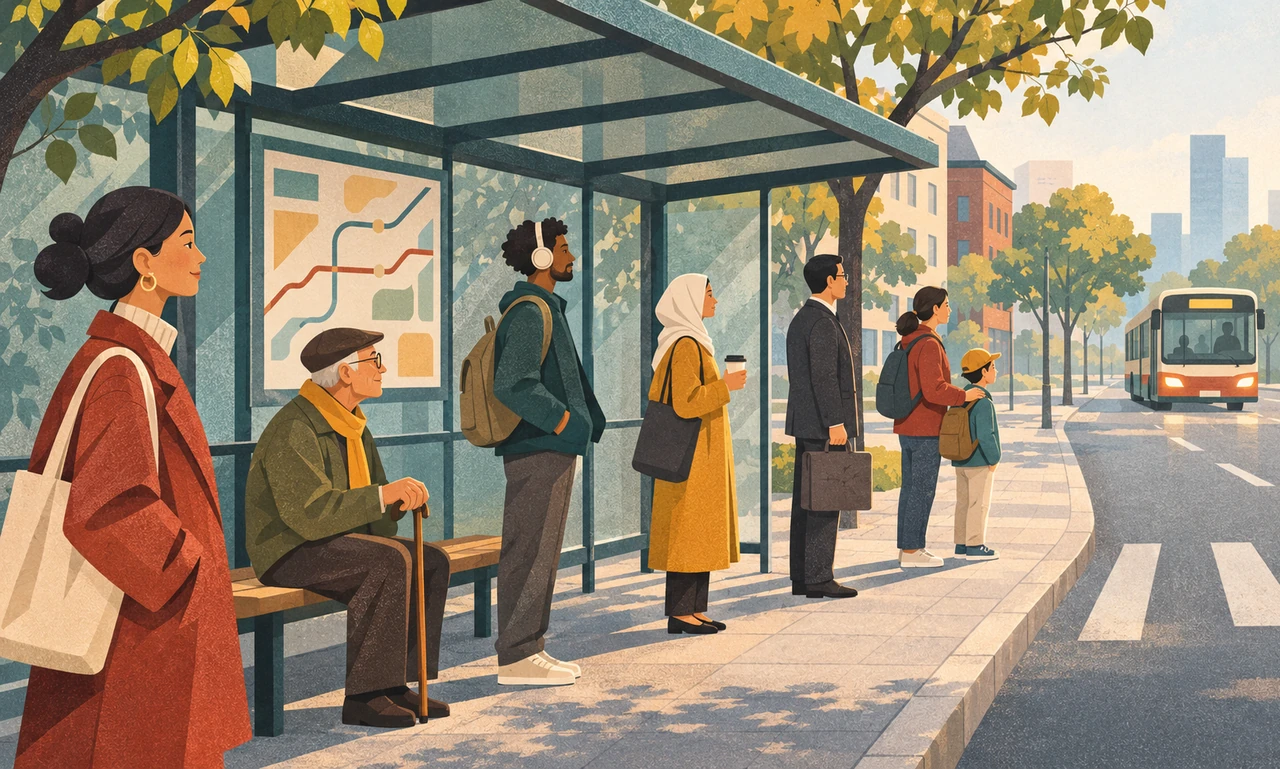
Begin with the shared purpose
A bus stop is designed around one simple expectation: people will arrive separately and leave together. Between those moments, strangers work out where to stand, how to leave a clear path and who was waiting first. Most of this coordination happens without a formal announcement.
Look at a familiar stop from a safe, ordinary position. Notice where the route information is placed, which direction the bus approaches and how people make room near the curb. A shelter, seat, pole and pavement edge may each serve a different part of the wait.
Do not assume every city or route follows the same boarding practice. Posted transit rules and instructions from staff take priority. The useful observation is not that one unwritten rule is universal, but that people constantly interpret a shared space together.
Leave room for different waits
Someone may need the seat, a clear approach to the bus or more time to board. A person with a stroller, luggage, a mobility aid or a small child may position themselves differently from someone travelling with only a phone in hand. Those choices do not necessarily indicate confusion or an attempt to move ahead.
Keep entrances, tactile surfaces and pedestrian routes clear. When the bus arrives, let passengers exit before filling the doorway, unless local staff direct otherwise. A small pause can prevent the whole group from pressing toward the same narrow point.
Weather changes the arrangement. On a rainy day, people may gather tightly under the shelter; in strong sun, they may wait farther away in shade. Courtesy has to adapt to the conditions rather than follow a perfect diagram.
Notice the order without policing it
An unwritten queue works through light signals: a glance, a step back, an offered place. It becomes less useful when one person treats themselves as the official monitor of everyone else. If the order is unclear, a calm question is usually more effective than an accusation.
Pay attention to the stop itself as well. Missing information, a blocked path or a damaged seat may make coordination harder. Report specific maintenance or access concerns through the transit agency’s published channel, including the stop number or exact location when available.
The bus stop is temporary public life. Its group forms, rearranges and disappears within minutes. What remains is a small neighbourhood habit: recognizing that other people’s journeys have equal claim on the same patch of pavement.
About this article
An original perspective from Everyday News. It offers practical ideas and perspective rather than firsthand reporting.

