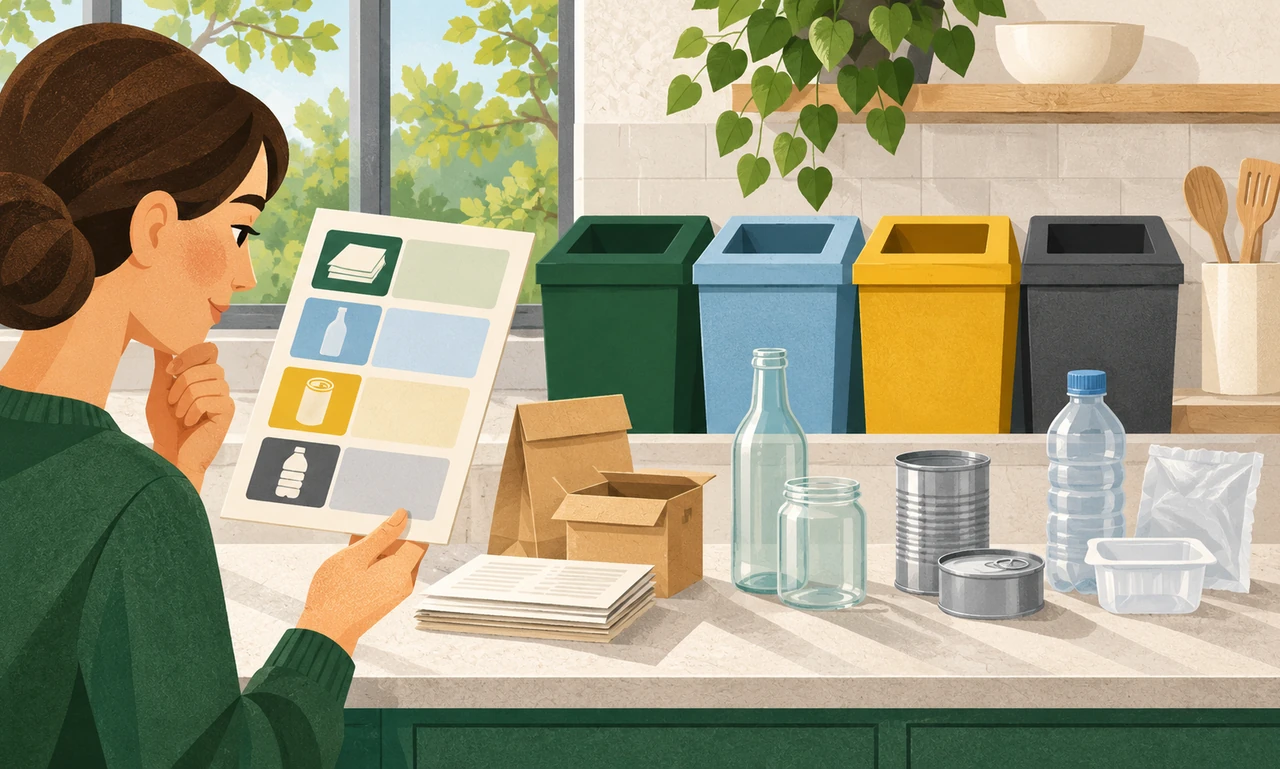
Start with the local guide
Packaging symbols can look like universal instructions, but collection programs differ by municipality, building and service provider. An item accepted in one place may be excluded somewhere else because sorting equipment, markets and contracts are different.
Find the current guide for your address or building before creating a household system. Check whether paper, glass, metal and plastics are collected together or separated, and whether flexible films, dark plastics or drink cartons have special instructions.
Use the most specific official information available. A general environmental article cannot establish the correct bin for every package, and rules can change. Save the guide where everyone who handles the waste can find it.
Prepare only as directed
Empty containers and follow local instructions about rinsing, lids and labels. More cleaning is not always more useful, particularly when it wastes hot water or the program does not require it. The goal is to meet the collection standard, not to invent a perfect ritual.
Keep food, liquids and materials named as contaminants out of the recycling stream. Do not place sharp, hazardous, pressurized, medical or electronic items in a household bin unless the responsible program explicitly accepts them there. These often require a separate drop-off or collection route.
When an item combines several materials, check whether the parts should be separated. If the guide does not answer the question, use the service’s published lookup or contact method rather than guessing from the package alone.
Make the correct choice easy
Label household bins with the categories used by the local program. Put a small “check first” container nearby for unfamiliar items so one uncertain package does not lead to rushed sorting.
Review the system when collection rules change or when a repeated mistake appears. A photograph of accepted materials or a short list near the bin can be easier to use than a long guide stored elsewhere. Keep the reference current and remove old instructions.
Sorting is only one part of a package’s life. Choosing reusable options, avoiding unnecessary packaging and using what you buy still matter. At the bin, however, accuracy is the useful task: follow the system that actually collects from your home.
About this article
An original everyday guide from Everyday News. It offers practical ideas and perspective rather than firsthand reporting.

