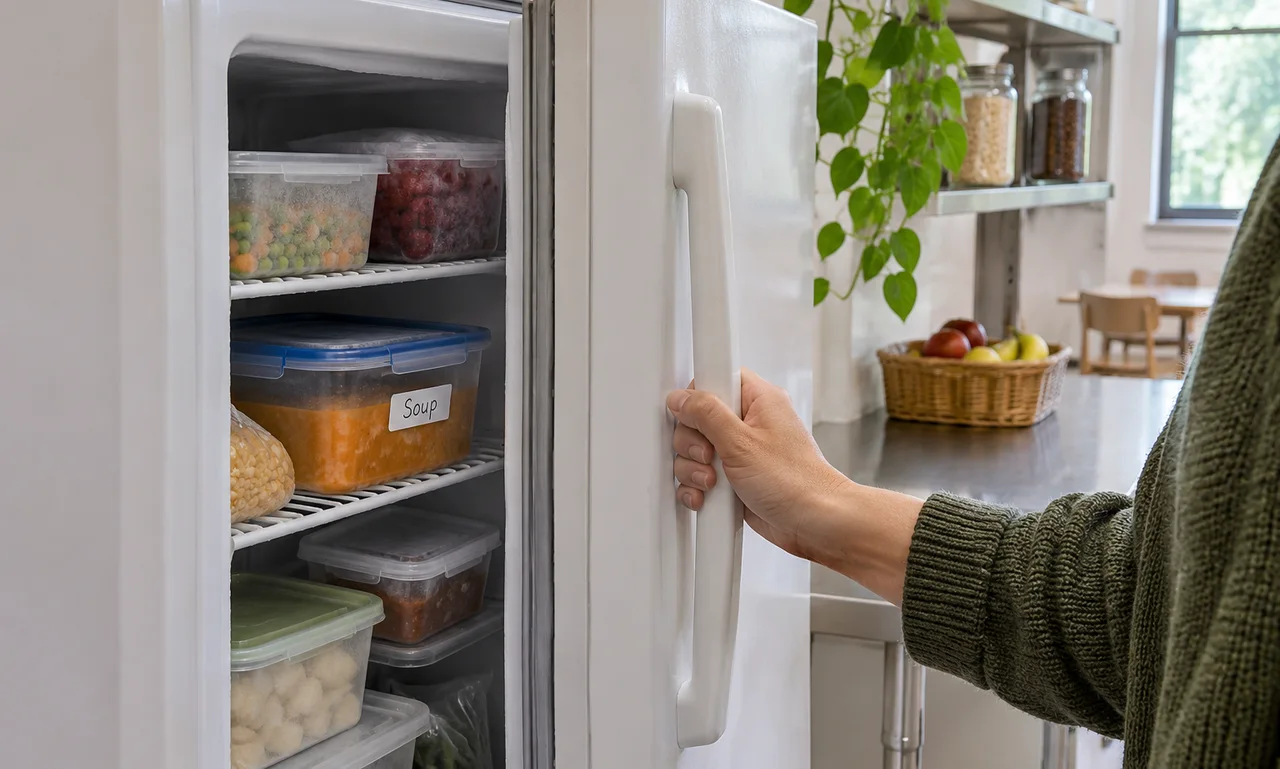
Load the shelf without blocking the door
Place food within the shelves, drawers or baskets designed for it. Keep packages away from the door edge, hinges and vents so the appliance can close and circulate cold air as intended.
Use containers suitable for freezing and label shared food according to the room’s rules. Do not overfill a shelf or force a large item into a space that prevents the drawer from returning fully.
Follow food-safety guidance for cooling, freezing and storage times. A closed door does not make food safe if it was handled or stored incorrectly before entering the freezer.
Pause for the seal
Close the door gently and watch or listen for it to settle against the frame. Some doors rebound when a package, drawer or ice buildup interferes with the seal.
If the door does not close, reopen it and find the obstruction rather than pushing harder. Move only your own items unless the shared-kitchen rules assign you responsibility for the whole appliance.
Keep the door open only as long as needed. Decide what to take out or put away before opening it, especially when several people share the freezer.
Report a door that will not stay shut
Tell the responsible person about a damaged gasket, loose hinge, warning light or repeated temperature problem. Do not adjust electrical parts or attempt an unauthorized appliance repair.
If food may have thawed or the safe temperature is uncertain, follow current food-safety guidance. Do not taste an item to decide whether it is safe, and respect ownership when a shared response is required.
The final check takes a moment: the drawer is in, nothing crosses the seal and the door stays closed. That small pause protects food, energy and the trust that makes a shared kitchen work.
About this article
An original everyday guide from Everyday News. It offers practical ideas and perspective rather than firsthand reporting.

