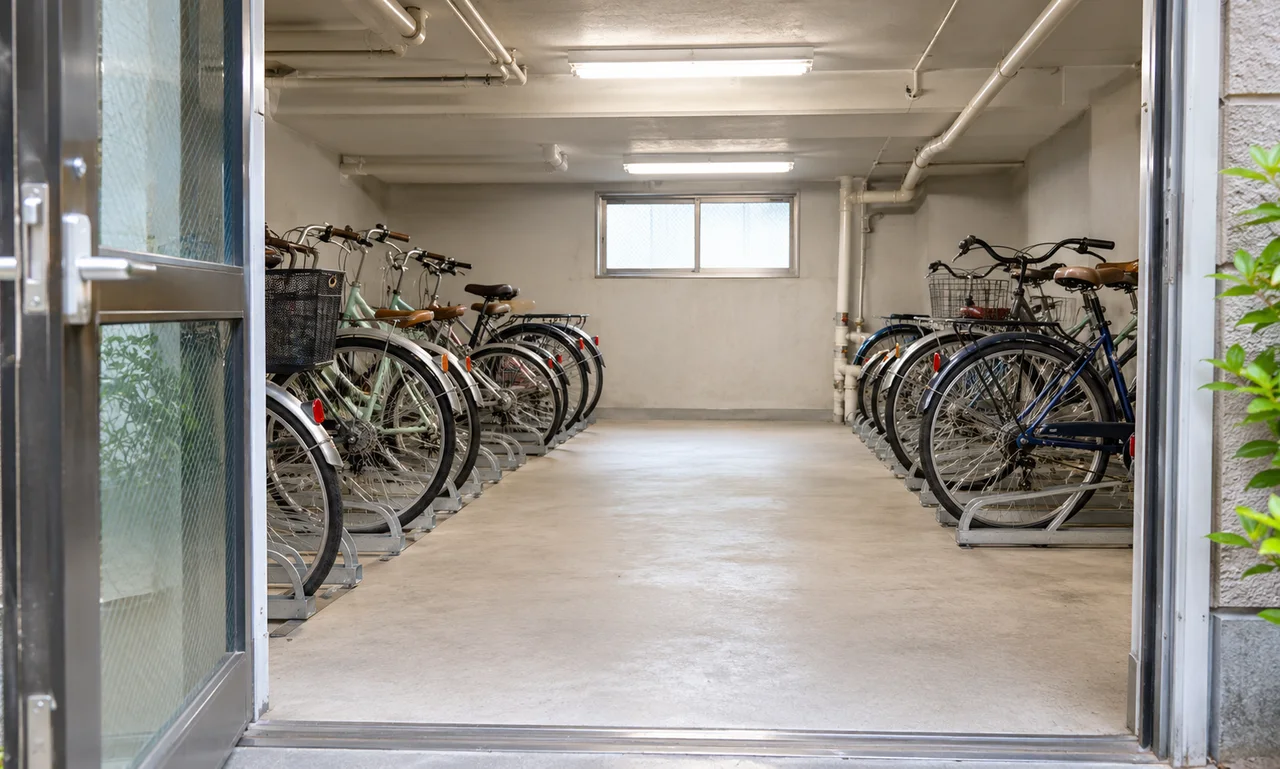
Protect the full doorway route
Park bicycles only in the racks, hooks or marked spaces provided. Keep the door swing, threshold and approach clear so people can enter while guiding a bicycle without turning sideways around loose equipment.
Do not leave trailers, scooters, boxes or detached wheels in the path. The required clearance may also support mobility, emergency access and building maintenance.
Follow the building’s fire, accessibility and storage rules. A space that looks unused may still need to remain open for equipment, utilities or safe movement.
Use the assigned storage correctly
Secure the bicycle to an approved rack without locking it to pipes, door hardware, railings or another bicycle. Position pedals and handlebars so they do not project into the walking line.
Take helmets, pumps and removable batteries to the place allowed by building policy. Battery charging and storage may have specific safety requirements that an ordinary outlet or shelf does not meet.
If the racks are full, report the capacity problem instead of improvising a space by the entrance. A recurring overflow needs a building-level solution rather than a series of narrow passages.
Leave room for the next arrival
Pause inside the room only long enough to lock, unlock or adjust the bicycle. Move away from the doorway before sorting a bag or checking a phone so another resident can pass.
Report abandoned bicycles, damaged racks or a door that does not close through the building’s established process. Do not remove, relocate or unlock someone else’s property on your own.
A bicycle room is both storage and a shared route. The racks hold the bicycles; the entrance stays open for everyone bringing one in or taking one out.
About this article
An original perspective from Everyday News. It offers practical ideas and perspective rather than firsthand reporting.

