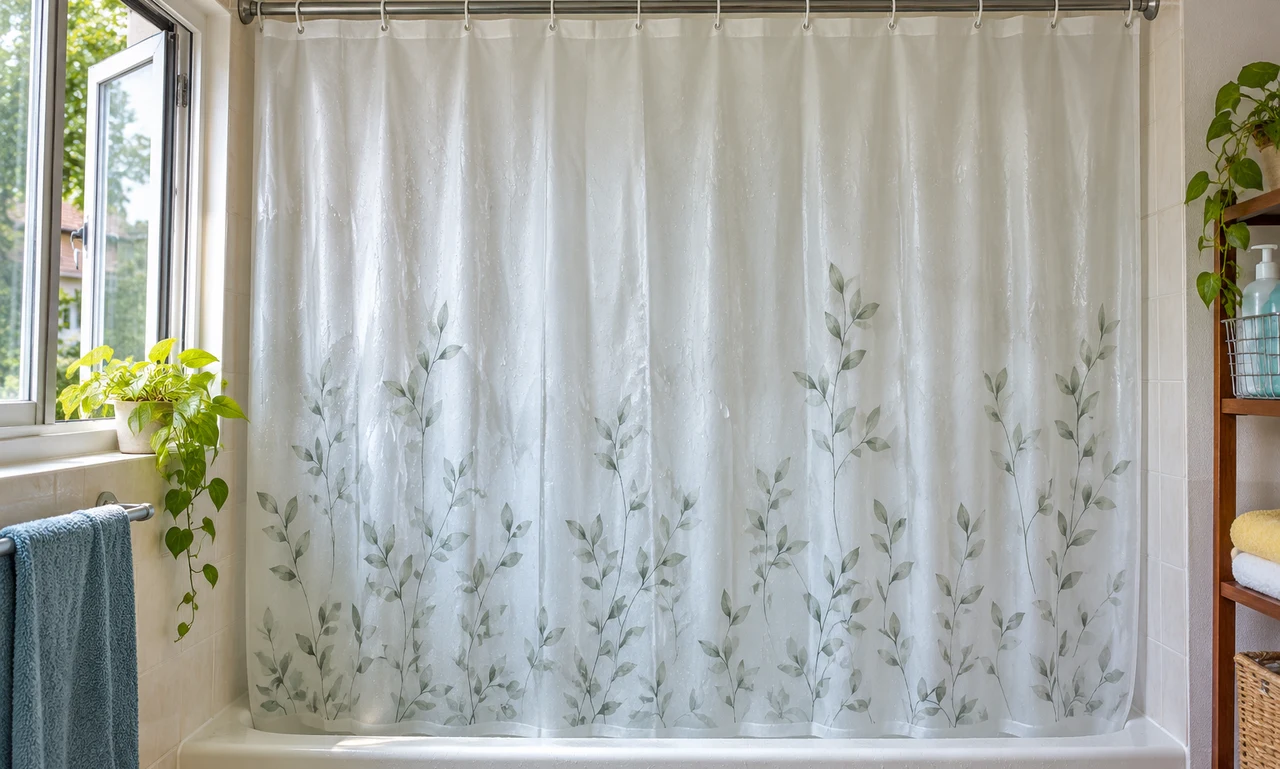
Finish with the curtain spread out
After the shower, pull the curtain across the length of the tub or shower area so wet surfaces are not bunched together. Keep the lower edge inside the tub until dripping has stopped.
Smooth the deepest folds without leaning on a wet wall or unstable fixture. Water on the floor should be wiped promptly to reduce a slipping hazard.
If the curtain has two layers, arrange them according to the product design so both can dry. Do not block a heater, vent or doorway with wet material.
Give moisture a route out
Use the bathroom fan or open an appropriate window when the room and weather allow. Follow building guidance and the fan maker’s instructions, especially in a shared or windowless space.
Leave the door in the position recommended for the room’s ventilation setup. A habit that moves damp air into another poorly ventilated area may simply relocate the problem.
Hang wet towels separately rather than pressing them against the curtain. Air needs access to each surface if drying is to happen efficiently.
Clean before residue builds up
Follow the care label for the curtain and liner. Some can be machine washed, while others need gentle cleaning in place or replacement when damaged.
Inspect the lower edge, seams, rings and nearby sealant for persistent residue or deterioration. Use suitable products as directed, never mix cleaning chemicals and keep the area ventilated.
The routine is brief: spread, ventilate and let the surfaces dry. It helps a reusable bathroom fitting stay ready for the next shower without requiring a new product or an elaborate system.
About this article
An original everyday guide from Everyday News. It offers practical ideas and perspective rather than firsthand reporting.

