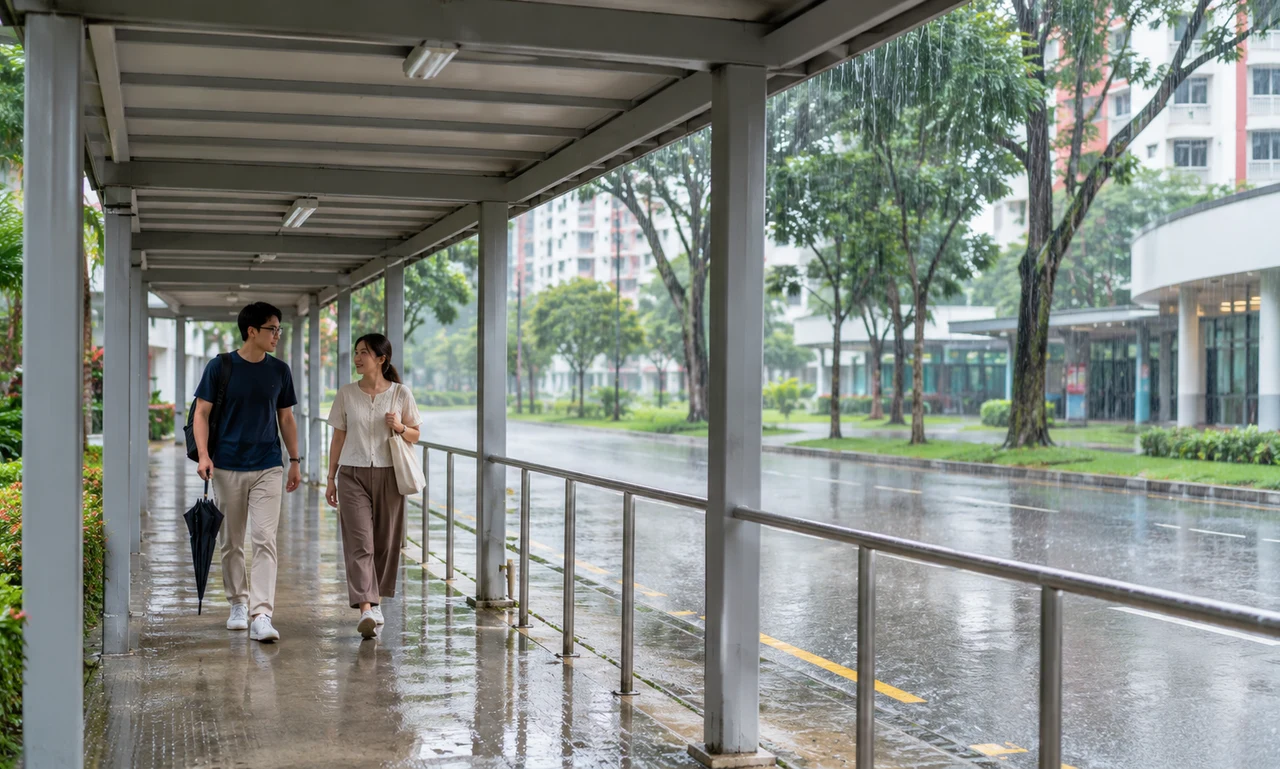
Notice where the shelter begins
A covered walkway creates a clear transition. One step is exposed to rain and the next is protected, while wind and water may still enter from the sides. That boundary affects where people pause, open an umbrella or adjust what they are carrying.
Keep moving areas clear near the entrance to the shelter. A cluster of people waiting just inside can narrow the route for someone using a stroller, cart, wheelchair or mobility aid.
The roof does not guarantee a dry surface. Water can blow inward, drip from an edge or collect where the pavement changes level. Walk at a pace suited to the conditions and follow any posted guidance.
Share the narrowest part
Covered routes often connect entrances, transit stops or parking areas, so people may be moving in both directions. Keep to the expected side where local practice or markings make that clear, and leave enough room to pass without forcing someone into the rain.
Close umbrellas before entering only when there is space to do so safely. Hold the wet canopy away from other people, and use a stand or drainage area when the building provides one.
Do not leave bags, bicycles or delivery items in the protected path. Shelter is useful because it keeps a continuous route available, not because it creates a convenient storage edge.
Read the rain at both ends
The pavement beyond the roof may be wetter, brighter or more slippery than the covered section. Pause before stepping into vehicle traffic or across a driveway, but do so to one side of the main walking line.
Report leaks, blocked drains, damaged lighting or pooled water through the responsible property or public-service channel. Describe the exact location and visible condition rather than guessing at the cause.
A covered walkway does not remove the weather. It organizes an encounter with it. The route becomes a sequence of exposure and shelter, and considerate movement helps each person use both parts safely.
About this article
An original perspective from Everyday News. It offers practical ideas and perspective rather than firsthand reporting.

