Rinse away the task
After using a reusable cloth, follow the product and cleaning-material instructions. Rinse it when appropriate and remove debris while wearing any protection the task requires.
Do not combine cloths used for incompatible chemicals, food areas, bathrooms or other specialized jobs. Separate them according to household or workplace hygiene guidance.
If a cloth contacted hazardous material, bodily fluids or something outside ordinary household cleaning, use the specific disposal or laundering procedure rather than treating it as routine laundry.
Spread the cloth where air can reach it
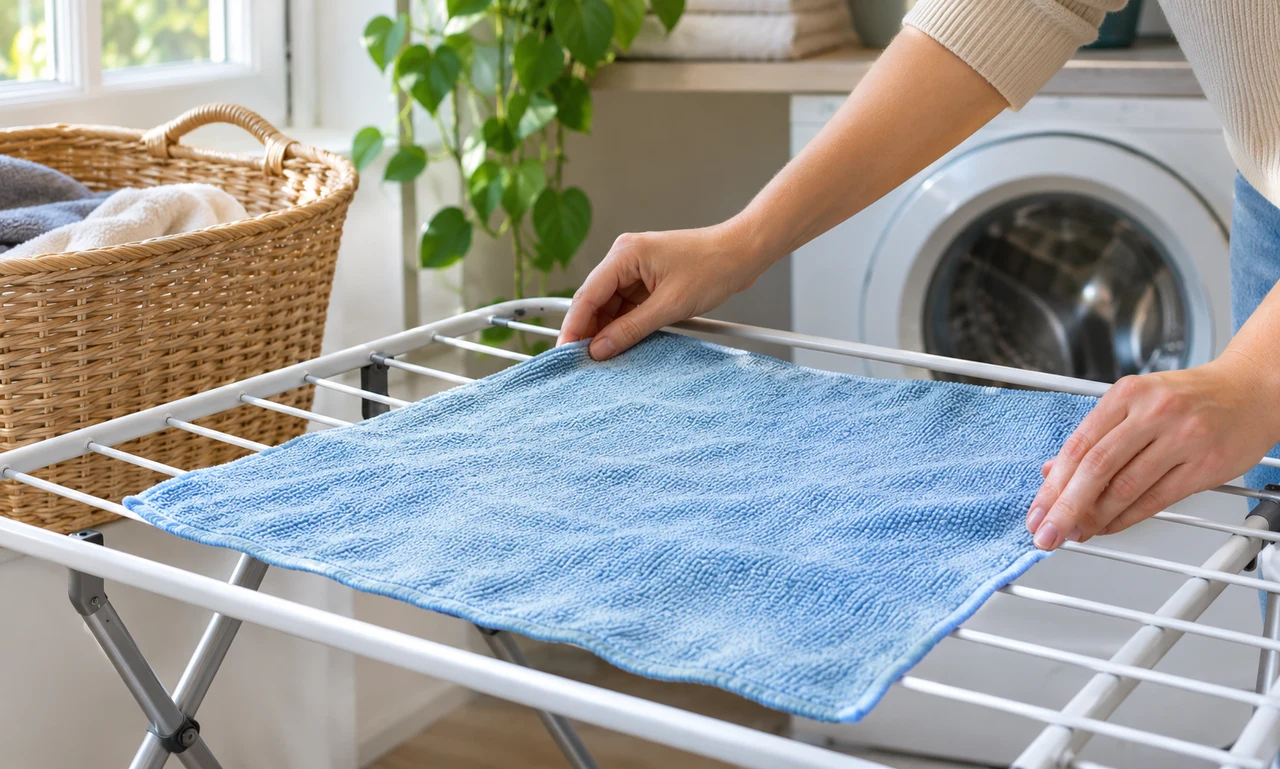
Open the cloth fully and place it on a suitable rack, hook or line with space around it. Keep it away from food preparation, heat sources and places where drips could create a slip hazard.
Do not leave the damp cloth bunched in a sink, bucket or closed basket. Trapped moisture can create odour and make the whole laundry load damp.
Choose a drying place that children and pets cannot disturb, especially when cleaning products may remain. Ventilate the area according to product instructions.
Wash and store it for the next use
Once dry, place the cloth in its designated laundry container and wash it using suitable detergent, temperature and cycle guidance. Some materials have limits that should be checked before hot washing or machine drying.
Inspect for residue, damage or persistent odour. Retire a cloth that can no longer be cleaned effectively, and follow local waste guidance for the material.
The sequence is simple: finish the job, rinse safely, dry openly and then collect for washing. It keeps a reusable tool ready for another cycle without carrying unnecessary moisture into storage.
About this article
An original everyday guide from Everyday News. It offers practical ideas and perspective rather than firsthand reporting.

