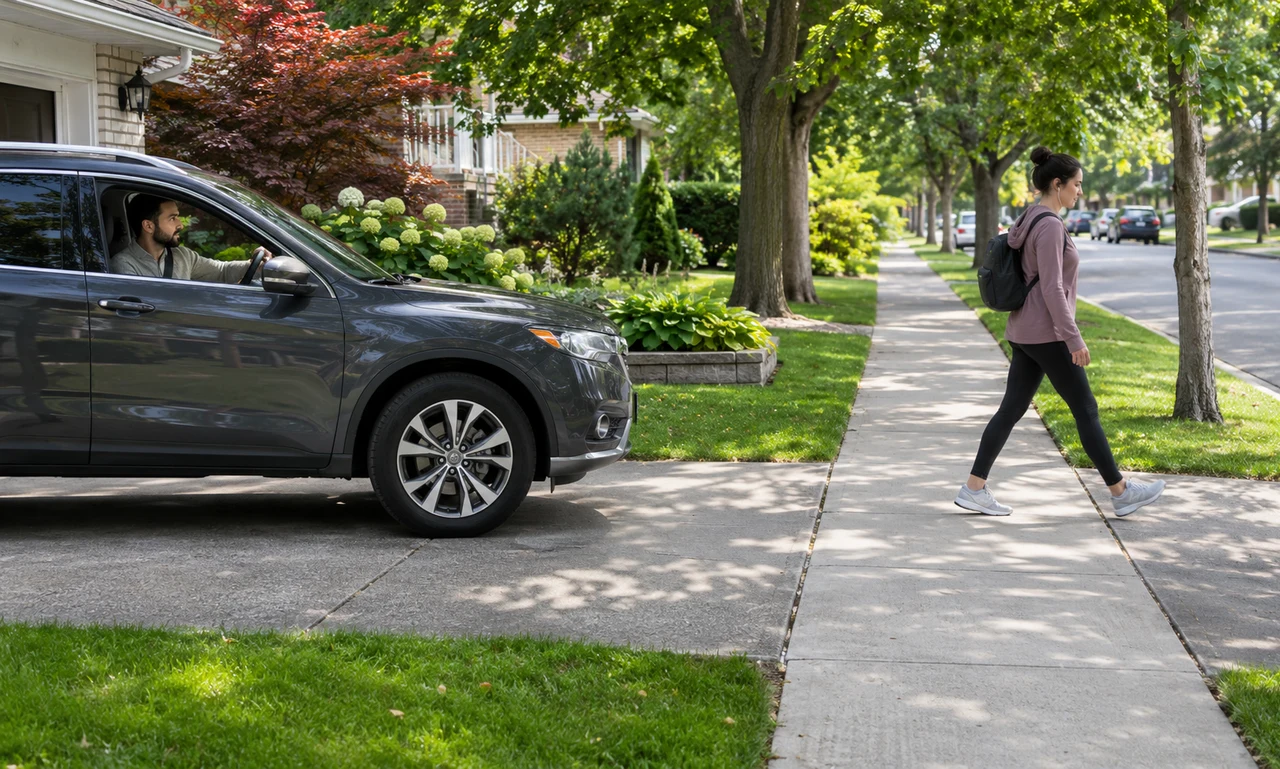
Treat the sidewalk as a route of its own
A driveway may belong to a home or business, but the sidewalk crossing it continues to serve people walking, rolling and moving along the street. The overlap does not erase that route.
Drivers should follow local laws, stop as required and check in every direction before crossing. A hedge, parked vehicle, wall or weather condition can hide a person who is already close.
Pedestrians should stay attentive without being expected to surrender the route. Eye contact can help, but it is not a substitute for the duties set by traffic rules.
Keep sight lines and pavement clear
Do not store bins, signs, snow or landscaping where they block the view between the driveway and sidewalk. Keep parked vehicles within permitted areas and away from the pedestrian path.
Property owners should maintain the crossing according to local requirements and report hazards they do not control. Uneven pavement, ice and poor drainage can affect both wheels and feet.
People use sidewalks at different speeds and heights. Children, wheelchair users and someone with a cane may be harder to see from a driver’s seat, especially when reversing.
Cross one route before joining another
A driver leaving a property should clear the sidewalk only when there is room to continue, rather than waiting across it for a gap in road traffic. The walking route should not become a holding space.
Use mirrors and cameras as aids, not as replacements for direct observation. If visibility is severely limited, follow local guidance and use a safe spotter when appropriate.
The driveway looks ordinary because the crossing happens many times. That repetition is exactly why the habit matters: slow down, look fully and preserve the sidewalk as a continuous public route.
About this article
An original perspective from Everyday News. It offers practical ideas and perspective rather than firsthand reporting.

