Choose the right place for the leaves
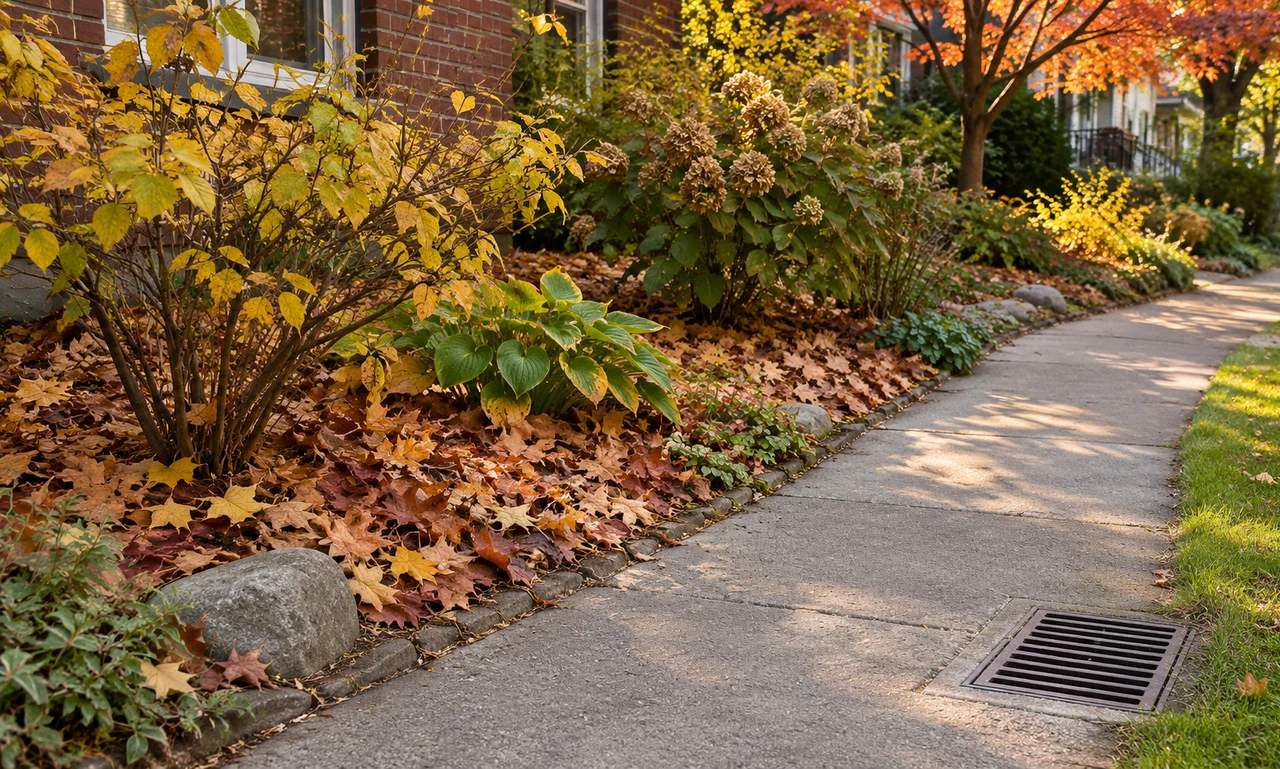
Fallen leaves are part of a seasonal cycle. In a garden bed or beneath established shrubs, a modest layer can cover bare soil, hold moisture and create habitat for insects and other small organisms.
The same leaves can cause problems in the wrong place. Keep sidewalks, steps, ramps, roadways and building entrances clear, especially when wet leaves become slippery. Remove leaves from storm drains and drainage channels so water can move as designed.
Follow local collection rules, property agreements and fire guidance. Some areas require leaves to be bagged or moved from curbs on particular dates, while others support mulching or municipal compost collection.
Use a light layer, not a sealed mat
Move suitable leaves into planting areas without piling them against doors, vents, tree trunks or the stems of sensitive plants. A thick, compressed layer can hold too much moisture, reduce airflow or hide hazards.
Shredding leaves with appropriate garden equipment can help them settle and break down, but use tools only as directed and keep people, pets, stones and debris away from moving blades. Dry leaves may be dusty; consider conditions and personal sensitivities.
Do not keep leaves that are contaminated with litter, road salt, animal waste or an identified plant disease. Use the disposal or collection method recommended by the responsible local service.
Check the bed as the season changes
Wind and rain will move a leaf layer. Recheck nearby paths, drains and entrances after strong weather, and return scattered leaves to a suitable place or collect them according to local rules.
In spring, observe how the bed is responding. Some leaves may have broken down into the soil surface; a heavy remaining layer may need to be loosened or reduced around emerging plants. Garden needs vary by site and species.
Leaving leaves is not the same as neglecting the space. It is a selective form of care: keep public routes safe, place clean material where it can serve the soil and continue watching as the season changes.
About this article
An original everyday guide from Everyday News. It offers practical ideas and perspective rather than firsthand reporting.

