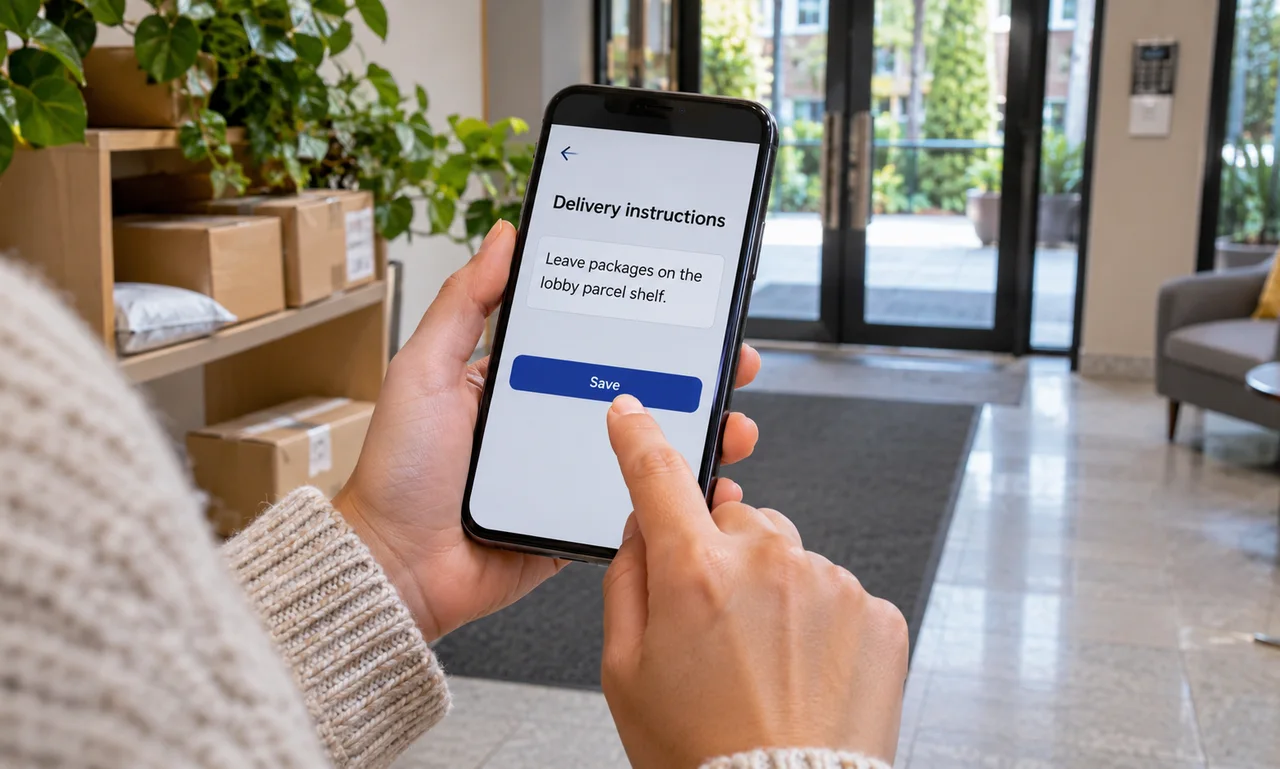
Write only what the delivery needs
Use the order or account field intended for delivery notes, and keep the instruction short. Include the approved entrance, buzzer method or handoff location without adding unrelated personal details.
Do not share door codes, hidden keys or building access information unless the property rules and delivery process specifically allow it. Choose a staffed or public handoff point when that is the safer option.
Accessibility requests should be clear and practical. If a service cannot support the needed handoff, contact it through an official channel before the delivery rather than relying on a long note.
Remove directions that are no longer true
Review saved instructions after moving, changing entrances or finishing temporary construction. An old note can send a driver to a blocked door or disturb a neighbour who is no longer part of the handoff.
Keep the current instruction in the account or order being used instead of spreading different versions across text messages, profile notes and pasted comments. Confirm which field applies to the specific delivery.
Avoid copying sensitive details into a general profile if they are needed for only one order. Temporary information should remain temporary and be removed when the situation ends.
Make the handoff easy to recognize
Use the tracking information and expected window provided by the service. Keep the phone available when appropriate, but do not ask a driver to use an unsafe stopping place or ignore parking and building rules.
If a parcel goes to a shared shelf, locker or desk, use the address and recipient format the building requires. A correct unit or pickup name is more useful than a paragraph of improvised directions.
Good instructions reduce uncertainty for both sides of the door. One current note, one permitted route and one clear handoff point are usually enough.
About this article
An original everyday guide from Everyday News. It offers practical ideas and perspective rather than firsthand reporting.

