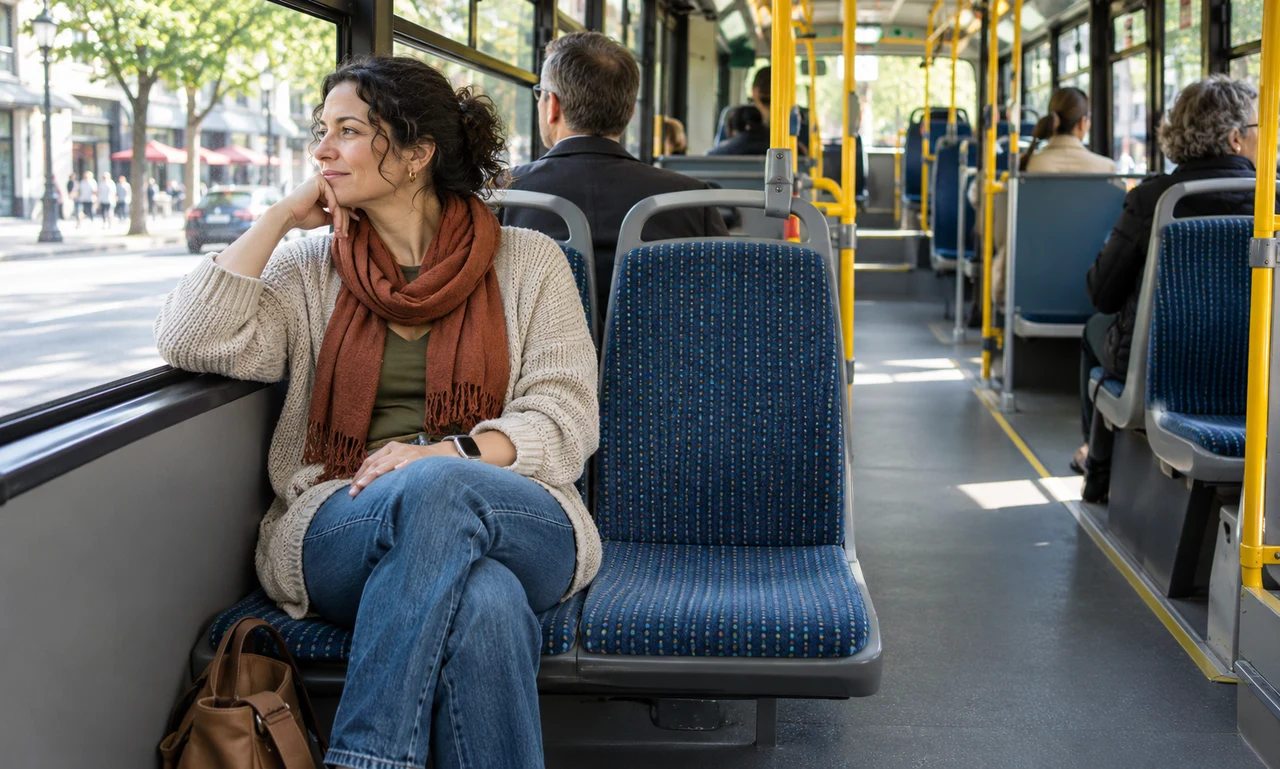
Notice what the seat offers
A window seat can turn an ordinary trip into a moving view of shops, trees, weather and familiar corners. It also places one passenger farther from the aisle, with another seat between them and the exit.
Choose the seat only when it suits your mobility and the length of the trip. Priority and accessible seating should remain available according to transit rules, and riders should follow instructions from the operator.
Keep hands, clothing and belongings inside the vehicle and away from windows or emergency equipment. The view is there to notice, not to photograph strangers or nearby homes without regard for privacy.
Keep the neighbouring space available
Place a bag on your lap, under the seat where permitted or in another designated location rather than using the adjacent seat when passengers need it. Keep straps out of the aisle so they do not catch a foot or mobility aid.
If another rider takes the aisle seat, acknowledge the shared space without expecting conversation. Headphones should stay at a considerate volume, and food, calls and other activities should follow the transit system’s rules.
Windows can bring sun, cold or glare. Use an available shade with care and speak politely if changing it affects someone else; equipment that is stuck or damaged should be reported, not forced.
Leave the row with care
Watch or listen for the stop information early enough to prepare without rushing. Gather belongings before standing, but remain seated until it is safe according to the vehicle’s movement and local guidance.
Ask the aisle passenger for room rather than climbing across or reaching over them. Allow extra time for crowded conditions, and use the bell or request control as directed by the transit service.
Check the seat and floor before leaving. The window offered a view for part of the route; leaving the row clear and available returns that small piece of the bus to the next passenger.
About this article
An original perspective from Everyday News. It offers practical ideas and perspective rather than firsthand reporting.

