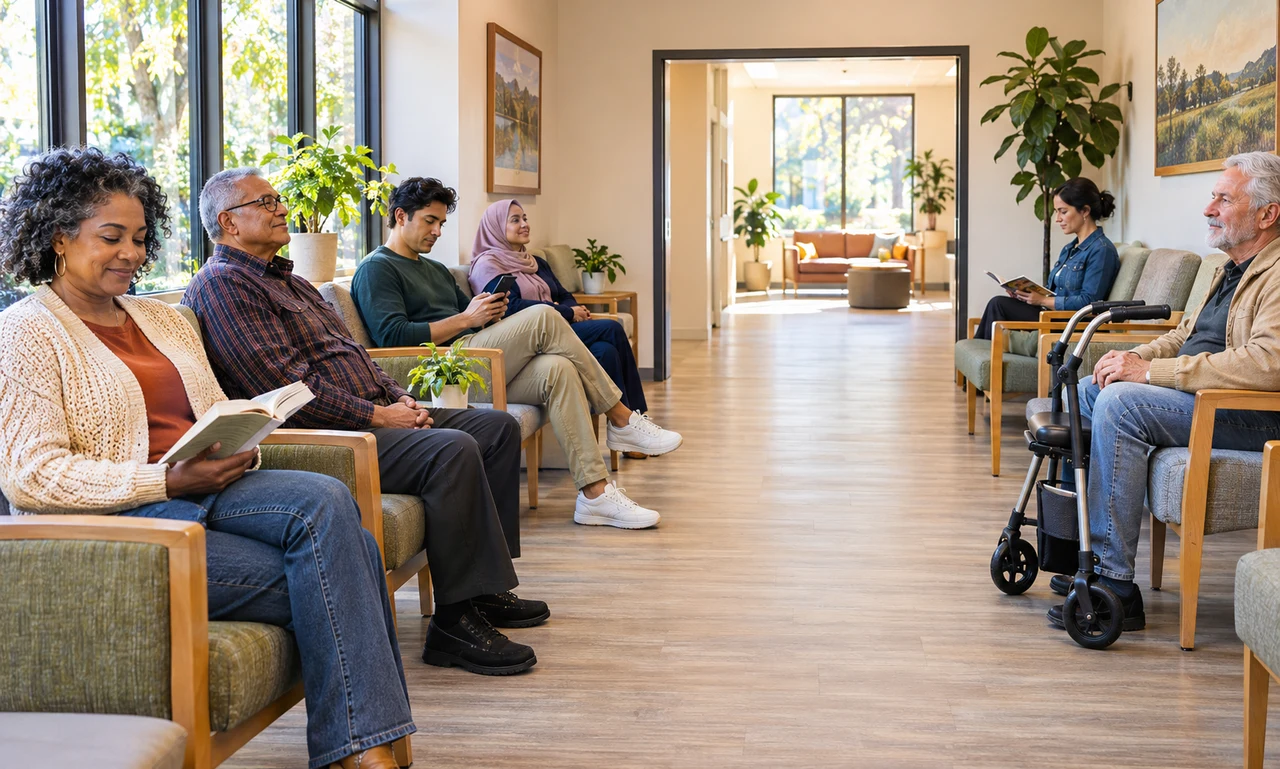
See the room as a route
A waiting room is not only a collection of seats. People need to enter, find reception, choose a suitable place and reach the next doorway without weaving around bags or furniture.
Keep aisles, accessible routes and doorways clear according to the venue’s requirements. Do not move fixed seating, safety equipment or mobility devices simply to create a preferred arrangement.
Some visitors need extra space, a companion seat or a position where they can hear or see announcements. Clear information and flexible help matter more than assumptions about what someone needs.
Keep belongings close without blocking others
Place coats, bags and strollers where permitted and within your control. Avoid using another seat when the room is busy or leaving straps where they can catch a foot, cane or wheel.
Sound travels easily in a shared waiting space. Use headphones at a low volume, take calls elsewhere when allowed and protect the details of any forms or conversations.
Children and support animals may need room, but the common route still has to work. Ask staff about an appropriate waiting location when the standard layout does not fit the situation.
Report the obstacle instead of rearranging the room
Tell reception or the responsible staff about a spill, loose chair, blocked door or other hazard. Give the location clearly and keep people away when there is an immediate risk.
Do not attempt repairs or relocate equipment without permission. Staff may need to preserve fire routes, infection-control spacing or other requirements that are not obvious from the chair arrangement.
Waiting already asks people for time. A clear path removes one unnecessary demand, allowing each visitor to arrive, pause and move on without the room itself becoming another barrier.
About this article
An original perspective from Everyday News. It offers practical ideas and perspective rather than firsthand reporting.

