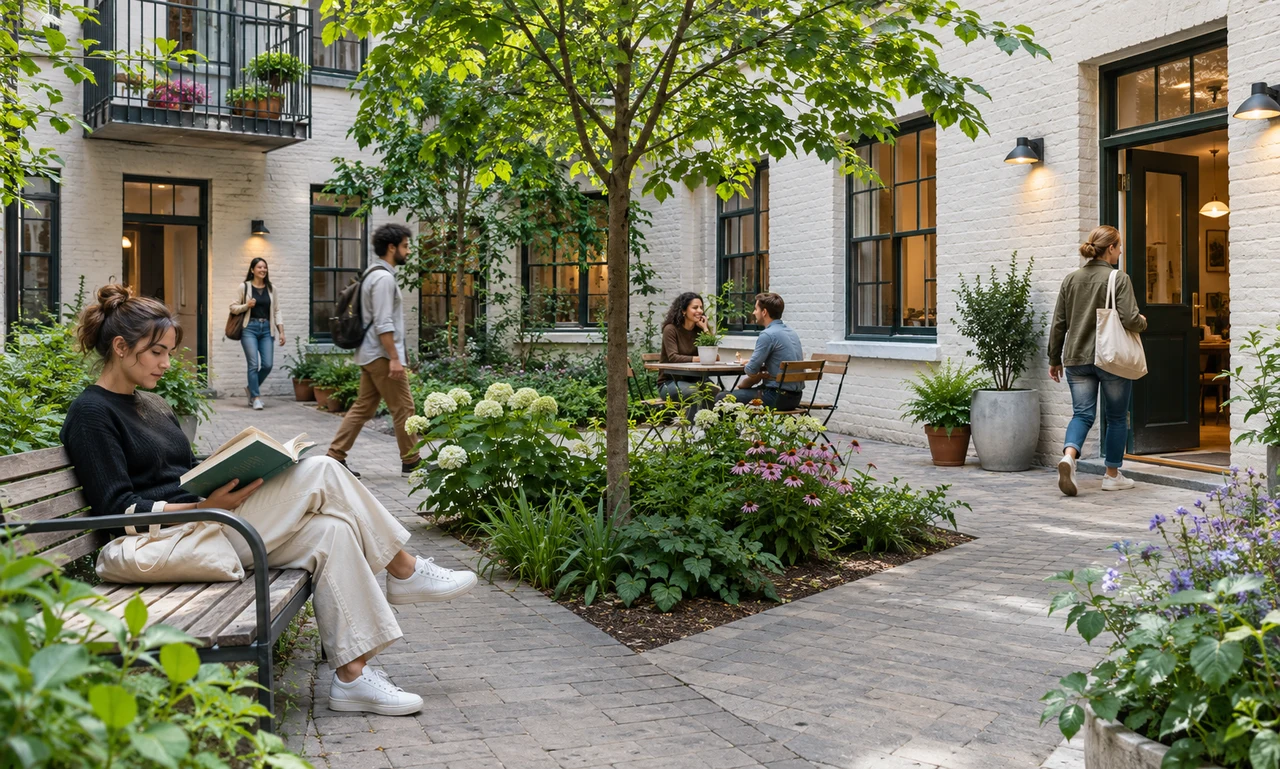
Notice the routes through the garden
A shared courtyard can hold plants, benches, play and conversation while also connecting several doors to the street, lift, bins or bicycle storage. Those paths remain active even when the space feels quiet.
Keep doorways, accessible routes and emergency access clear according to building rules. Furniture, toys and planters should stay in approved places rather than slowly narrowing a route.
Each entrance belongs to someone’s daily routine. Avoid gathering directly outside another household’s door or treating its threshold as general seating.
Share the sound as well as the space
Courtyard walls and windows can carry voices, music and late-night movement into nearby homes. Follow building rules and adjust the volume and timing with the closeness of those homes in mind.
Children, pets and visitors may use the space differently. Supervision and access rules still apply, and one person’s routine should not become a reason to photograph or monitor neighbours.
Ask before moving communal furniture or organizing an event. A place shared by many doors needs agreement, not just available floor area.
Leave the courtyard ready for another arrival
Take belongings, food and waste when leaving. Return permitted furniture, report damage and keep drains, gates and lighting clear enough to do their jobs.
Do not attempt structural, electrical or landscape repairs without authorization. Building management can identify who is responsible and which requirements apply.
The courtyard is neither fully public nor entirely private. Its character comes from that middle ground: a place to pause that still respects every route home around it.
About this article
An original perspective from Everyday News. It offers practical ideas and perspective rather than firsthand reporting.

