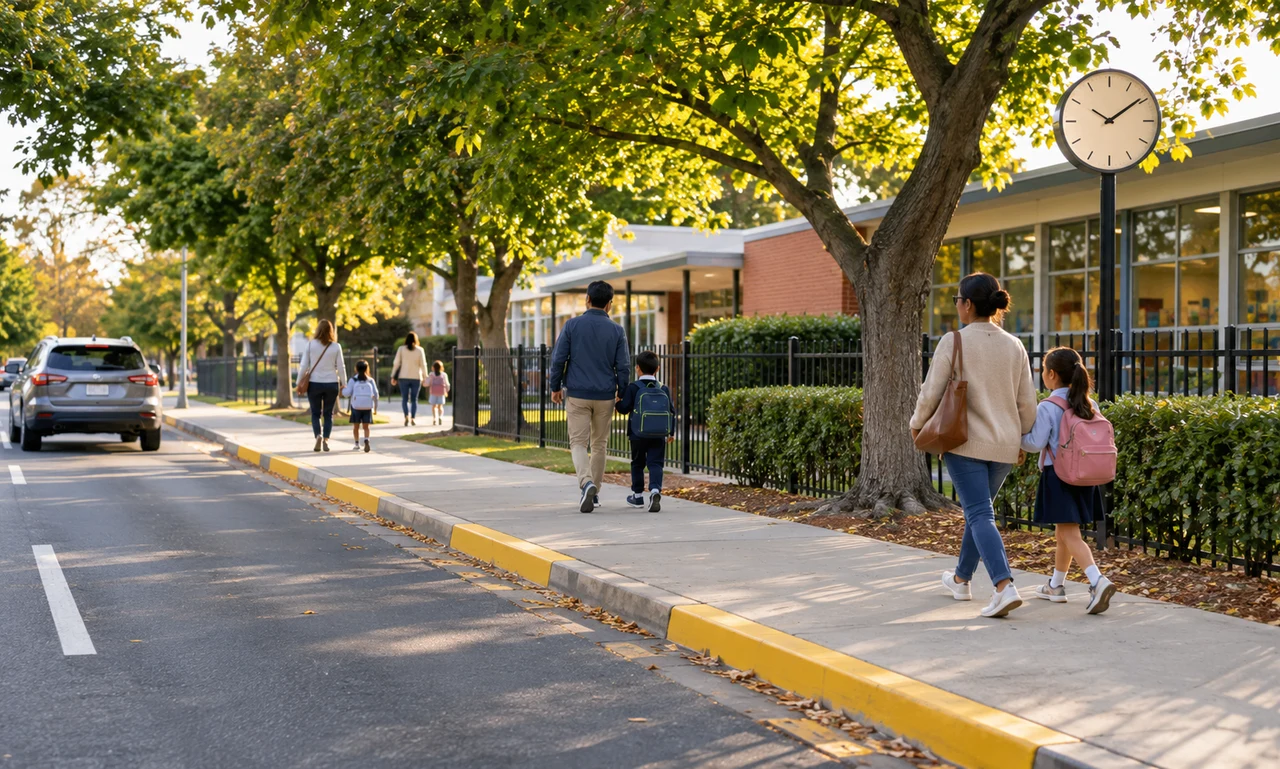
Read the whole sign before stopping
Curb rules near a school may change by hour, day and type of vehicle. A place that permits parking at one time may become a loading area or a no-stopping zone when students arrive or leave.
Read the posted sign from top to bottom and follow current local rules. Do not rely on another parked vehicle as proof that a stop is permitted, and do not cover a sign, crossing or curb ramp while trying to read it.
If the wording is unclear, continue to a lawful place and check official information when safely parked. A missed turn is easier to correct than a hurried curb decision.
Keep the walking route visible
Children may approach between adults, bicycles, buses and parked vehicles. Leave crossings, driveways, bus areas and sight lines clear, even for a very short drop-off.
Passengers should enter or leave from the safest permitted side according to local rules and the street layout. Do not invite someone to cross active traffic simply because the vehicle has stopped.
Move only when doors are closed, seat belts are in use and the route ahead is clear. Signals from staff or crossing guards should be followed without adding an improvised wave that could confuse another road user.
Let the curb change back
After the busiest period, the street may return to a different pattern. That change is part of how one limited space serves school access, residents, deliveries and through traffic across the day.
Report damaged, obscured or contradictory signs to the responsible road authority. Give the exact location and visible wording rather than trying to enforce the rule yourself.
The useful habit is to treat the curb as timed public space. Check the clock, read the sign and make a decision that keeps the route understandable for everyone arriving next.
About this article
An original perspective from Everyday News. It offers practical ideas and perspective rather than firsthand reporting.

