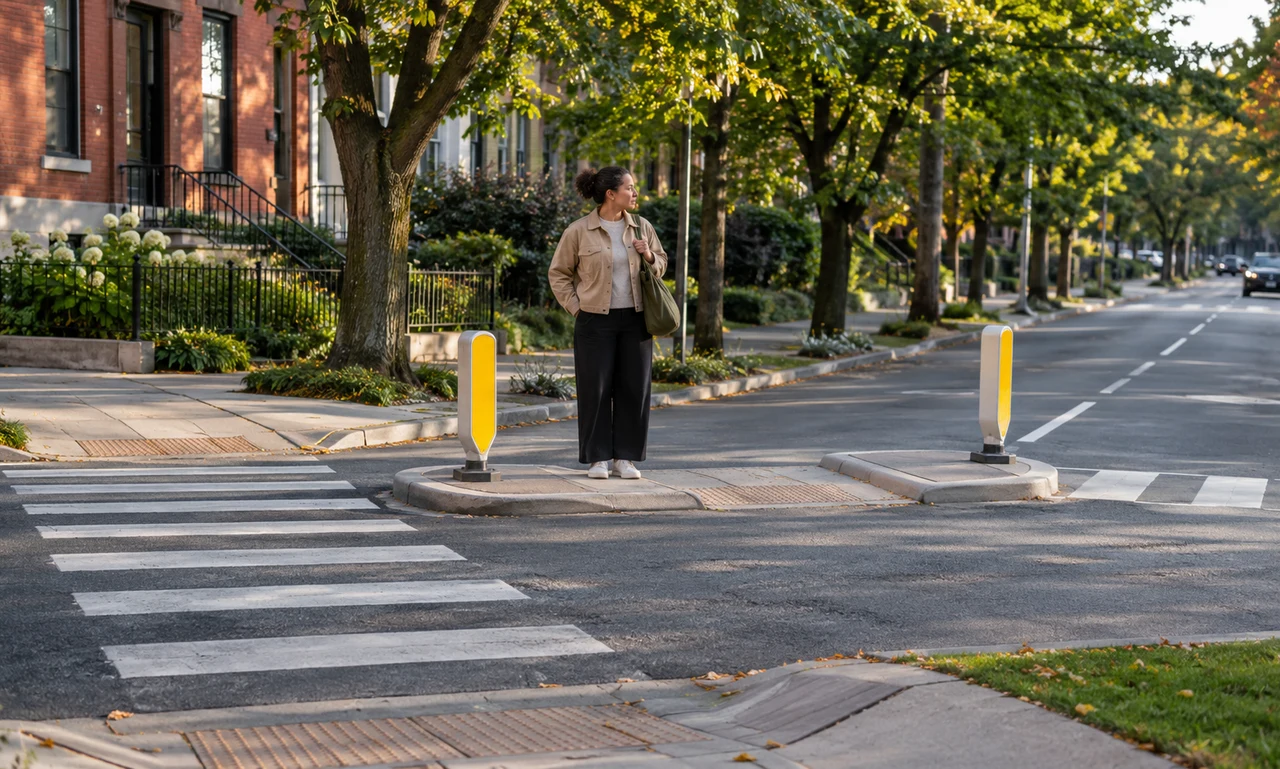
Treat each half as its own crossing
A pedestrian refuge island can let someone cross one direction of traffic, pause and then assess the next. Signals, markings and traffic rules vary, so follow the controls for the particular street rather than assuming the second half is automatically clear.
Look and listen again from the island. A vehicle that was distant when the first crossing began may now be approaching the next lane, and turning traffic can change the situation.
People using mobility aids, pushing strollers or walking with children may need more time and space. Do not pressure another person to begin simply because you are ready.
Keep the waiting area usable
Stand within the protected area and away from the curb edge. Keep bags, bicycles and mobility equipment close enough that they do not extend into traffic or block the path for someone arriving from the other side.
Some islands are narrow. When space is limited, arrange the group so everyone can face the next crossing and so a person can reach any push button or tactile surface without obstruction.
The island is not a meeting place or a spot for photographs. Its purpose is a brief, attentive pause within an active traffic environment.
Continue only when the route is clear
Use the applicable signal or safe gap for the second crossing. Do not follow another pedestrian blindly; their pace, view and decision may not suit your circumstances.
If the island is damaged, obstructed, poorly lit or repeatedly difficult to use, report the exact location to the responsible road authority. Avoid stepping into the roadway to inspect a concern.
The design acknowledges that one long crossing can contain more than one decision. The useful habit is equally simple: complete the first part, reset your attention and begin the next only when it is safe.
About this article
An original perspective from Everyday News. It offers practical ideas and perspective rather than firsthand reporting.

