See the approach as part of the opening
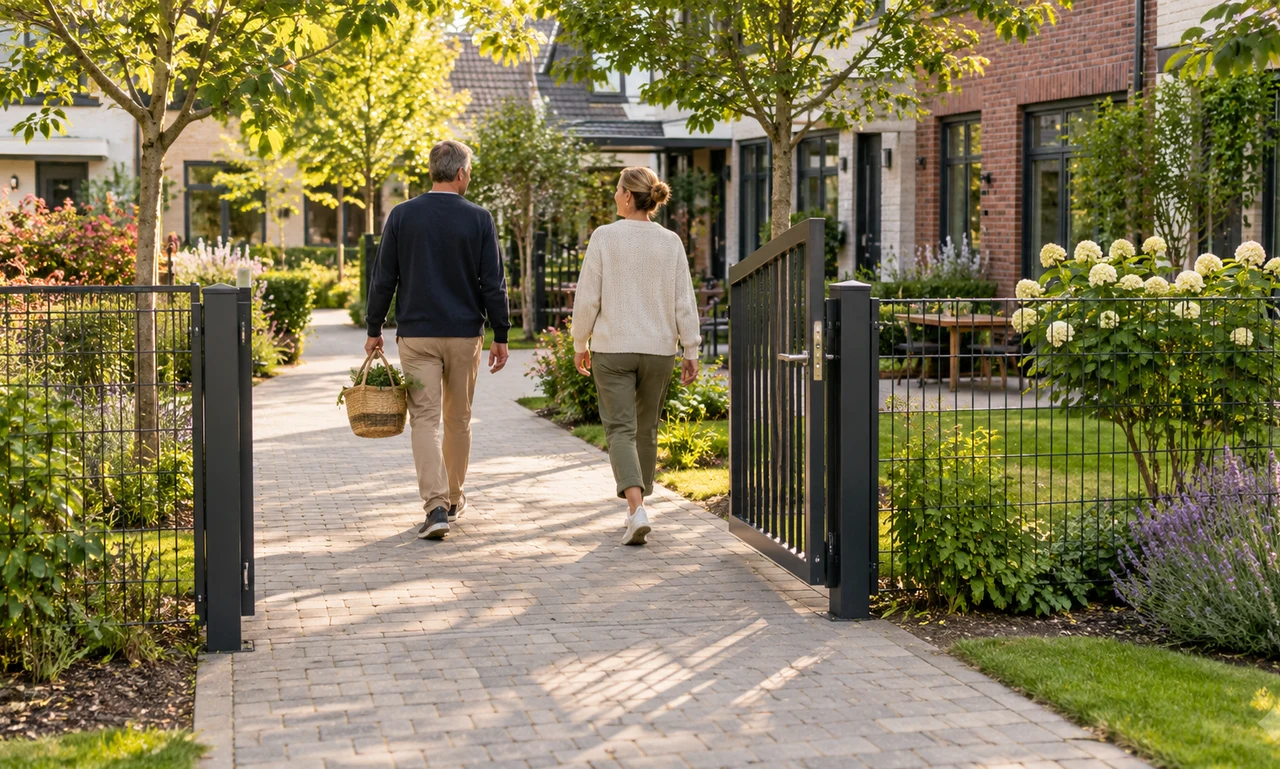
A gate is more than the panel between two posts. Someone needs space to approach, reach the latch, manage the swing and continue along the path without stepping into planting, traffic or stored belongings.
Keep bins, bicycles, deliveries, snow and garden items away from both sides. An object that seems beside the gate may still block its swing or the turning space needed by a mobility device.
Follow property rules about locking, access and emergency routes. A gate that must remain secured should not be propped open simply to make one trip easier.
Pass through without holding the route
Look before opening so the gate does not strike someone approaching from the other side. Hold it when another person is close enough to benefit, but allow them to choose their own pace and position.
Keep children and pets supervised according to the setting. Do not assume a latch will close itself or that another person is responsible for checking it after you.
If the path is narrow, complete the passage before stopping for a conversation or arranging a bag. The threshold works best when it remains a movement space rather than a gathering point.
Report what prevents a clean close
A dragging panel, loose hinge, sharp edge or failed latch should be reported to the responsible owner or service. Describe the location and condition without dismantling hardware or making an unauthorized repair.
Clear ordinary debris only when it is safe and permitted. Structural problems, powered access controls and emergency hardware need appropriate maintenance.
The gate connects two shared spaces through one small opening. Keeping room on both sides respects the full journey: approach, open, pass, close and leave the path ready for the next person.
About this article
An original perspective from Everyday News. It offers practical ideas and perspective rather than firsthand reporting.

