Use the name the person offers
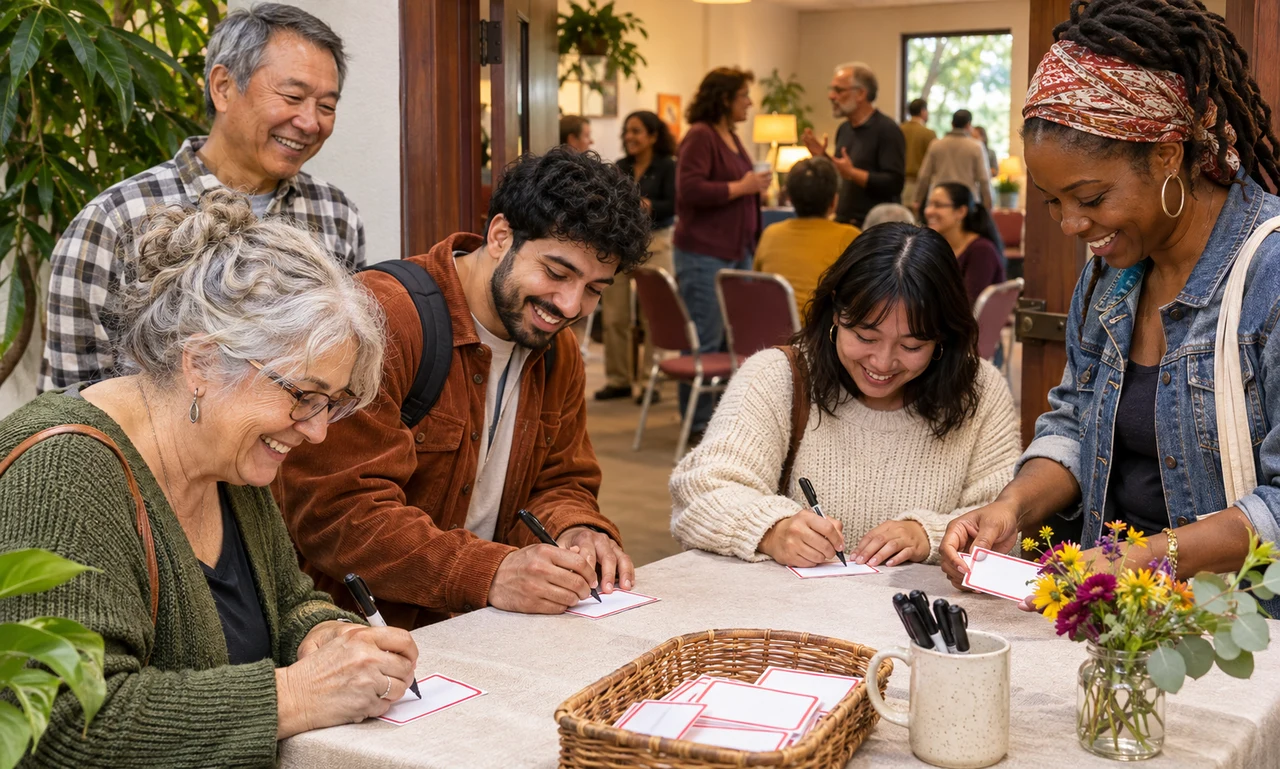
A name tag is a small invitation to begin a conversation. At a neighbourhood meeting, workshop or social gathering, one useful name may be enough to help people address each other with care.
Let each person decide what name to write and how to spell or pronounce it. A preferred first name, familiar name or another chosen form may be more useful in the room than the full name on an official document.
Participation should be voluntary unless identification is genuinely required and clearly explained. Someone may have privacy, safety, cultural or personal reasons for leaving a tag blank or choosing a limited form of their name.
Ask for no more than the event needs
Do not request a surname, employer, address, job title or other detail simply because the label has empty space. If the gathering needs roles or affiliations, explain why and allow people to describe them in their own words when possible.
Use thick, readable markers and high-contrast tags. Offer help without taking over the choice of name. Place tags where people can reach them, and provide clips or alternatives for anyone who does not want adhesive on clothing.
Photographs can turn a temporary tag into a lasting record. Event organizers should explain photography practices, respect requests not to be included and avoid posting identifiable images without appropriate permission.
Let the label end with the gathering
Collect backing paper and discarded tags before they become litter. If a tag contains personal information, dispose of it with care rather than leaving it on a table or in an open recycling bin.
Reusable holders can reduce waste when they are cleaned and the inserts are removed completely. Do not preserve a participant list from the tags unless the event has a separate, transparent reason and process for doing so.
The best name tag soon becomes unnecessary. It helps two people begin, gives way to conversation and then disappears when the gathering ends, leaving the relationship—not the label—as the useful result.
About this article
An original perspective from Everyday News. It offers practical ideas and perspective rather than firsthand reporting.

