Watch the street appear
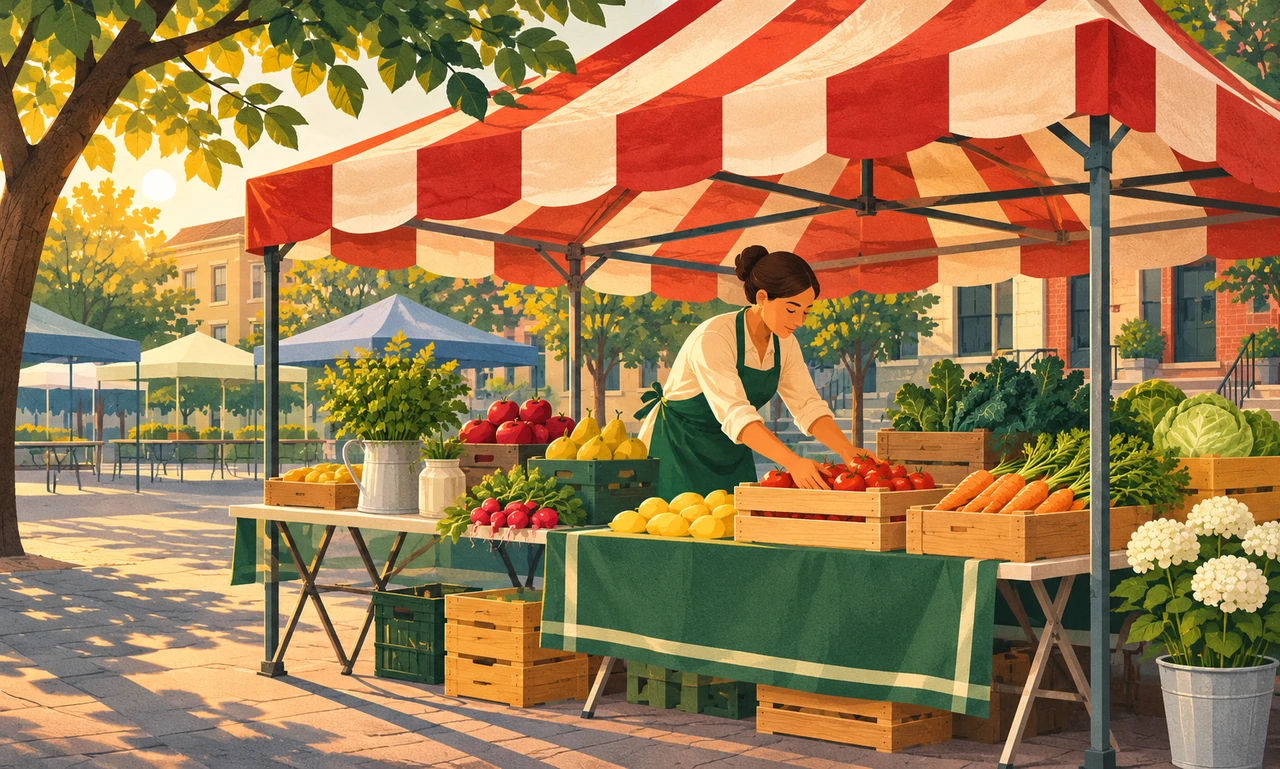
Before a market opens, the site may look almost empty. Then vehicles arrive, frames unfold, canopies rise and tables form narrow rooms without walls. Within a short time, an ordinary paved area has entrances, counters, paths and landmarks.
Observe from a respectful distance and stay clear of setup work. Notice how each stall defines a front for customers, a back for storage and an edge shared with its neighbour. These decisions are practical, but together they create the market’s temporary architecture.
The arrangement is not improvised without limits. Organizers, permits, safety rules and access requirements shape where structures can stand. What appears casual may depend on careful planning that visitors never see.
Read the structure through movement
A wide opening invites browsing. A table placed across a corner may slow the route. Crates can raise goods into view while adding weight and storage below. Shade, wind and rain alter the design as soon as the weather changes.
Look at the shared paths rather than only the displays. Can people pass without stepping into a queue? Are entrances and accessible routes kept clear? Do signs and payment areas draw customers away from the main flow? Describe what you see without treating one visit as a formal assessment.
Vendors also need room to work. Avoid photographing workers or customers without permission, and do not handle goods merely to improve a picture. The market is a workplace as well as a public event.
Notice the square return
At closing time, the architecture reverses. Produce is packed, coverings fold, tables disappear and the square becomes available for another use. The speed of that change is part of the design: every component must arrive, work and leave.
Temporary does not mean unimportant. For a few hours, the market can establish routes, meeting points and a recognizable centre. People may navigate by a favourite stall just as they would by a permanent shop.
Return after the market has gone and compare the space. The contrast reveals how much of a neighbourhood is made not only from buildings, but from repeated arrangements. A market stall stands briefly, yet its pattern can become one of the week’s most familiar places.
About this article
An original perspective from Everyday News. It offers practical ideas and perspective rather than firsthand reporting.

