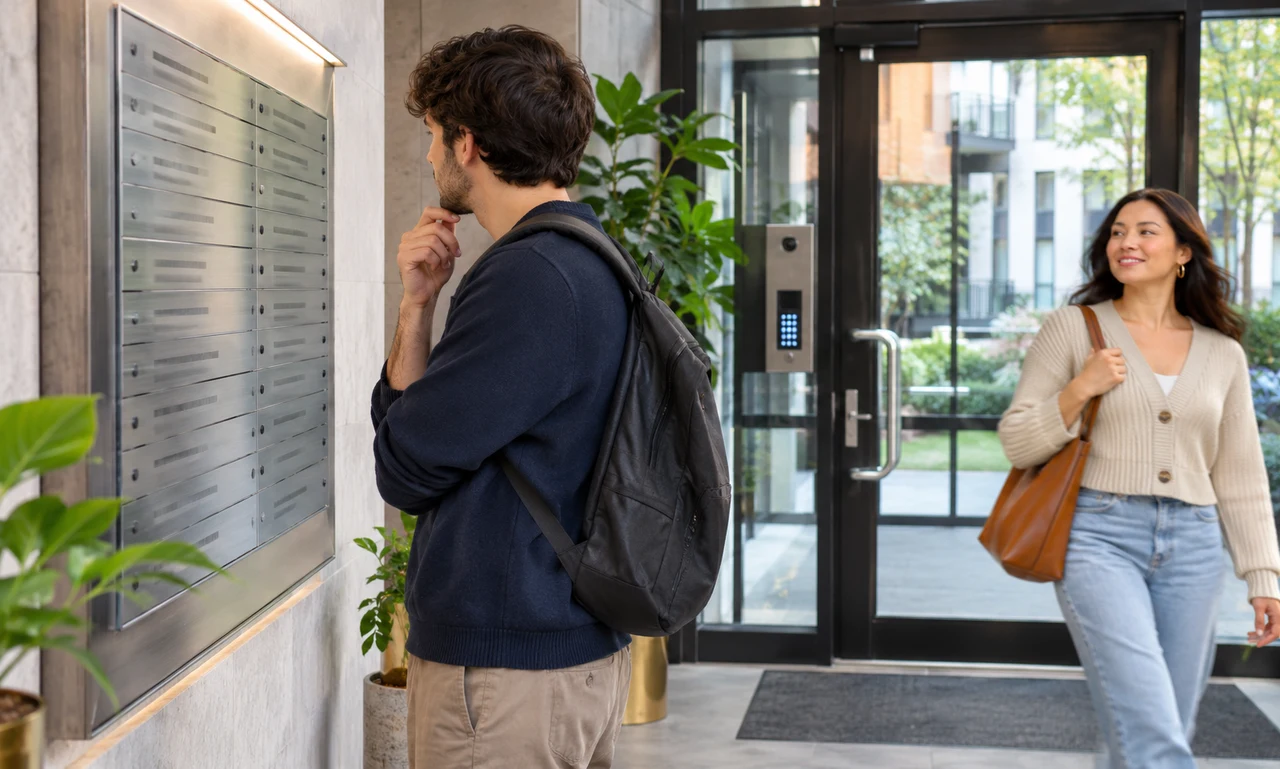
Give visitors one useful clue
A lobby directory has a narrow job: help an expected visitor contact the right household or office. A unit number, chosen name or another limited identifier may be enough, depending on the building and its access system.
Residents should understand what will appear and have a clear way to raise privacy or safety concerns. One format will not suit every household, and an official legal name is not automatically the most useful public label.
Keep instructions simple and reachable. The directory should work with the buzzer or reception process rather than invite visitors to guess among several entries.
Leave private details off the wall
Do not display phone numbers, schedules, family relationships or other information that is not necessary for entry. Avoid handwritten additions that reveal why someone lives or works in the building.
Visitors should use the directory only to complete their own visit. Photographing the whole list, copying names or sharing an access code turns a temporary arrival aid into a lasting record.
Delivery workers, contractors and support services may have established procedures. Those procedures should give them the information they need without exposing every resident to every caller.
Keep the list accurate and maintained
An old name, missing unit or unreadable label can send a visitor to the wrong household. Building management should provide a reliable update process and remove obsolete information promptly.
Report broken lighting, inaccessible placement or a directory that no longer matches the entry system. Do not open panels or alter access equipment without authorization.
A useful directory answers one question and then steps out of the way. It helps a visitor begin the correct conversation while allowing the rest of the building to remain private.
About this article
An original perspective from Everyday News. It offers practical ideas and perspective rather than firsthand reporting.

