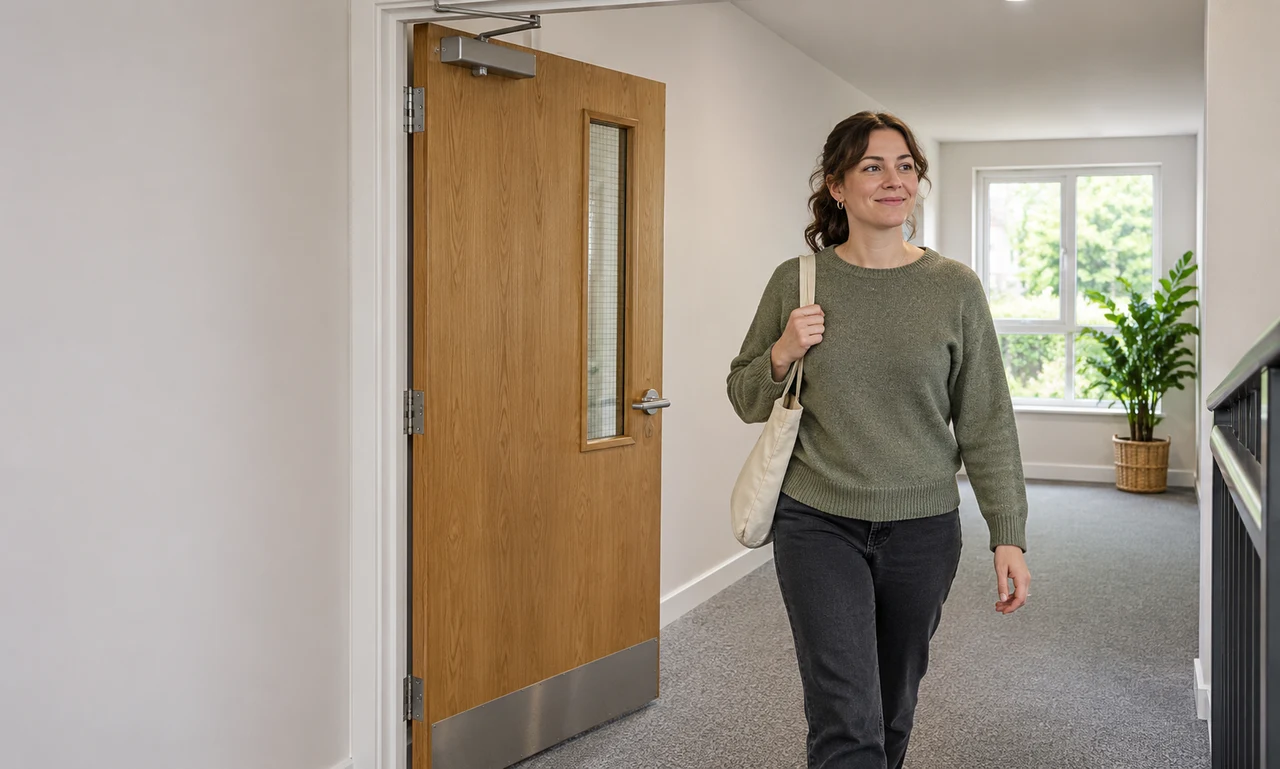
Let the door complete its job
A fire door is designed to separate parts of a building when it is closed. In ordinary use, that means opening it for passage and allowing the closer to bring it back to the frame without being held or wedged.
Move through without rushing, keeping children, mobility aids, deliveries and other people clear of the swing. If someone needs more time, hold the door safely for that person and release it only after the opening is clear.
Do not prop the door for convenience, even during a move or delivery. Building procedures may provide a supervised alternative, but a random wedge or heavy object can leave the opening unprotected long after the task is finished.
Keep the opening clear
Boxes, mats and decorations can interfere with the door, closer, latch or threshold. Keep both sides of the opening clear and do not hang objects from the handle or closing mechanism.
Never force the closer, tape the latch or alter seals and hardware. Fire doors are part of a building system, and changes should follow applicable requirements and be handled by authorized, qualified people.
The route around the door matters too. Corridors, landings and exits should remain usable according to building rules, without stored items narrowing the path or creating a trip hazard.
Report a door that does not close
If the door stops short, drags, slams, fails to latch or has visible damage, note the exact location and tell the property manager or responsible service. A photograph can help if building policy permits, but do not delay an urgent report.
Do not dismantle the closer or test alarms and emergency systems yourself. Follow posted procedures, local requirements and instructions from building or fire-safety officials.
In an emergency, use the designated route and call the appropriate emergency service when necessary. On an ordinary day, the useful habit is smaller: pass through, leave the opening clear and make sure the door is able to finish closing.
About this article
An original perspective from Everyday News. It offers practical ideas and perspective rather than firsthand reporting.

