Look at the full approach
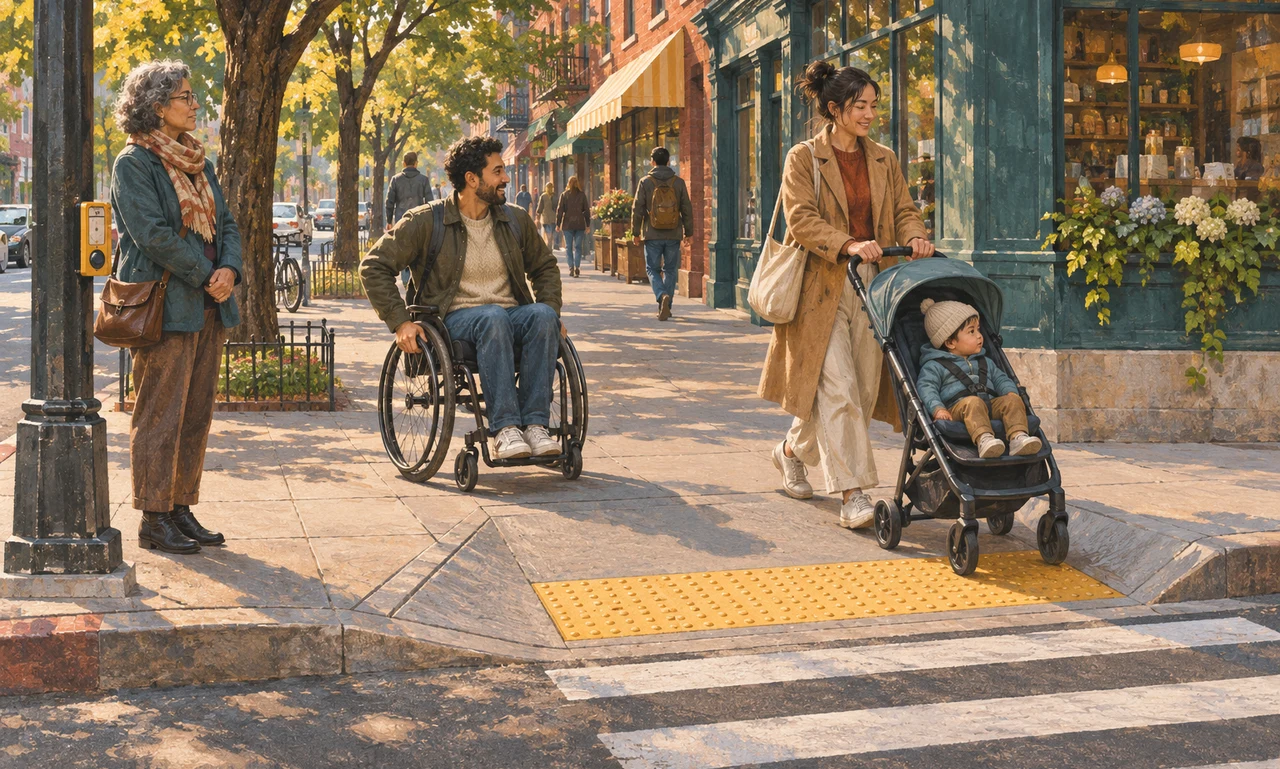
A curb ramp is a short piece of a much longer route. Its value becomes clear in the approach: the sidewalk leading toward it, the space at the corner and the crossing beyond. A person using a wheelchair, pushing a stroller, pulling a suitcase or guiding a cart may all depend on the transition.
Stand in a safe public place and follow the route with your eyes. Is the ramp easy to identify? Does the path remain clear on both sides? A well-placed ramp can disappear into an ordinary trip, while a blocked or damaged approach can make the entire corner difficult to use.
Observation is not a formal accessibility inspection. Standards vary, and measurements or compliance judgments require suitable expertise. Describe visible conditions without claiming to speak for every person who uses the corner.
Notice what gathers at the edge
Corners attract objects and activity. Snow, leaves, water, parked vehicles, signs and construction materials can gather near the curb. A ramp that exists on a plan may be less useful when its approach becomes storage or its drainage is blocked.
The street side matters as much as the sidewalk side. A puddle, rough surface or vehicle stopped across the crossing can interrupt the connection. Notice these details without stepping into traffic or testing the route in a way that puts anyone at risk.
Temporary conditions should be recorded with a date and time. A delivery lasting a few minutes is different from a repeated obstruction, although both can affect someone’s journey. Specific notes are more useful than a broad complaint about the whole intersection.
Treat the connection as shared infrastructure
A curb ramp may be associated with one kind of mobility, but its usefulness is broad. It helps connect people carrying groceries, children learning to ride, workers moving equipment and travellers with luggage. That wider benefit does not erase its importance for people who rely on step-free routes.
If you report damage or obstruction, include the exact corner, direction of travel and visible issue. Use the responsible municipal, property or construction contact. For an immediate traffic danger, follow local emergency guidance rather than attempting to direct vehicles yourself.
The ramp is small because it solves a precise problem: two surfaces meet at different heights. In doing so, it also connects the corner’s larger promise—that people moving in different ways can continue along the same public route.
About this article
An original perspective from Everyday News. It offers practical ideas and perspective rather than firsthand reporting.

