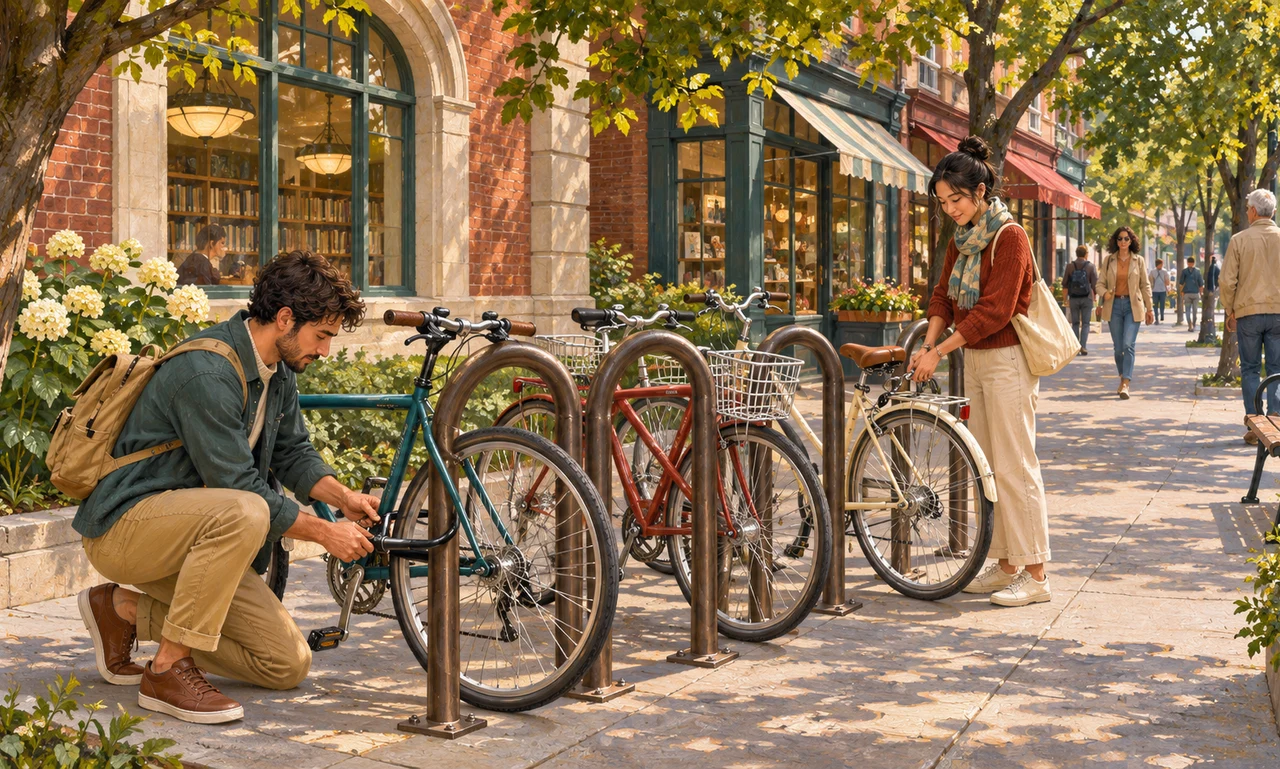
Read the rack as a shared address
A bicycle rack is a small piece of public infrastructure with a precise job. It gives a rider a recognizable place to leave a bicycle for a short time and signals to everyone else that the surrounding path should remain open.
Before locking up, check that the rack is intended for bicycles and appears securely fixed. Follow posted limits and local rules, especially near transit stops, building entrances and private property. A decorative rail, tree or accessibility feature is not a substitute for a rack.
The busiest rack also reveals how a street is being used. A few bicycles outside a library, shop or community centre can show that people are arriving without a car, but a single visit cannot establish broader travel patterns.
Lock without blocking the route
Position the bicycle so its frame can be secured while wheels, handlebars and cargo stay within the rack area. Keep curb ramps, doors, stairs, tactile surfaces and the main walking route clear. Leave enough space for the next rider to use the rack.
Use a lock suited to the bicycle and location, following the manufacturer’s instructions. Remove easily detached items and avoid displaying identifying documents or valuables. No lock or rack can guarantee security, so choose the setting with care.
If the rack is damaged, loose or placed where bicycles repeatedly obstruct access, note the exact location and report it to the responsible property owner, transit agency or municipal service. Do not attempt a structural repair yourself.
Leave the space ready for the next bicycle
A rack works best as a place to pause, not as indefinite storage. Retrieve the bicycle within posted time limits and remove broken locks or accessories that belong to you. Abandoned-bicycle procedures vary, so use the official local process rather than moving someone else’s property.
Small courtesies matter when capacity is limited. Do not lock across several spaces or trap another bicycle. If a basket or trailer needs extra room, look for a position designed to accommodate it without narrowing the public route.
The rack is a short-term address: visible, shared and connected to the life around it. Used thoughtfully, it supports a simple exchange between movement and place—arrive, secure the bicycle, keep the path open and make room for whoever comes next.
About this article
An original perspective from Everyday News. It offers practical ideas and perspective rather than firsthand reporting.

