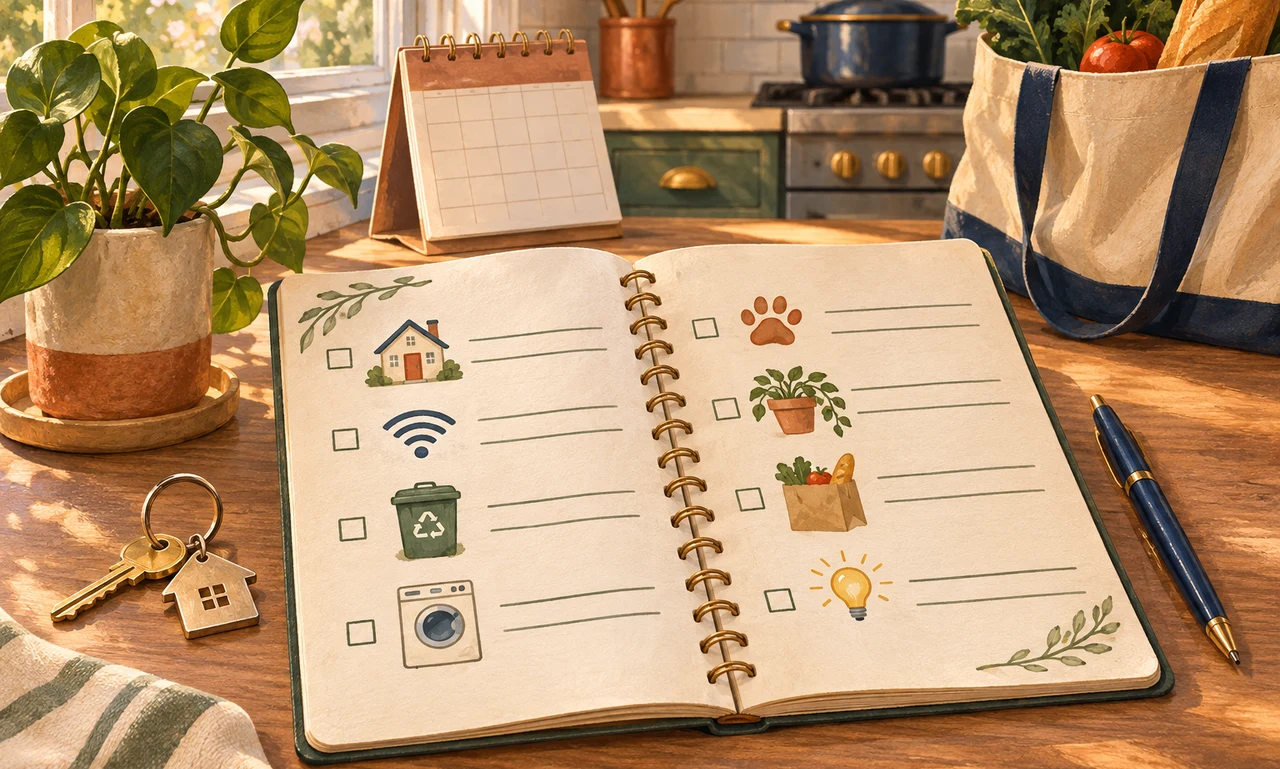
Write for the next ordinary day
A household handover note is useful when someone else will manage a home for a while. The reader may be a partner, relative, housemate or trusted friend. They do not need a history of everything you do; they need the details that will matter next.
Start with time-sensitive routines. Note collection days, expected deliveries, agreed appointments and any task that cannot simply wait. Use dates and clear instructions instead of phrases such as “soon” or “as usual,” which depend on knowledge the reader may not share.
Keep the note proportionate to the situation. A weekend away may need only a few lines. A longer handover may need sections, but it should still be easy to scan. The goal is continuity, not a perfect manual for the household.
Separate access from information
List public or household contacts by role: building manager, service provider, school office or trusted neighbour. Confirm that personal contact details can be shared before including them. Avoid copying private information merely because it might be useful.
Do not place passwords, alarm codes, financial details or identity documents in an ordinary note. Use the secure method already agreed for sensitive access. If a key is being transferred, record who has it and when it should be returned without labelling the key with a full address.
For care routines involving children, pets, medication or accessibility needs, use current instructions from the responsible person or professional source. A handover note can organize those instructions, but it should not replace them or improvise new ones.
Name what is unfinished
An unfinished task is easier to manage when its status is clear. Write what has already happened, what the next step is and whether a deadline exists. “Repair requested Tuesday; manager will call before visiting” is more useful than “sink problem.”
Add the date at the top and remove outdated versions. If the reader updates the note, ask them to mark completed items rather than deleting information that may explain what happened. A simple record can prevent two people from repeating the same call or overlooking the same promise.
End with the small facts that make a home run smoothly: where a necessary item is kept, which plant was already watered or what food should be used first. Thoughtful coordination often looks ordinary. That is precisely why a clear handover note can be so valuable.
About this article
An original everyday guide from Everyday News. It offers practical ideas and perspective rather than firsthand reporting.

