Include the stop when reading the map
Public routes are usually described by destinations: the playground, market, trail or transit stop. A washroom may be treated as a minor facility, yet its presence can decide whether a person can use the route at all.
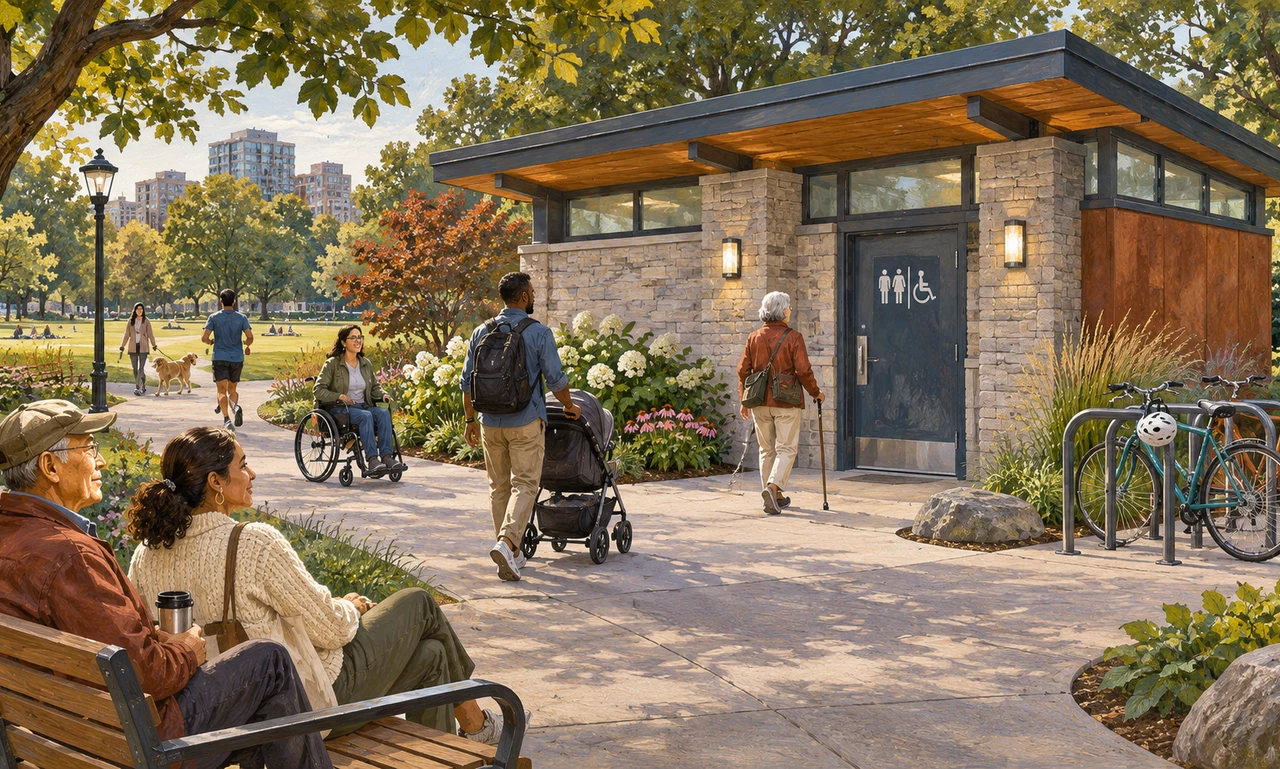
Notice where the building sits in relation to paths and activity. Is the approach clear and visible? Are opening hours or seasonal limits easy to find? A facility marked on a map is useful only when the visitor can reach it and reasonably expect it to be open.
Respect privacy completely. Observe only the public approach and exterior information. Do not photograph people entering or leaving, record inside the facility or treat the space as a subject for casual inspection while it is in use.
See the work that keeps it usable
A public washroom depends on water, lighting, supplies, cleaning, waste collection and repairs. When those systems work, the facility can feel like an ordinary part of the day. When one fails, the effect is immediate.
Visible cleanliness is important, but a brief visit cannot establish every health or accessibility condition. Avoid making technical claims from appearance alone. Follow posted instructions and use another facility if there is a closure, hazard or maintenance notice.
If something needs attention, report the exact location, time and visible issue through the responsible park, transit, facility or municipal service. Do not attempt repairs or handle unsafe waste. For an urgent danger, use the appropriate emergency channel.
Recognize who gains time and confidence
Reliable washroom access supports families with children, older adults, people with health or mobility needs, workers spending the day outside and anyone taking a longer journey. These experiences differ, and no single design or location meets every need.
The facility also affects the wider public space. A visitor who knows where a washroom is may feel able to stay for an event, continue a walk or use transit rather than cutting the trip short. That confidence is part of how welcoming a place becomes.
A washroom is not the destination, but it belongs on the route. Including it in planning, signs, maintenance and conversation acknowledges an ordinary truth: public life depends on making room for ordinary bodies.
About this article
An original perspective from Everyday News. It offers practical ideas and perspective rather than firsthand reporting.

