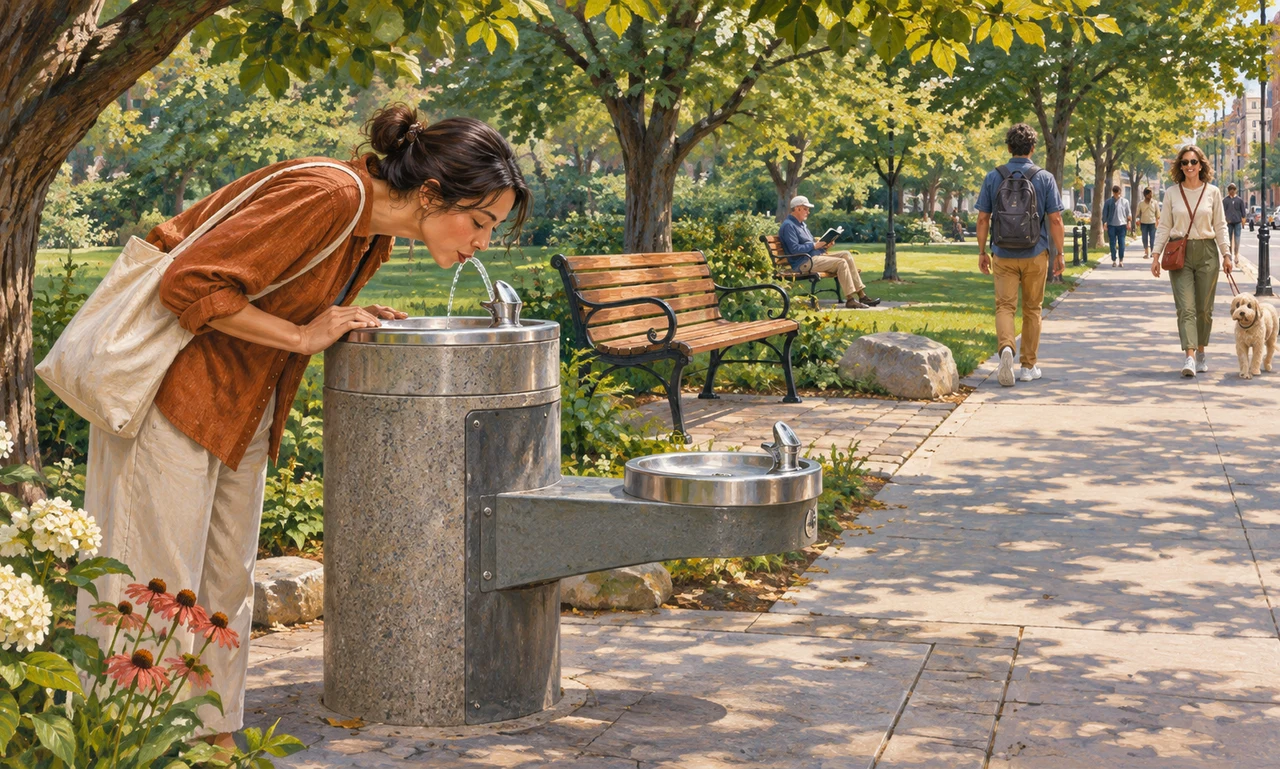
Notice where the fountain stands
A public drinking fountain is easy to overlook until you need it. Its location near a path, playground, transit stop or sports area connects a basic service to the movement of the day.
Look at the approach as well as the fixture. Is the route clear? Can different users reach the controls? Is there space to pause without blocking the path? A bottle-filling point, a lower basin or a separate feature for animals may serve different needs, but designs vary widely.
Observe without interfering with other users. Do not touch the outlet or allow a bottle to contact it. Follow posted guidance and local public-health information about whether the water is available for use.
Read signs of care and interruption
A steady stream, clear drainage and a clean surrounding area can make the fountain feel dependable. A cover, warning or shutoff may reflect maintenance, freezing weather or a temporary water issue. The visible condition tells only part of the story.
Do not test a fountain marked unavailable or attempt to repair it. If there is damage, a leak or a cleanliness concern, record the location and report it through the responsible park, facility or municipal service. Use another safe water source while the issue is checked.
Season matters. In colder places, an outdoor fountain may close for part of the year. Temporary closure does not make the service unimportant; it shows that public amenities depend on schedules, inspections and maintenance that visitors rarely see.
Value the ordinary service
A fountain does not eliminate every barrier to water access, and one observation cannot establish water quality or service across a city. It can still reveal a useful principle: public space works better when common physical needs are included in its planning.
The benefit reaches beyond the person taking a drink. A reliable refill point can support a longer walk, a child’s play or an outdoor worker’s route. It can also reduce the need to find a shop for a basic pause, provided the fountain is safe and operating.
The promise is small and practical. Somewhere along the route, there is a place designed to offer water. Keeping that promise requires infrastructure, care and the public habit of leaving the fountain ready for the next person.
About this article
An original perspective from Everyday News. It offers practical ideas and perspective rather than firsthand reporting.

